Roosevelt Lake is one of several lakes around Arizona.
Years ago we used to enjoy it from the vantage point of the water’s edge, in a boat.
Now that we we are retired, we are more apt to enjoy the water from a vantage point high up from the lake so that we can capture photos of her allure from afar.
The Roosevelt bridge can be seen from the distance through smoke and haze. Either way, the water always attracts us and brings us back for more.
There are lots of genre’s of photography: sports, wildlife, landscape, portrait, etc., just to name a few.
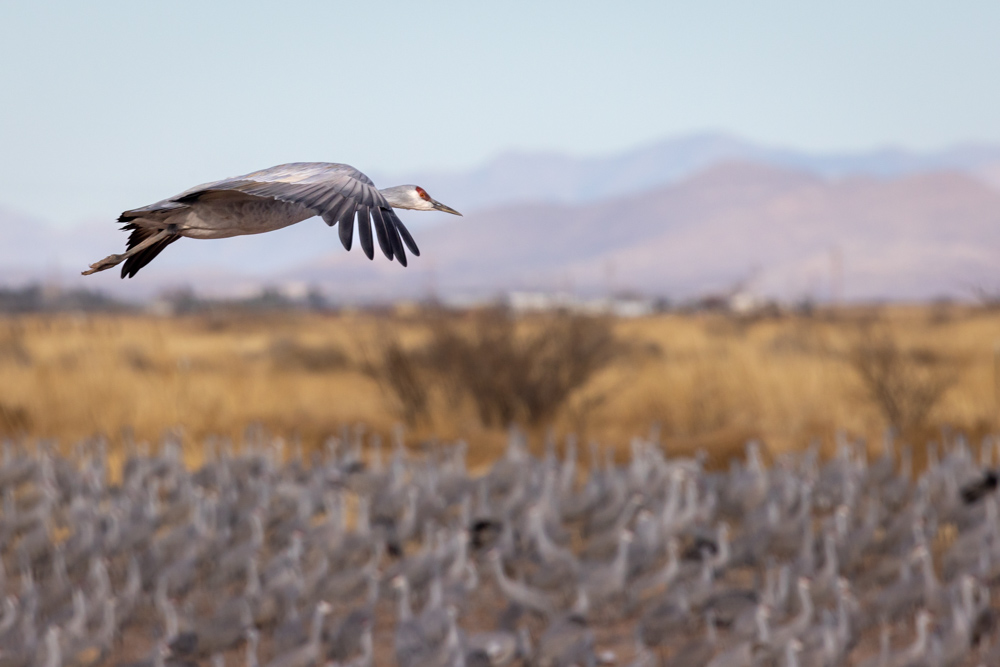
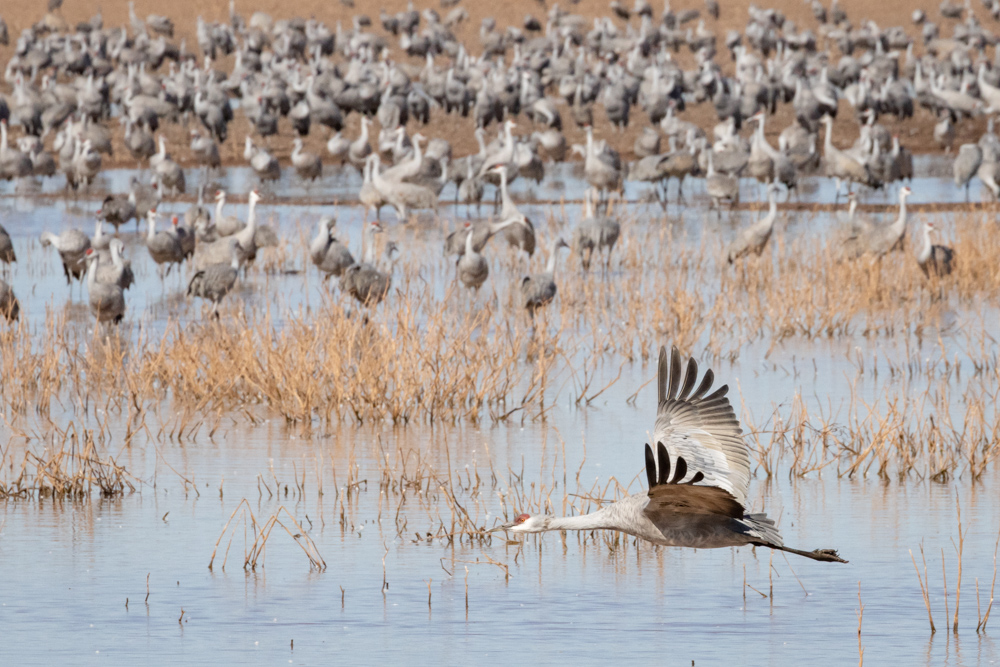
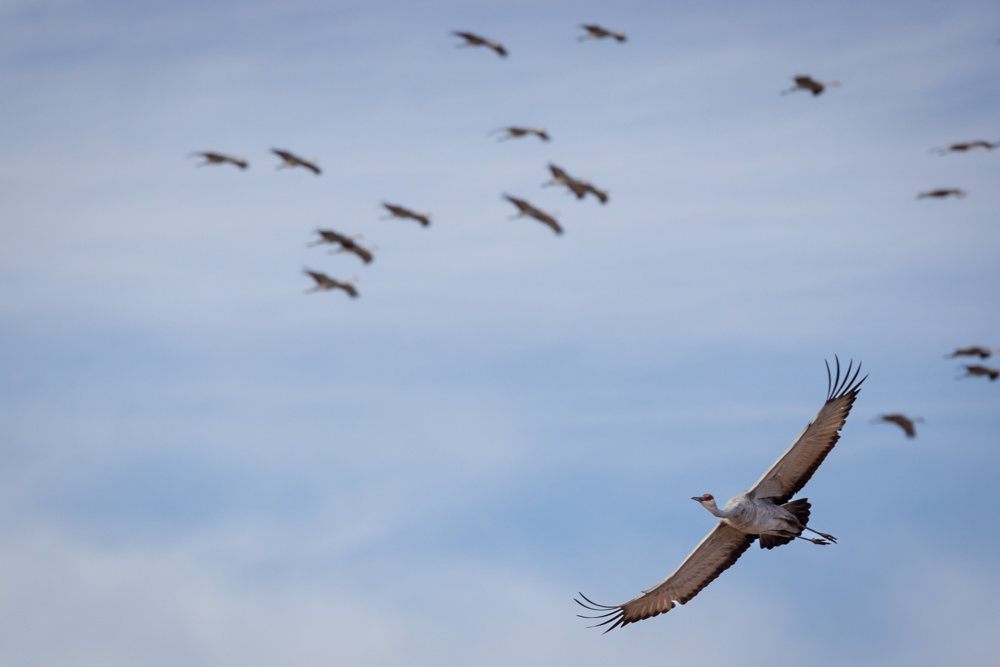
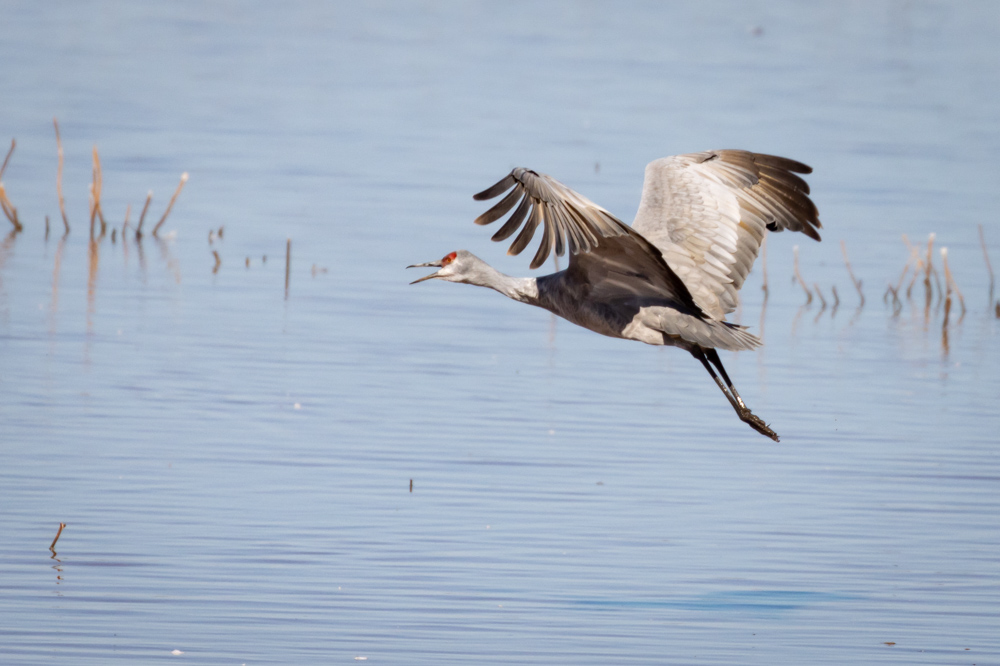
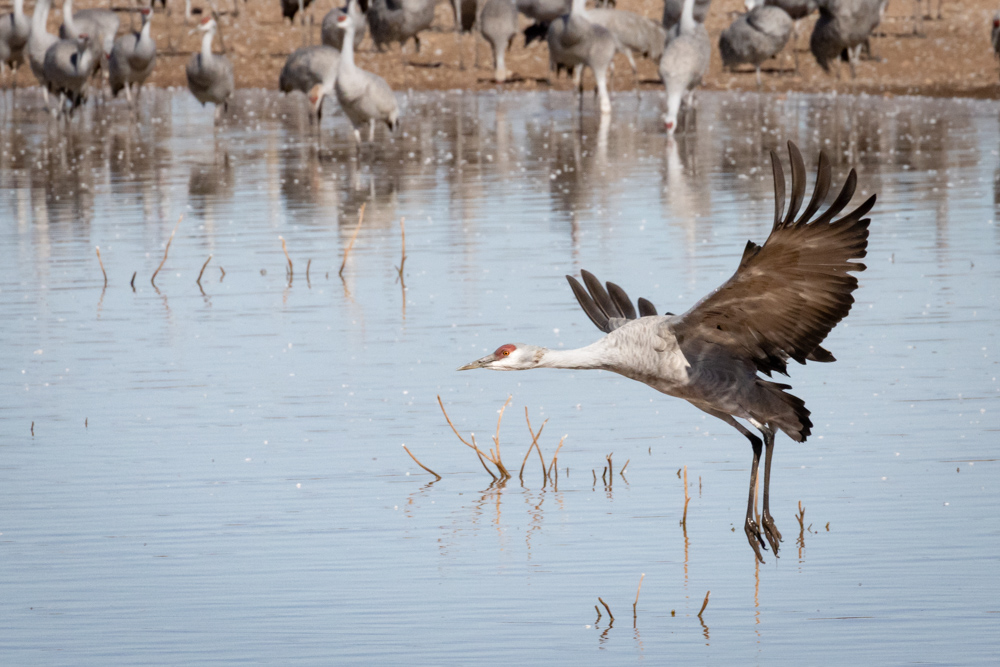
But Birds-in-Flight is it’s own animal, forgive the pun. Before embarking on the long trek to Whitewater Draw I watched dozens of online video’s to help assure that I might come home with some decent images.
I have always shot single point focus as I take a lot of close up animals and landscape photos. But for BIF it was recommended that I use zone area to focus on a larger area (and improve my chances of getting a sharp image). While I was there, a kind photographer, JT, suggested I use the eye-focus that my camera offered. I must say, I found it very awkward and somewhat difficult. However, once I got more used to it, I found myself enjoying the fast focus ability of these new fancy cameras. Thanks, JT, for the great tip.
The eye focus had a particularly hard time picking out the eye in darker conditions, so I had to switch back to single point (or nine-point) focus for those situations. During the daylight hours I had better success, yet still struggled for the camera to focus on what I wanted to while recomposing the shot.
A fast shutter speed is essential to obtain a sharp photo, and not a streaky blur. However, in the early morning hours it was difficult to maintain a fast shutter speed, large enough aperture to get decent depth of field, and as low as possible ISO to reduce noise, even on a tripod. Admittedly, the daytime photos were easier to capture tack sharp pix.
I did learn that the closer the bird, and less distractions, the better the focus worked – and made for a cleaner more interesting photo. I also quickly realized that ‘bird butts’ make for a less than interesting photos, and it was best to pan across to get a profile or head shot.
Of course, wildlife photography is best with action shots and ‘gesture’. If I can capture something that has the animal doing something, or looking cute, that photo stands above the rest.
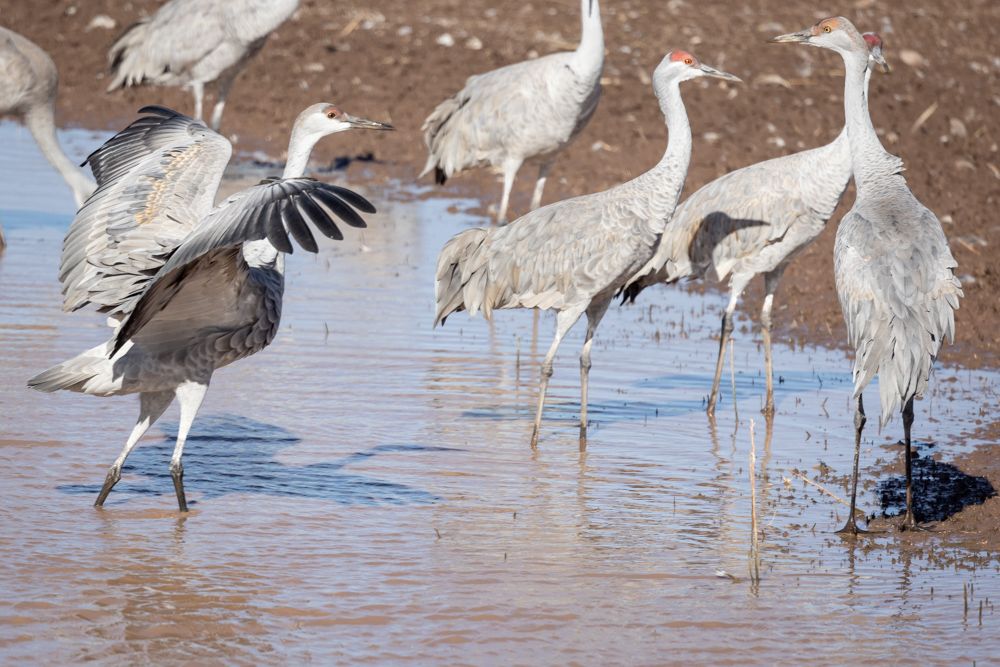
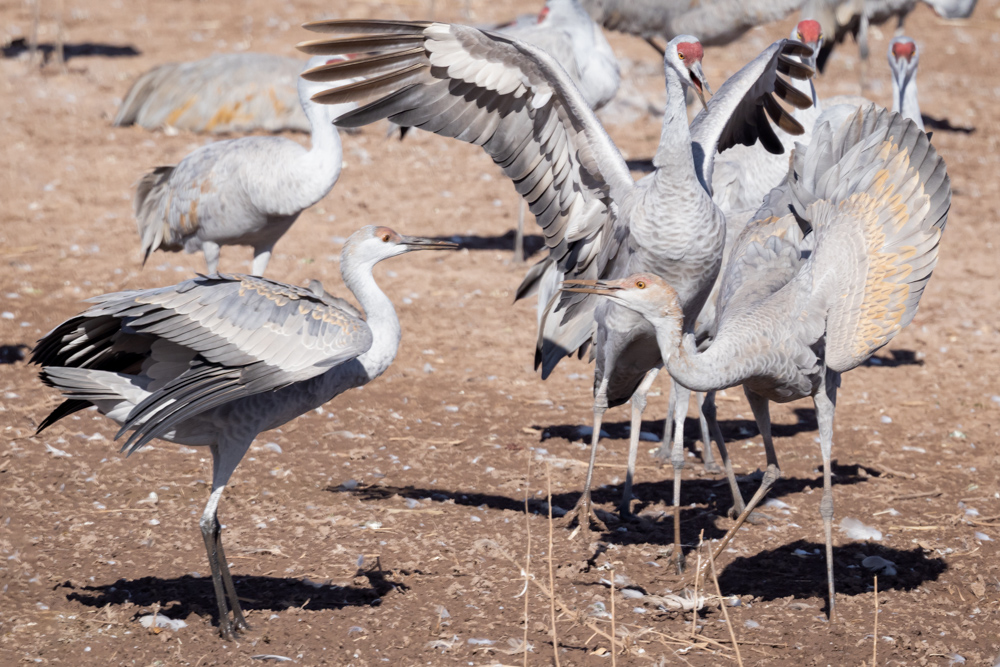
I had a hard time picking out the interaction among the birds from the flocks that surround them. With these high mega-pixel cameras, I was able to crop in to focus the attention and cut the clutter.
It helps to be in the right place at the right time. The best way to do that is scope out the area, find the best spot to take that great photo, and the best time. We were at Whitewater Draw for 4 days, allowing us ample opportunity for photographic greatness. Being prepared also means having the right equipment for the shoot. A fixed telephoto has very narrow flexibility, while a medium zoom provides options and a variety of story telling photos.
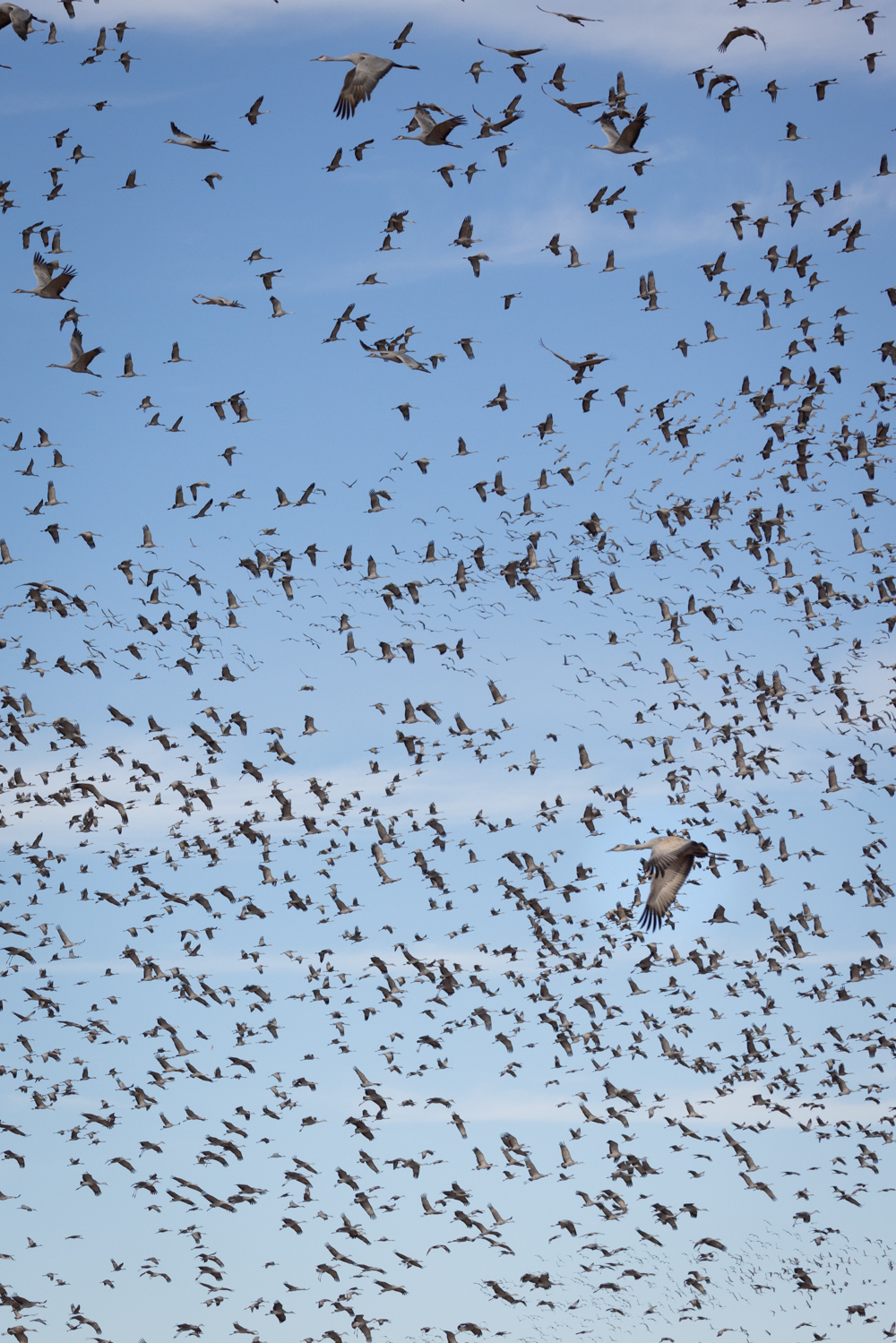
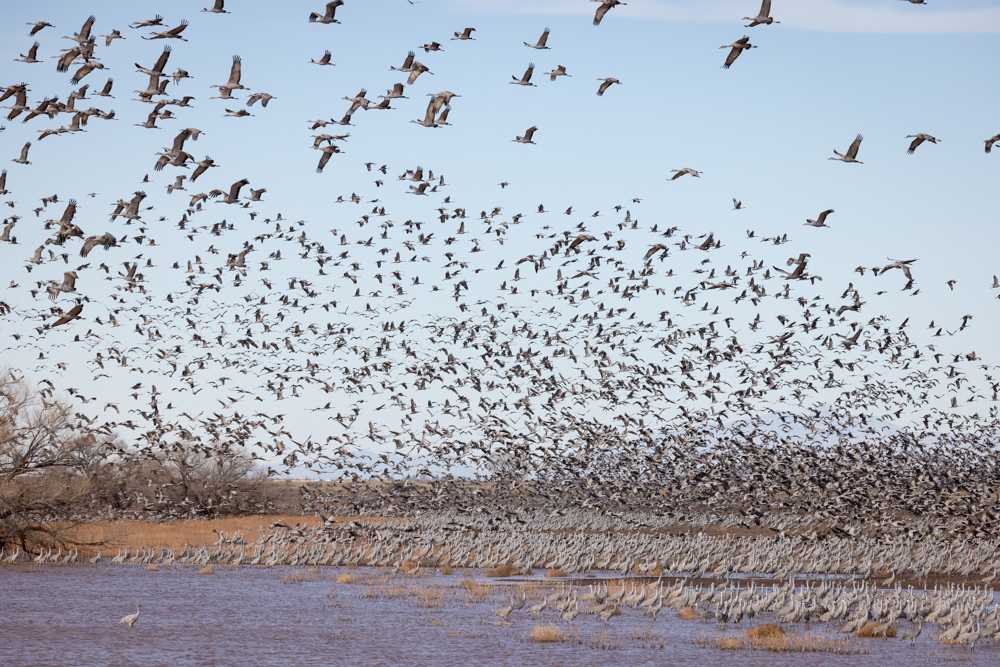
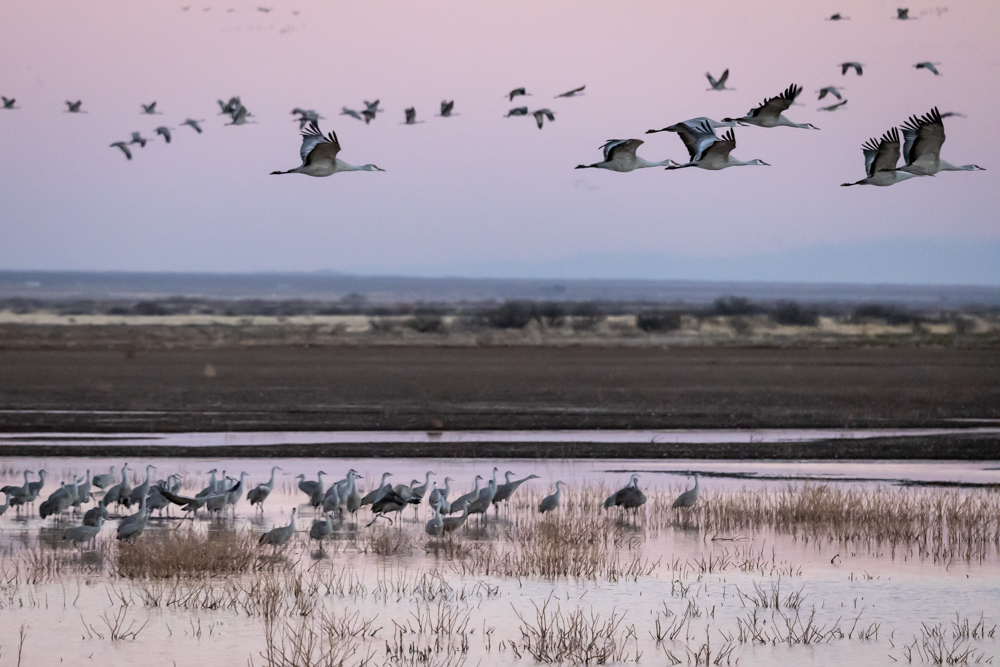
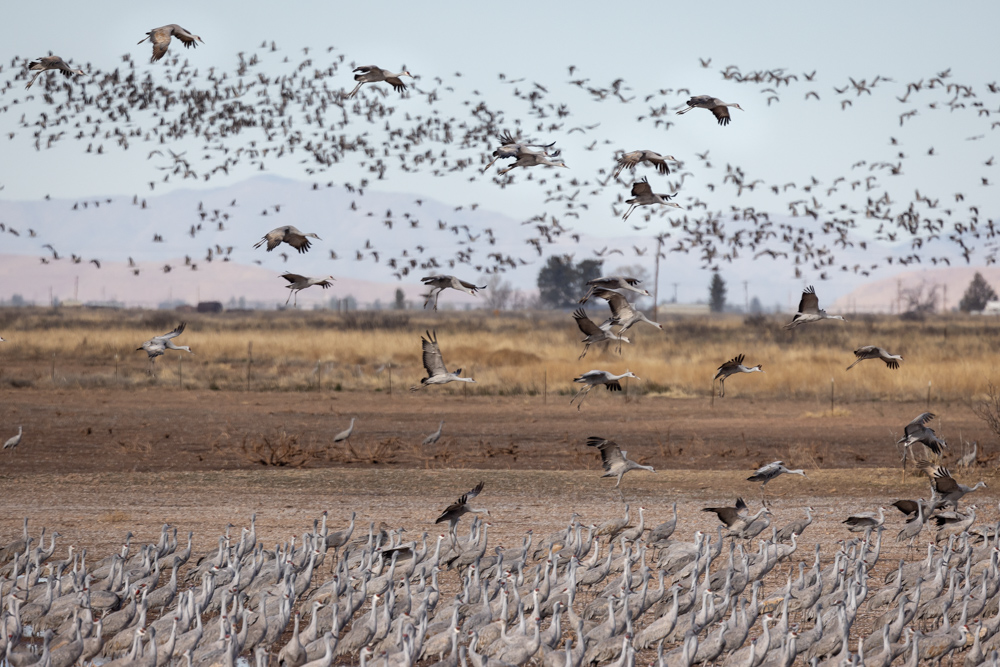
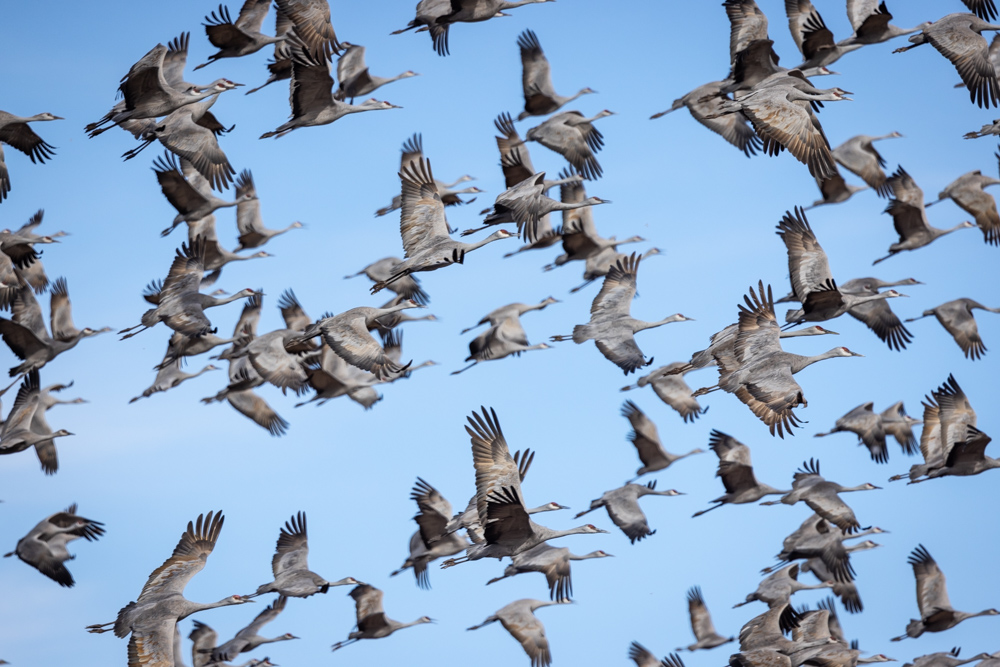
I took a lot of photos at varying focal lens with different lens to tell the complete story of the event, from the massive morning lift off to the late afternoon fly-ins, from the sandhill cranes interacting together, their mingling in the pools, to fly by’s. This diverse collection conveys a better sense of Whitewater Draw.
Above all else, I found practice was the best tool to improve my BIF shots. What do they say… practice makes you lucky. So true!
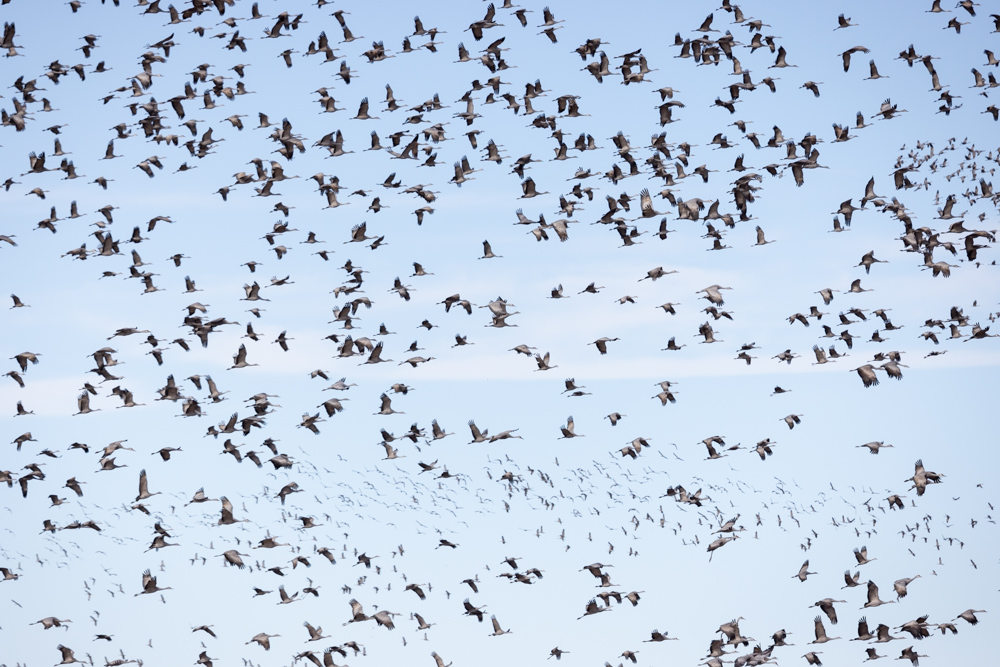
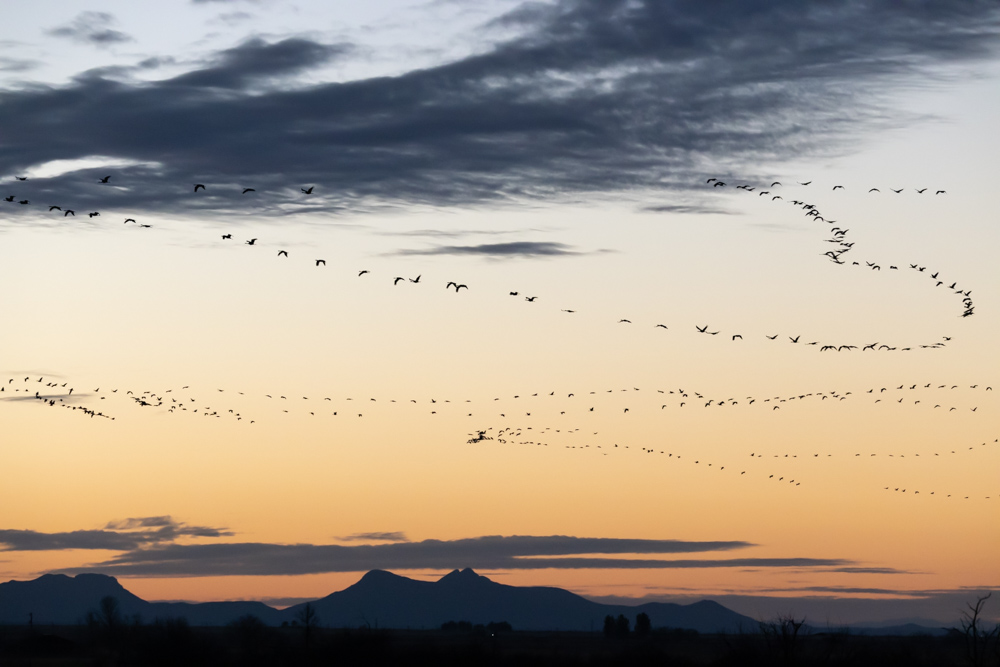
Sandhill crane fly across the morning sky in the distance.
Have you heard of Whitewater Draw? Whitewater Draw is a swampy marsh area in McNeal, in southern AZ, east of Bisbee and north of Douglas (pretty much the border of AZ / Mexico).
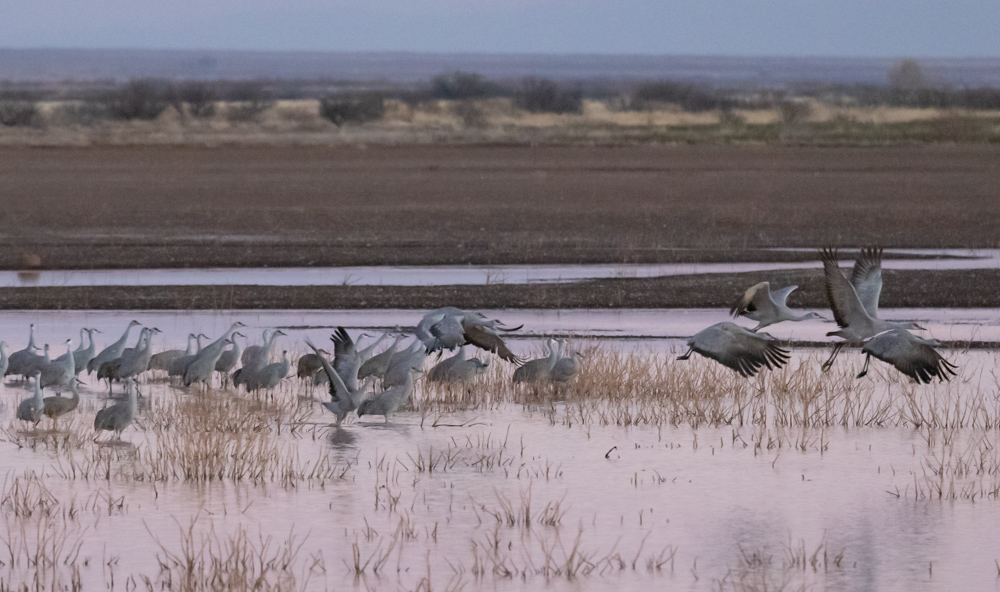
Because of the food sources (namely corn fields) and marsh ponds, the sandhill crane flock to Whitewater Draw in droves in the winter months, Oct – March.
They sleep in the ponds to protect themselves from predators. Every morning they lift-off and go to graze in nearby fields.
In the afternoon some come back (between 10 am – noon) to rest and socialize in the ponds.
Just before sunset there is a mass fly in when the cranes come back for the night.
It is a sight to see! The noise of the cranes is deafening. The shear quantity of birds is impressive to say the least.
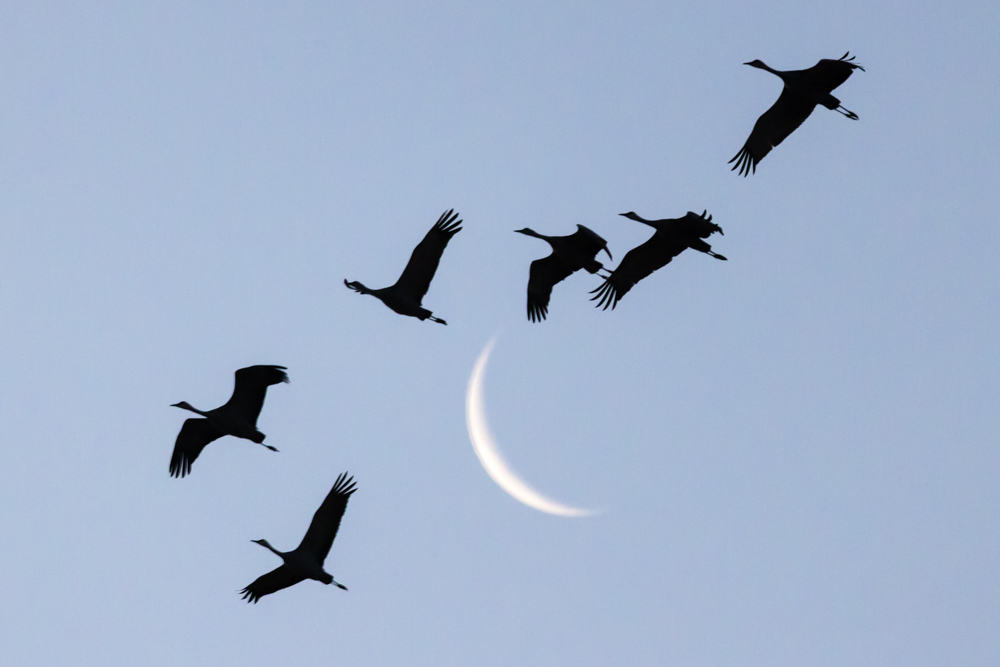
We participated in a Photo Workshop put on by Arizona Game & Fish (AZGFD). We watched the cranes take off from a distance crossing the moon in their path.
George Andrejko, AZGFD’s professional photographer for more than 20 years, walked around with us through the walking paths, pointing out different birds, and ducks along the way. Where else can you get a one on one with such a gifted and renown Arizona photographer? It was a special experience, one I would do again in a heartbeat.
The mere $25 fee to participate goes to a good cause so that the AZGFD can continue to care for the site and put on more such events.
We not only learned about the site, but were able to speak with talented and knowledgable AZGFD personnel. We met new and interesting like-minded people, enjoyed the outdoors, and had a ‘show’ throughout the day.
Every once in awhile you find yourself in a truly special place, experiencing a joyous moment that has you giddy with excitement.
Nature’s beauty, whether it’s wildlife or landscape, often does that for me. We certainly have places we frequent, but are always on the lookout for new places to enjoy and photograph.
And when we might find ourselves in such a state of mind and place, we should slow down take it in and savor every minute.
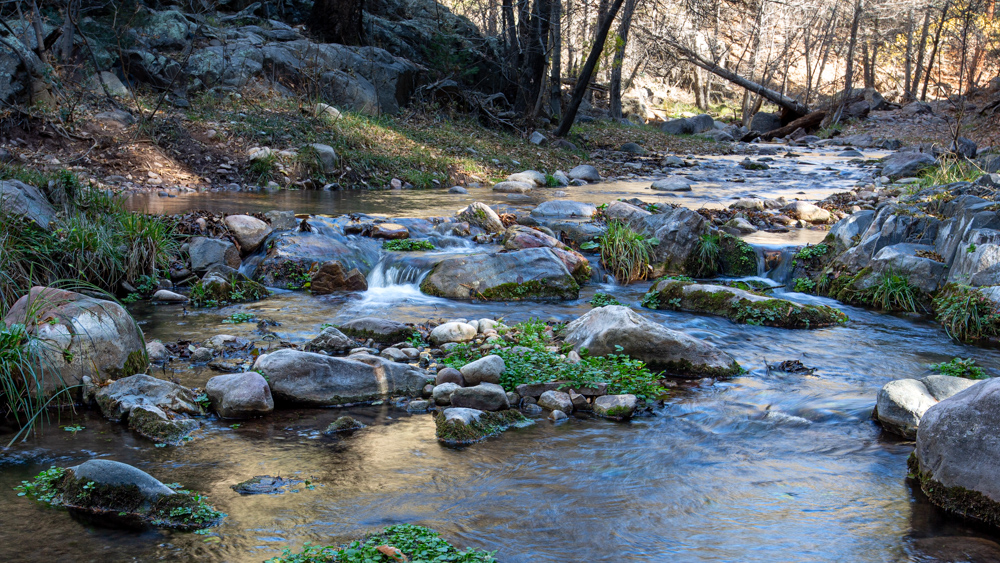
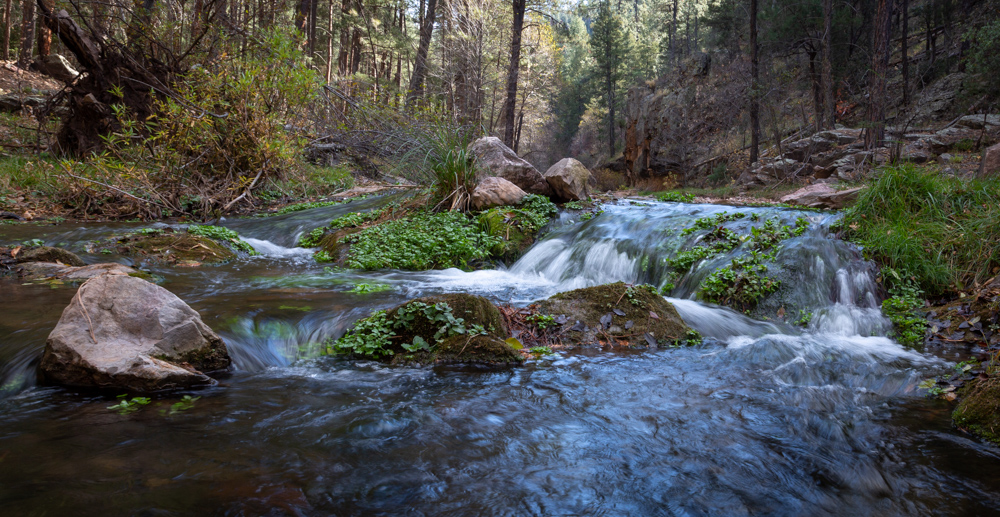
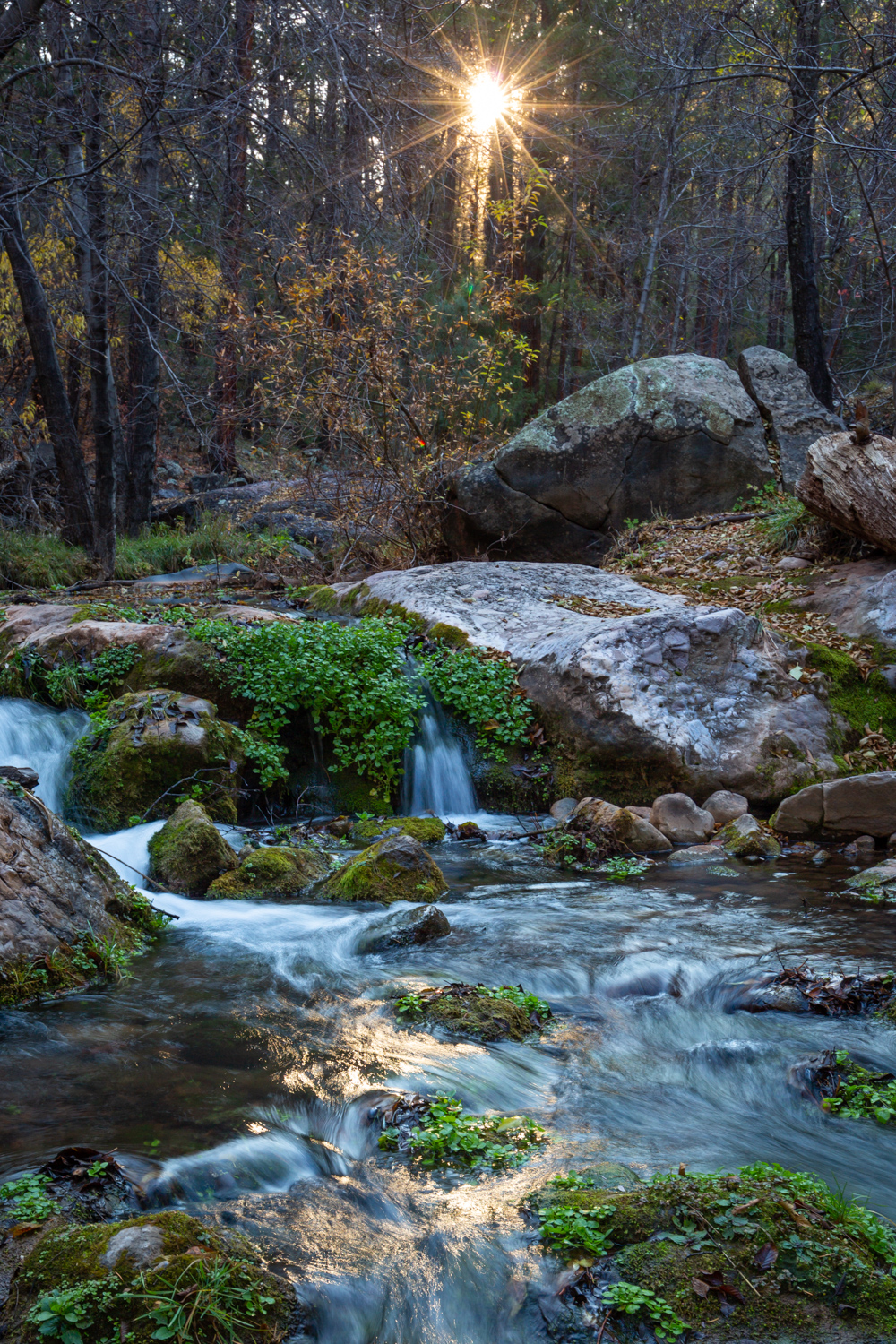
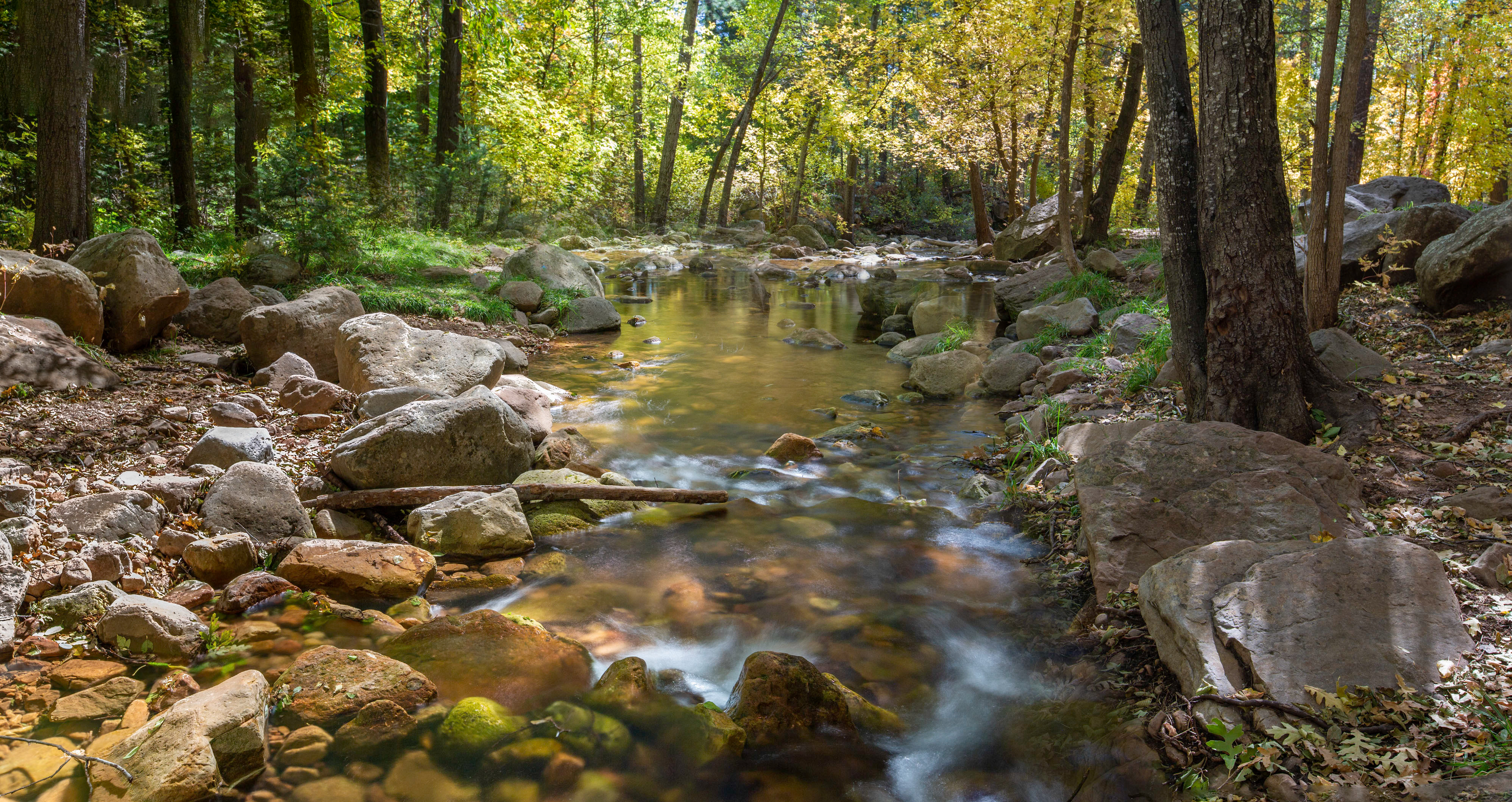
So it was, that we encountered this gorgeous stream, and spontaneously decided to spend the night, even though we had not planned to.
The next morning, watching the sunrise over this stream, we were rewarded by gorgeous light basking along the shimmering water cascading over mossy rocks. Sometimes it pays to be spontaneous, and seize the moment.
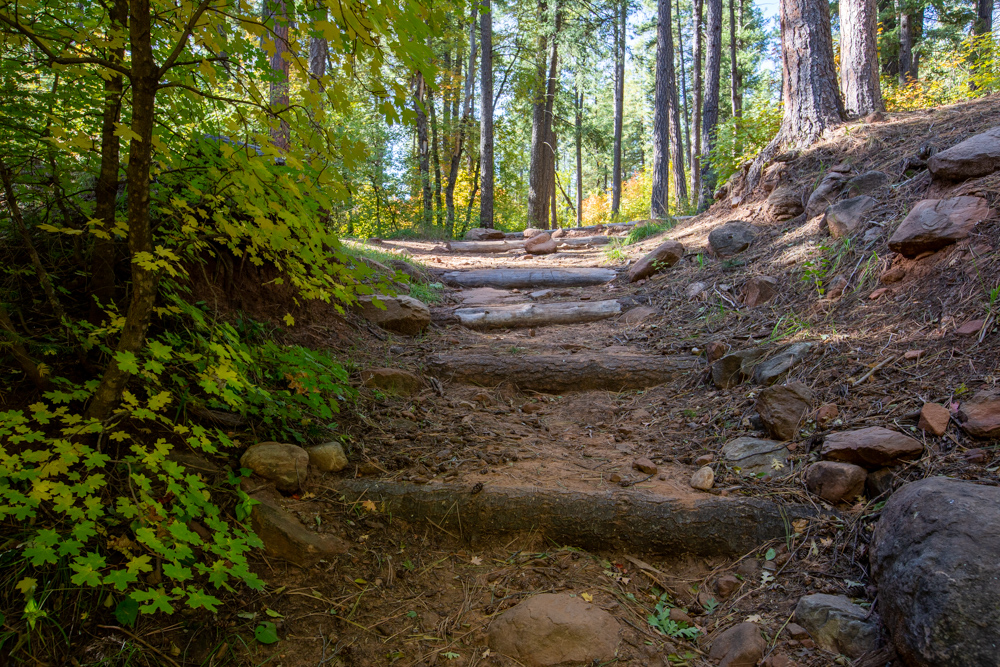
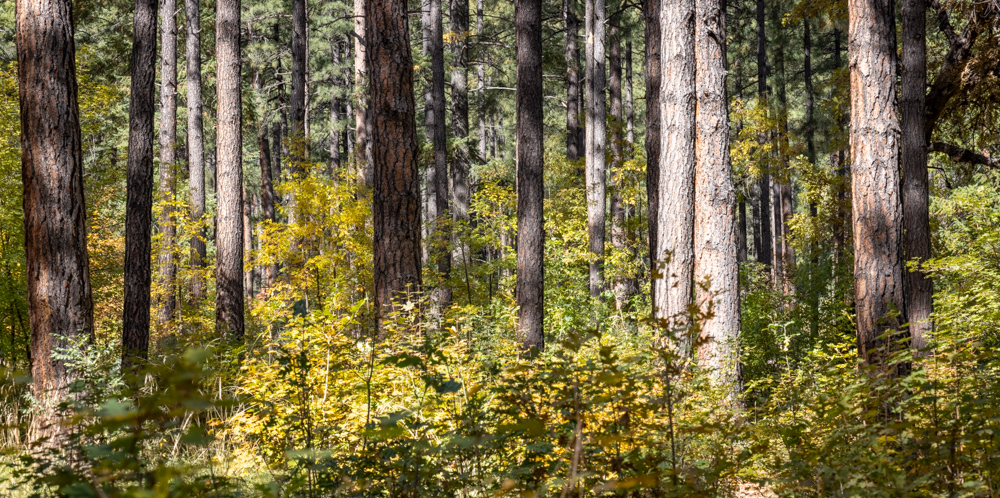
October always means FALL for us. We look forward to the fall colors and actively debate and explore different areas to enjoy nature’s beauty in full living color.
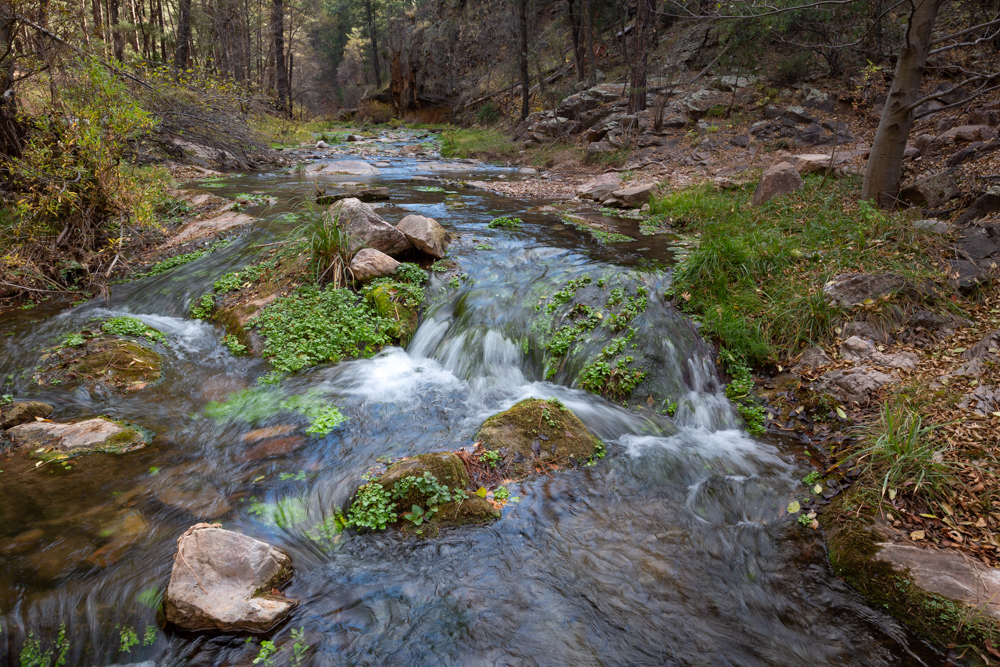
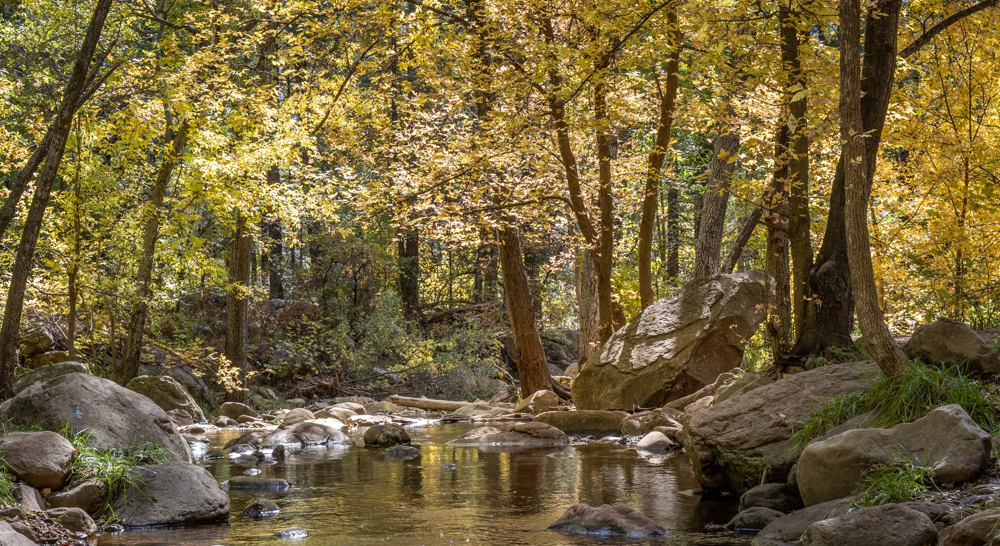
This year we found a new place to explore, Christopher Creek, and we were thrilled to find fall in it’s full range of greens, yellows, orange, and reds. It was stunning. Thanks for the tip Rosemary.
As if the changing of the leaves wasn’t enough we were thrilled and entertained by the cascading water along the creek with fleeting views of fall’s glory.
I am in awe of nature’s beauty and humbled by her harsh light and deep shadows and the many challenges of capturing her many moods. I guess I need to get out more and practice more. Oh, darn.
The Mogollon Rim is probably one of our favorite places. It is not far from where we live, and offers exceptional views and a myriad of roads to explore.
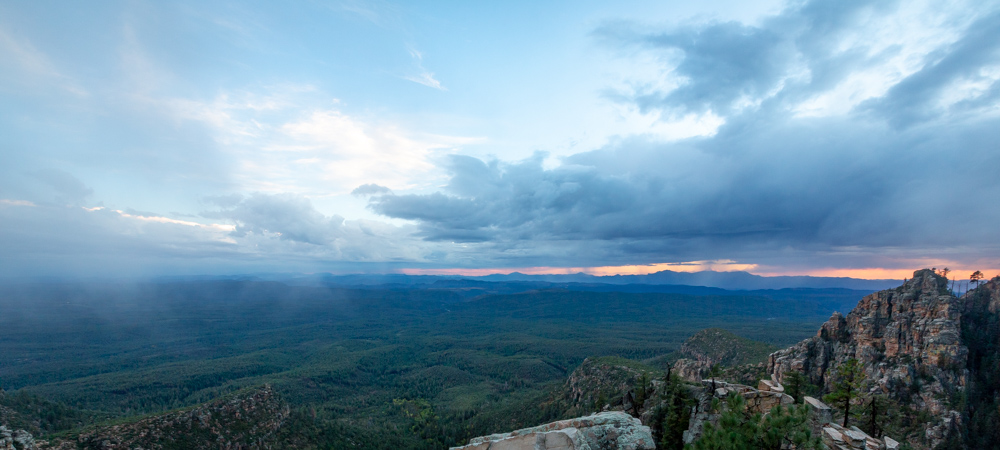
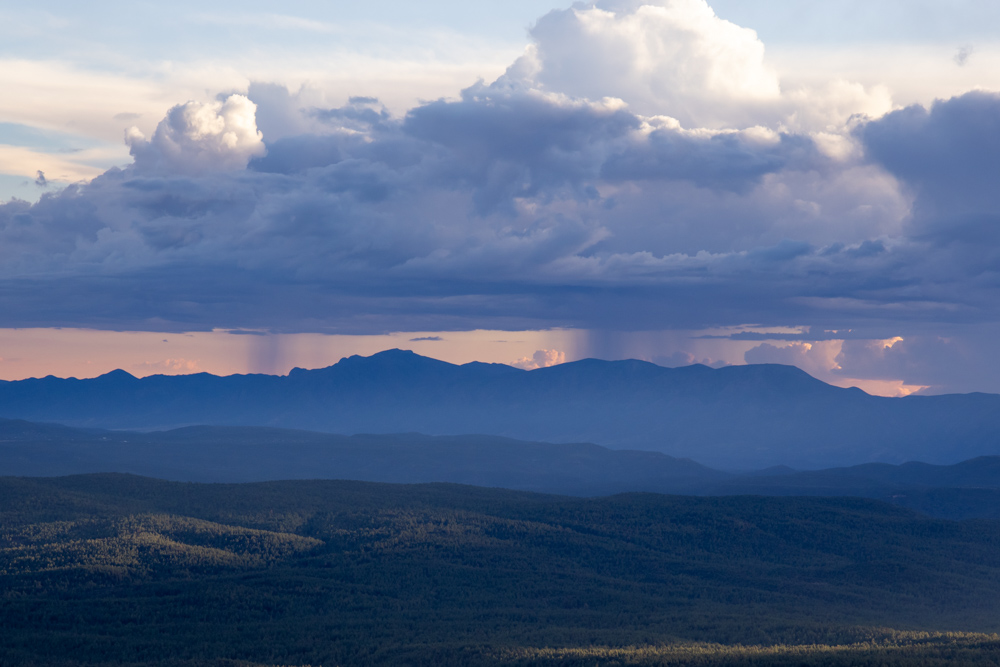
One of our favorite vantage points we have dubbed, ‘Tree Saddle’. It was never more spectacular than after a heavy dousing of frigid rain. We stuck it out and were rewarded with amazing skies.
Funny, I feel I must caveat some of these photos… yes the sky was that red and magical, it was not ‘photoshopped’. I was giddy with joy for this tremendous sky as it rolled in and turned bright red. As a boater, I was reminded of the old adage, ‘Red skies at night, sailor’s delight. Red sky in the morning, sailor’s warning.’
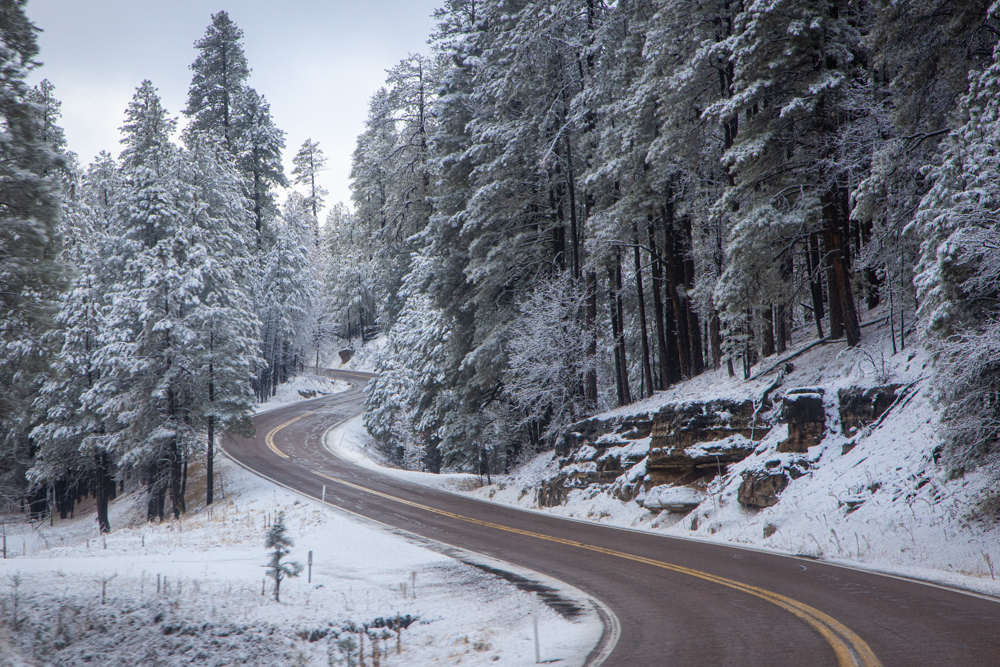
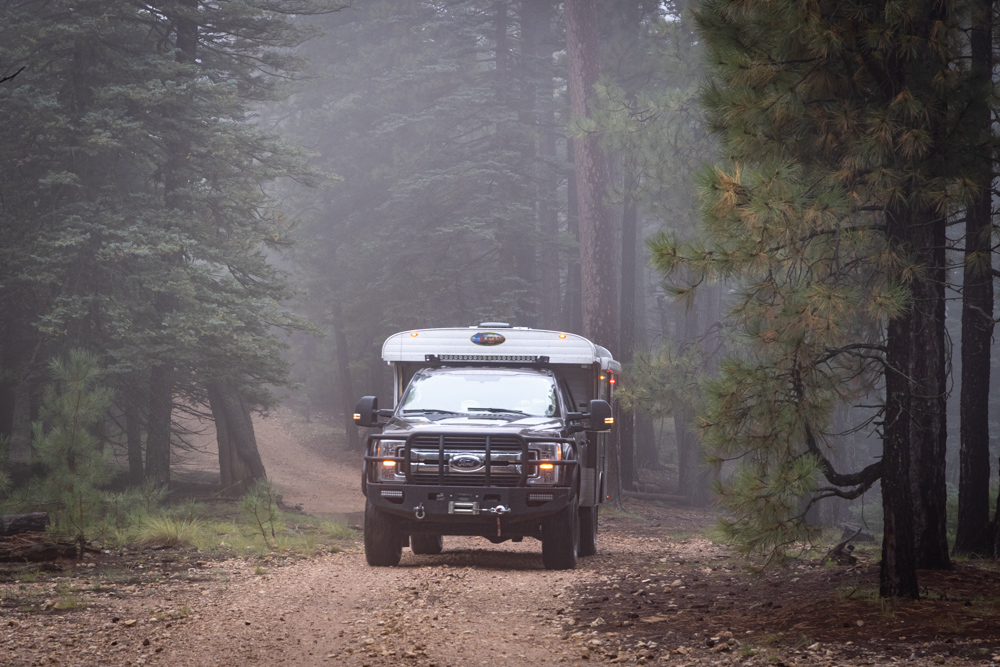
While the views along the rim itself are stunning, the forest roads along the rim are equally beautiful.
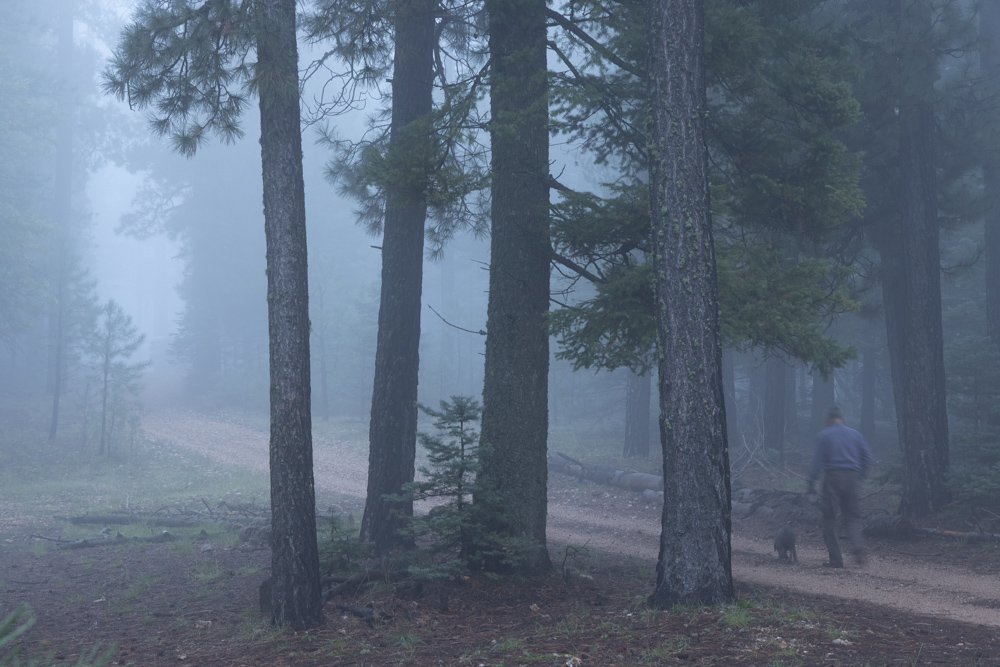
When the fog rolled in the following morning, we wandered the forest roads capturing eerie fog pix.
I was completely soaked and freezing as clouds went from great photos to completely enveloping me as I got doused trying to get one more pic. While weather can be cold and uncomfortable, it does make more intriguing photos. It was absolutely worth it, and euphoric to be in the presence of such amazing views.
Rainbow Trail is a great hiking / biking trail outside of the National Park Boundaries with great overlooks and dispersed camping.
There are 5 overlooks as part of the Rainbow Trail: Timp, North Timp, Locust, Fence, and Parissawampitts (say that 3x fast).
There are also 2 nice overlooks just inside of the National Park Boundary: Point Sublime and Swamp Point. Both have nice views and limited dispersed camping.
They are a bit of a drive to get to. But as they say, anything worth doing is worth doing well, and sometimes that means a drive.
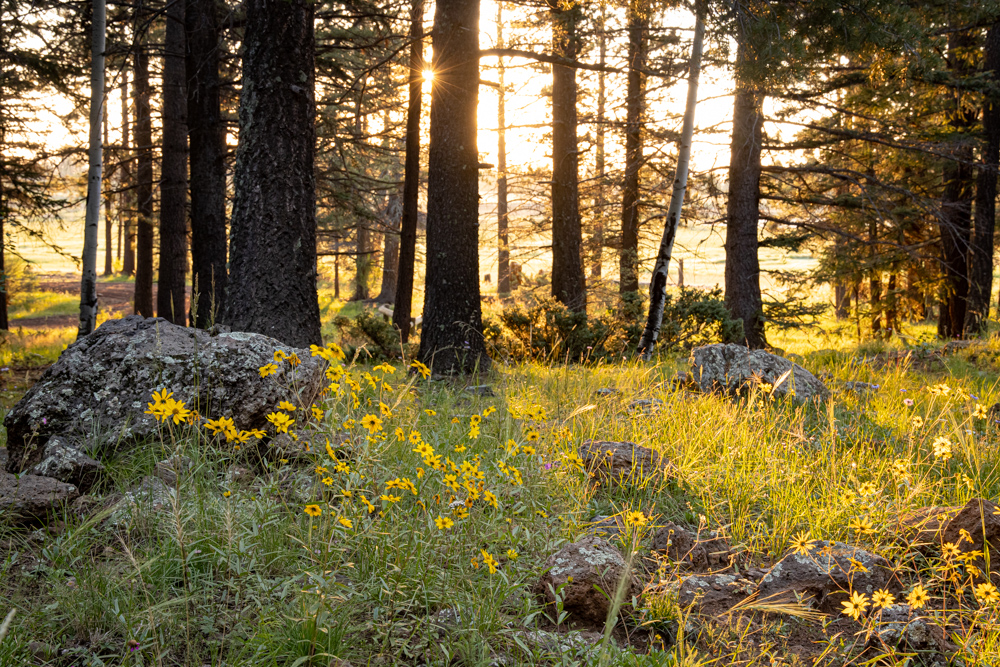
Sun rises over Carnero Lake as witnessed by patch of daisies.
It’s amazing how many times you can go to a place, and how it changes from time to time.
We went back to Carnero Lake hoping to catch osprey fishing, but there were none to be had. Considering the amount of rain we had, we were amazed to see how low the lake actually was. It was barely photogenic. Changing our view looking through the forest toward the lake at sunrise, yielded an entirely new view.
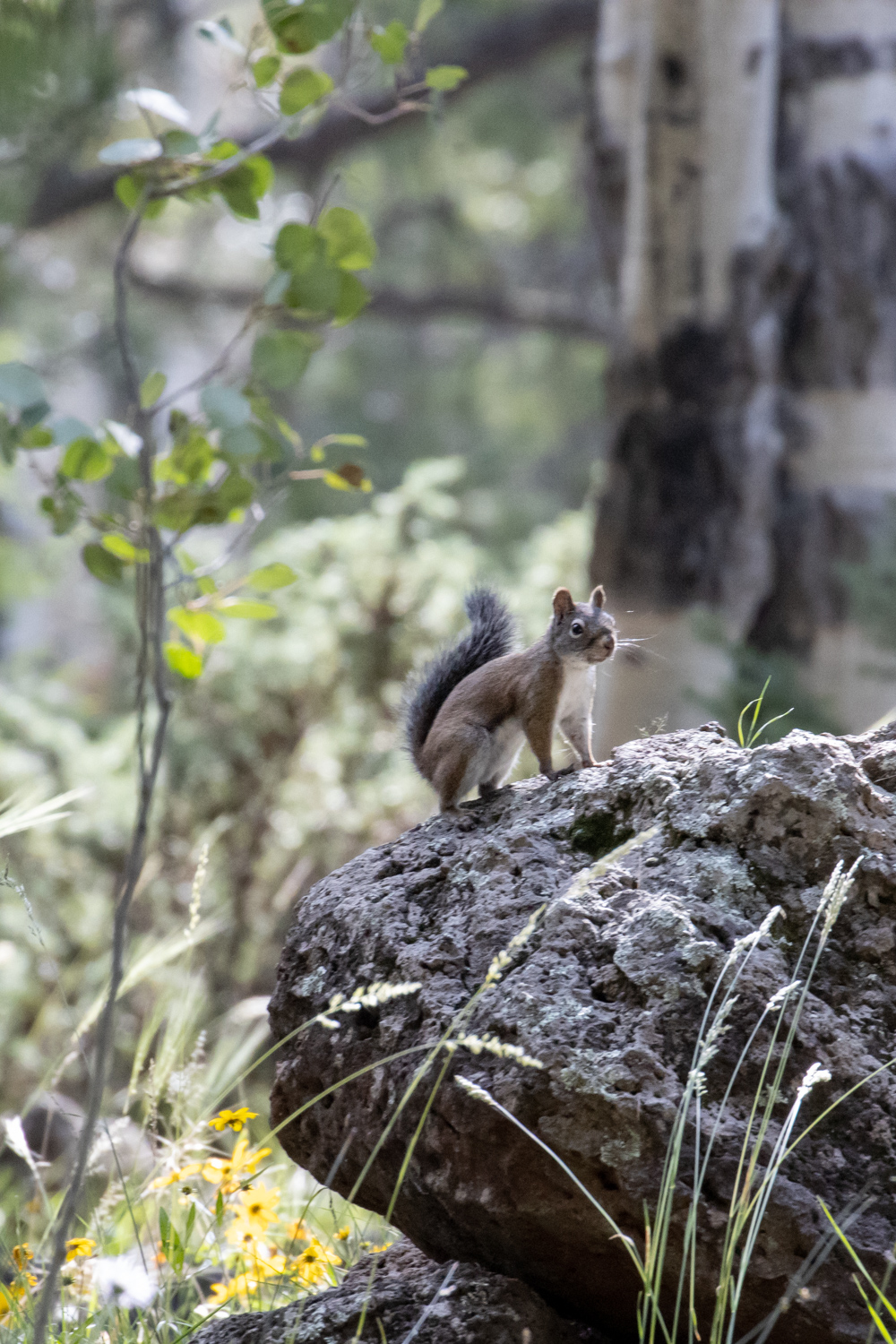
Juvenile robin hangs out in a wooded forest.Squirrel checks out next pine tree to hunt
All we saw (in terms of animals) was a juvenile robin and a squirrel collecting pinecones for the winter.
It’s just a reminder to turn around 360 degrees to take in your surroundings, and actually SEE what different vantage points can present themselves if you take the time to take it in.
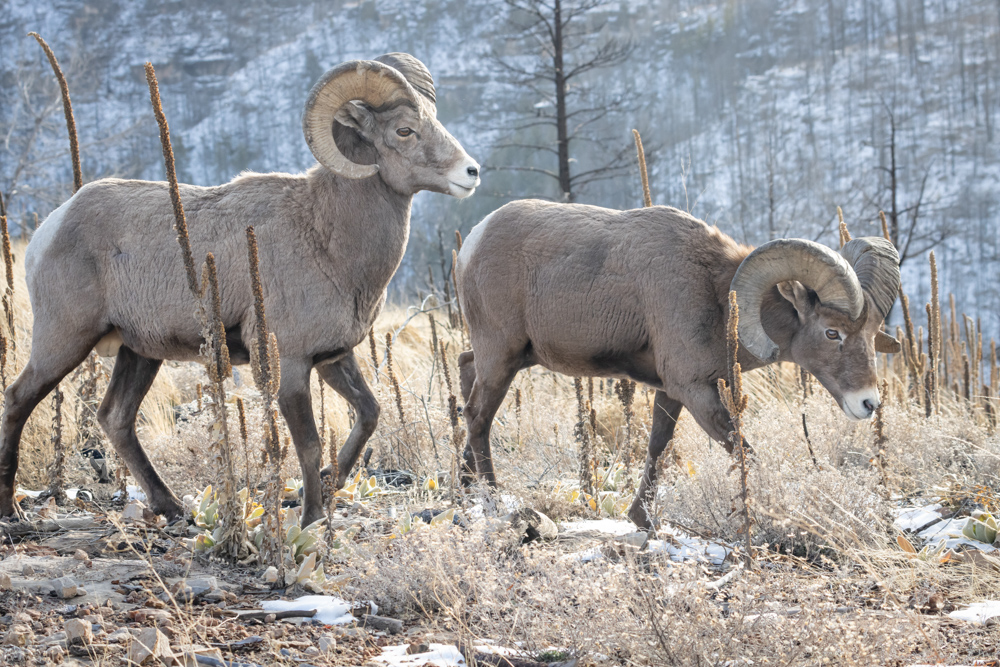
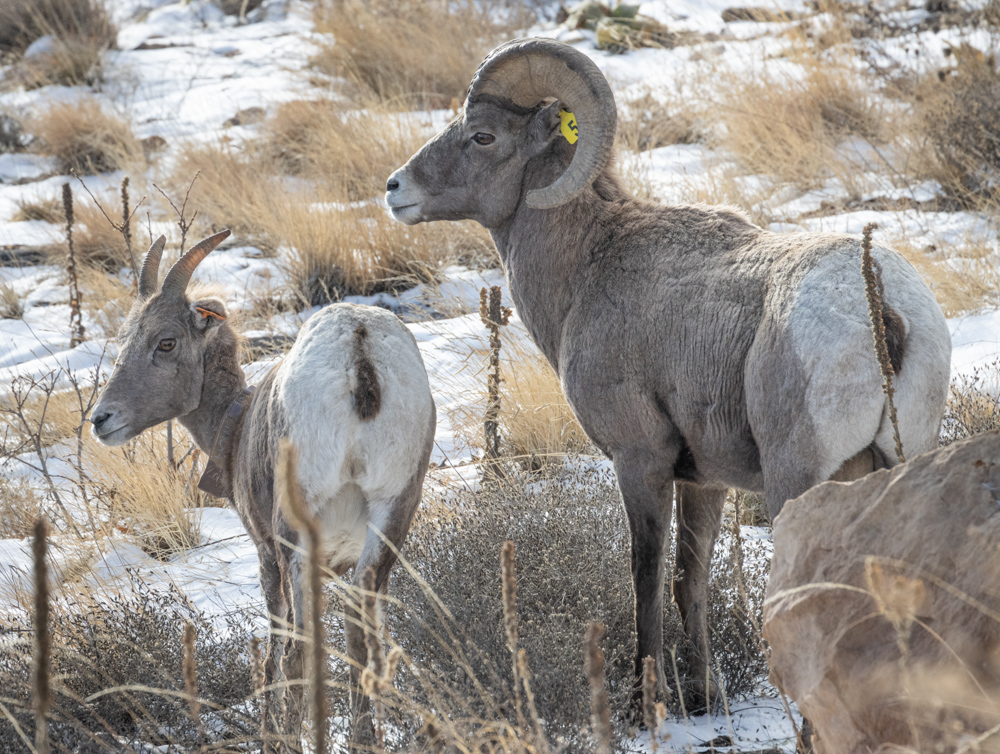
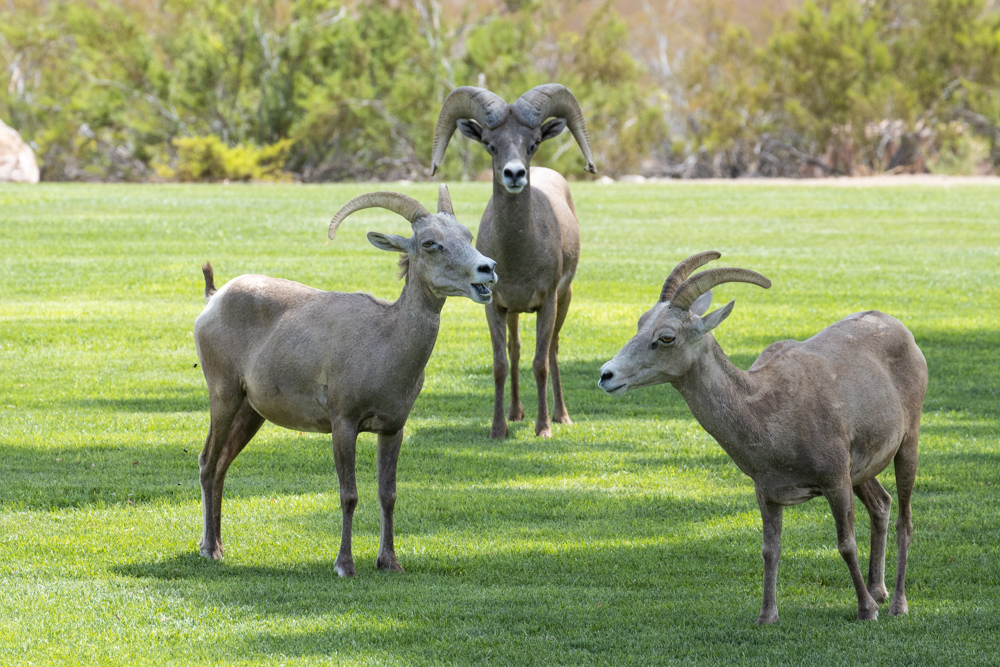
I do enjoy it when we see animals. We encountered these big horn sheep enjoying a grass field lying in the shade and munching away.
It was almost as if they were talking to one another, laughing and telling stories, while others just relaxed and enjoyed the beautiful afternoon.
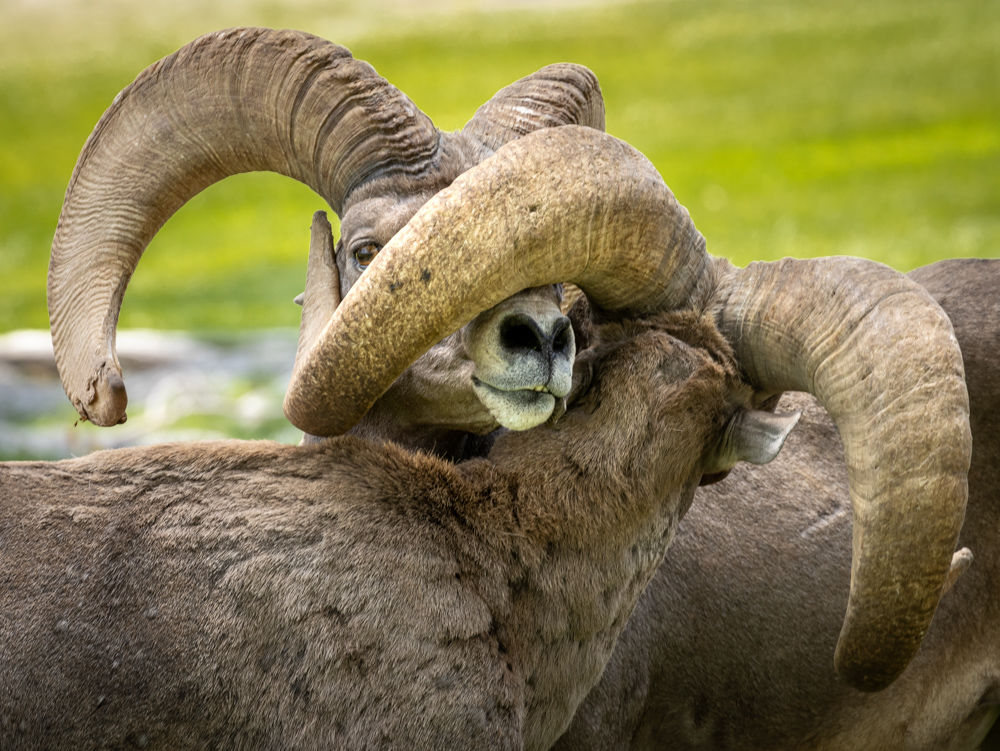
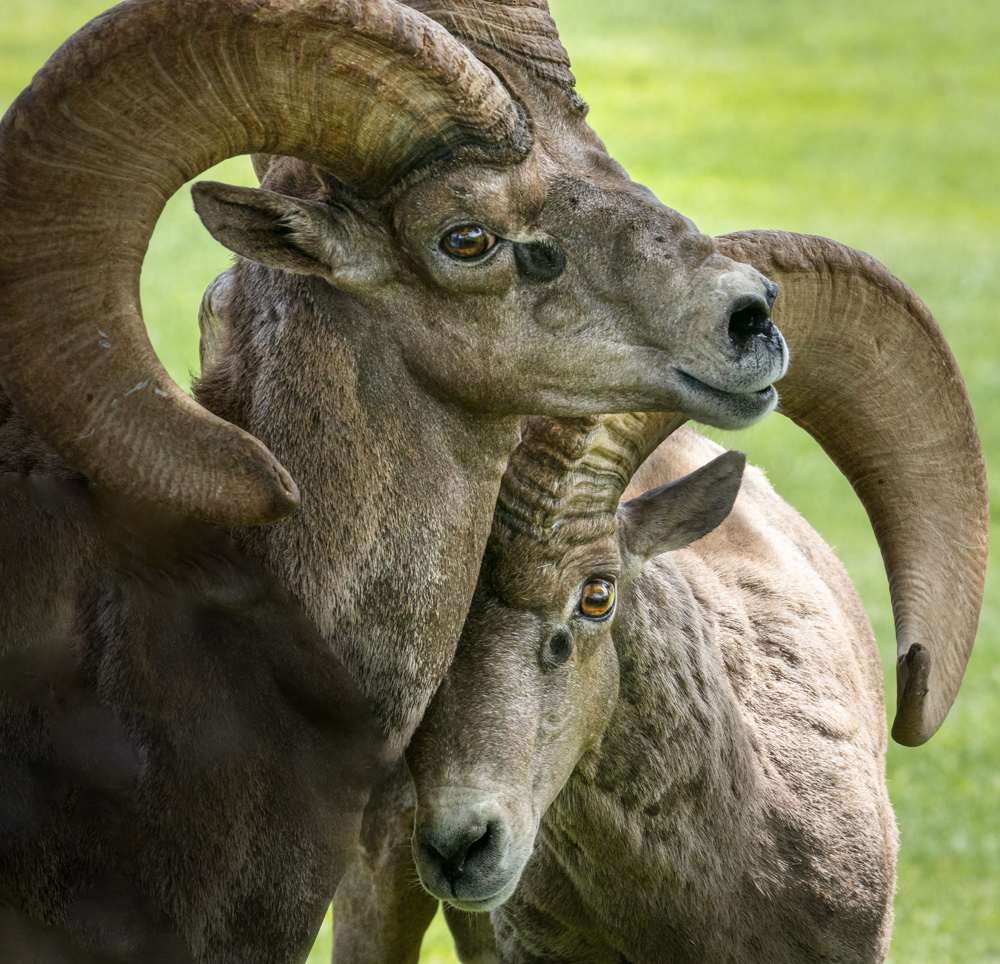
Most of the ones in this herd were males, or rams, with only a few female ewes. The boys demonstrated their dominance by locking horns, but seemed more affectionate than fierce.
While I tried to keep my distance, they didn’t seem to mind that I was there and got closer to me than even I was comfortable. I took every advantage of their presence.































 kritterspix