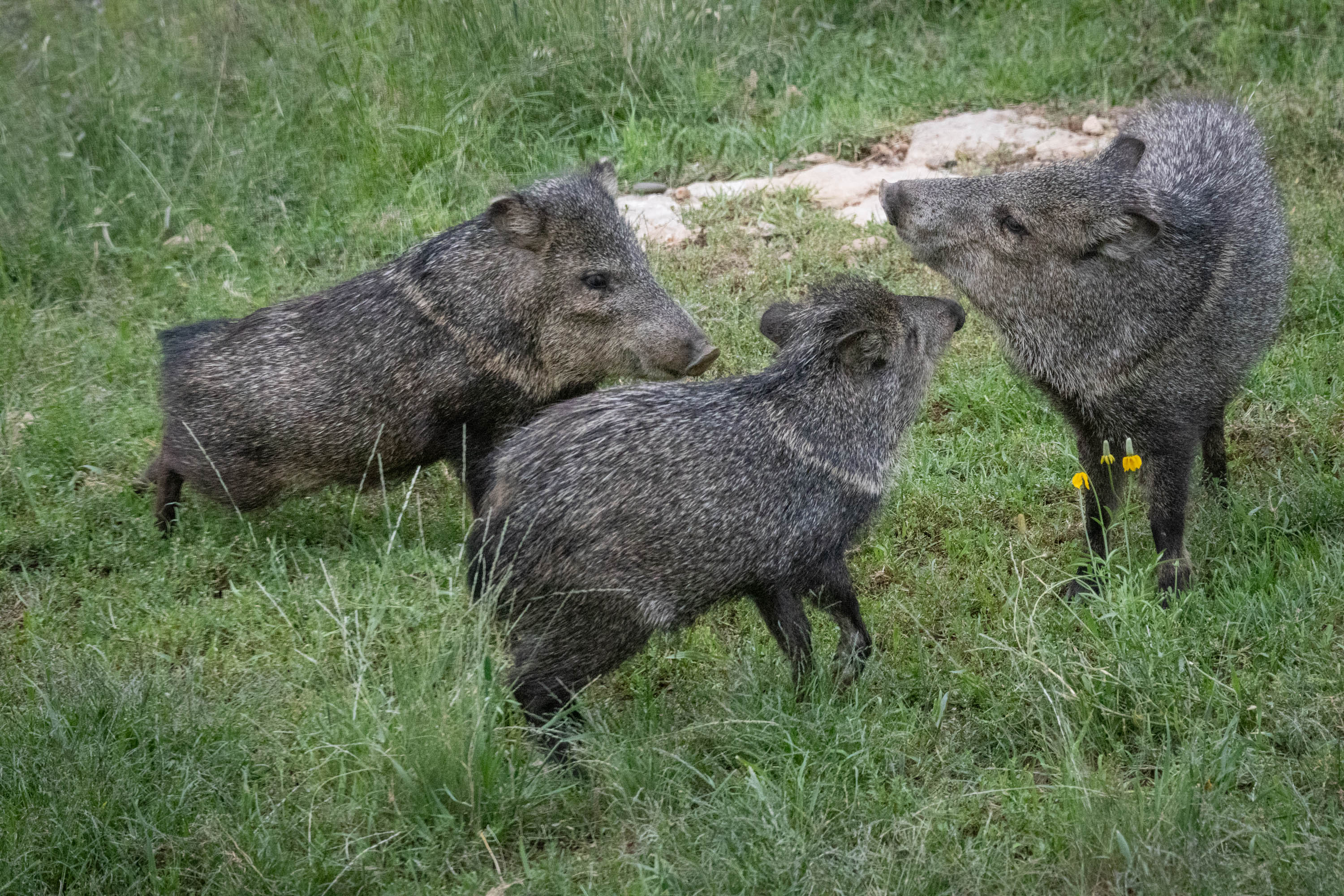
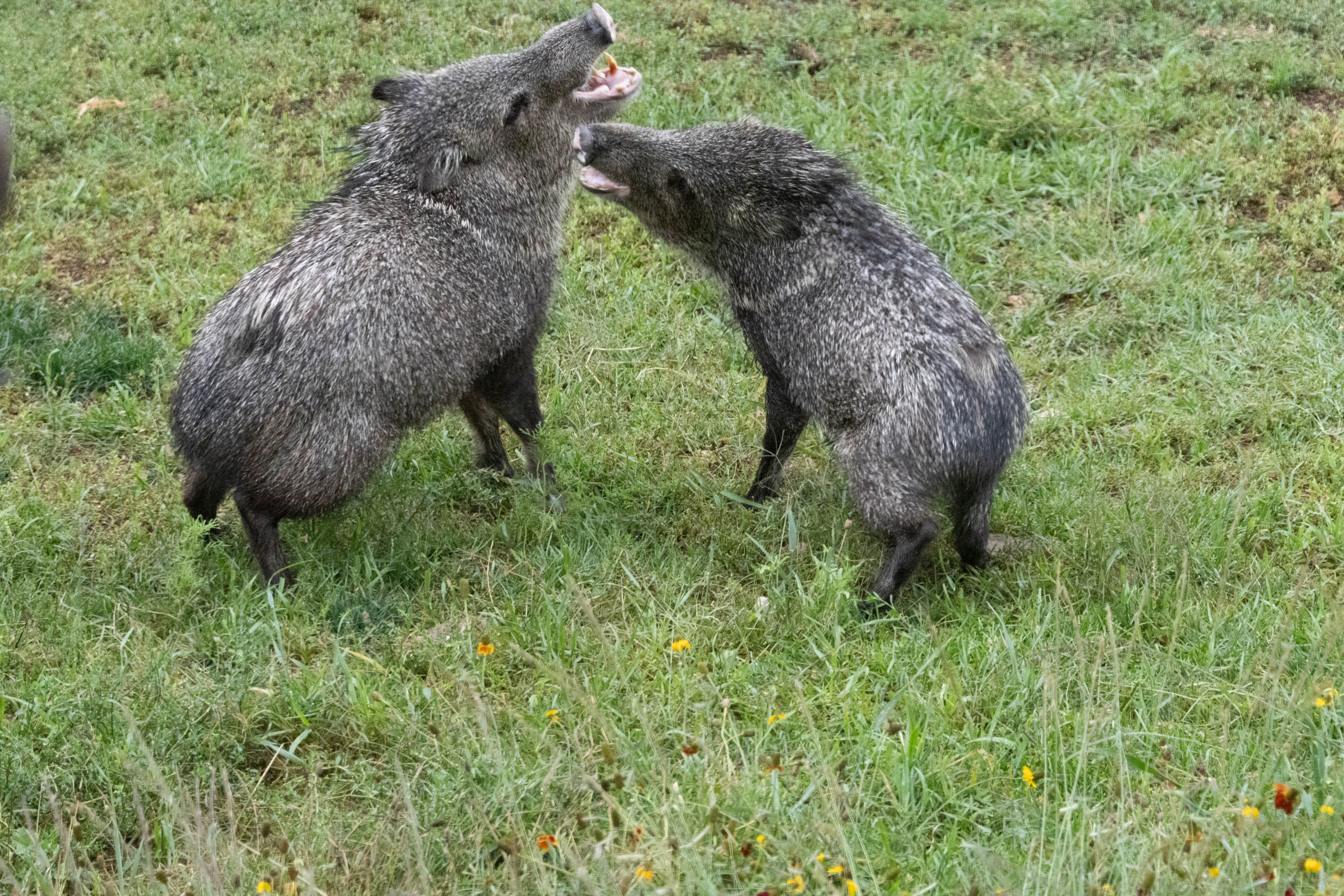
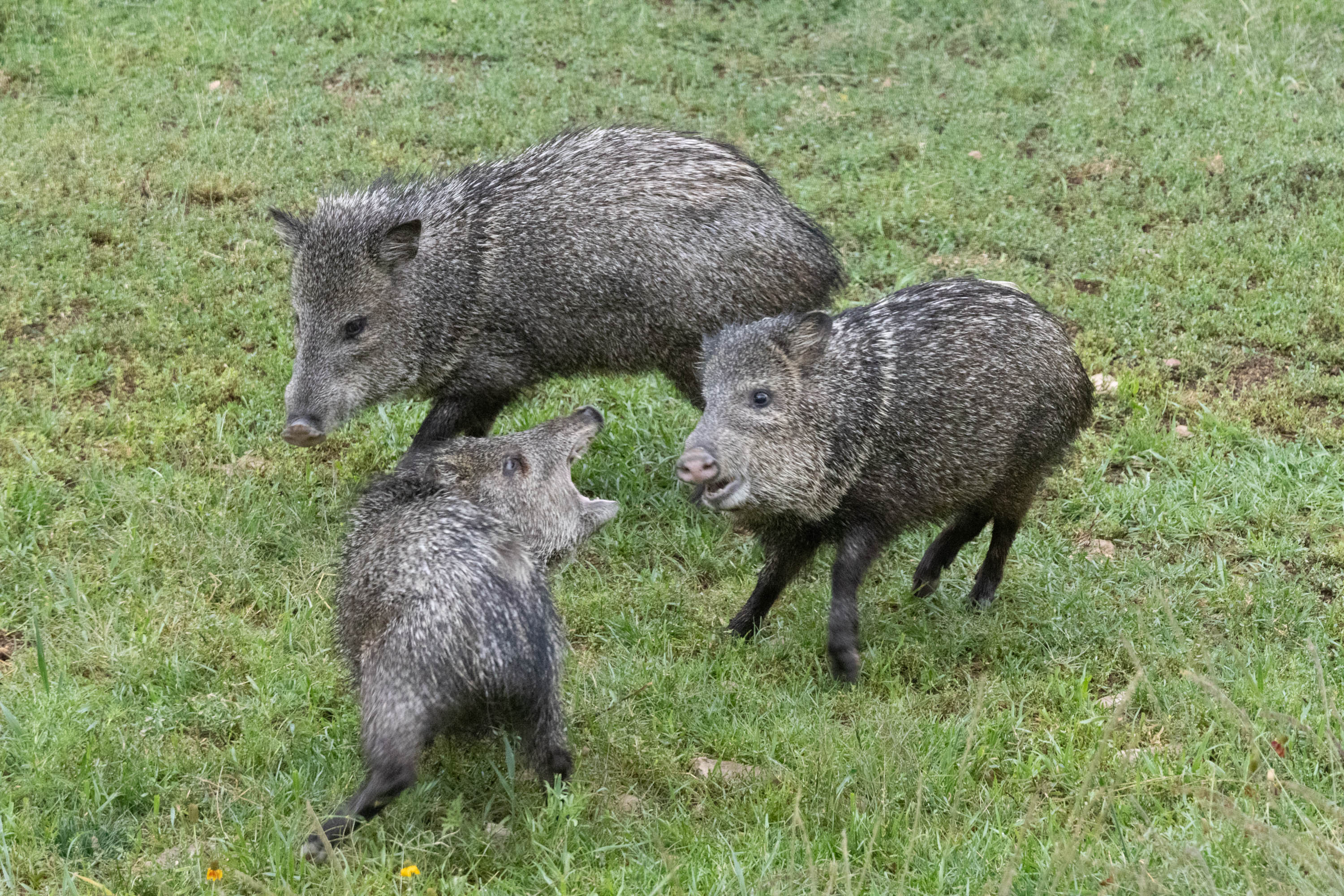
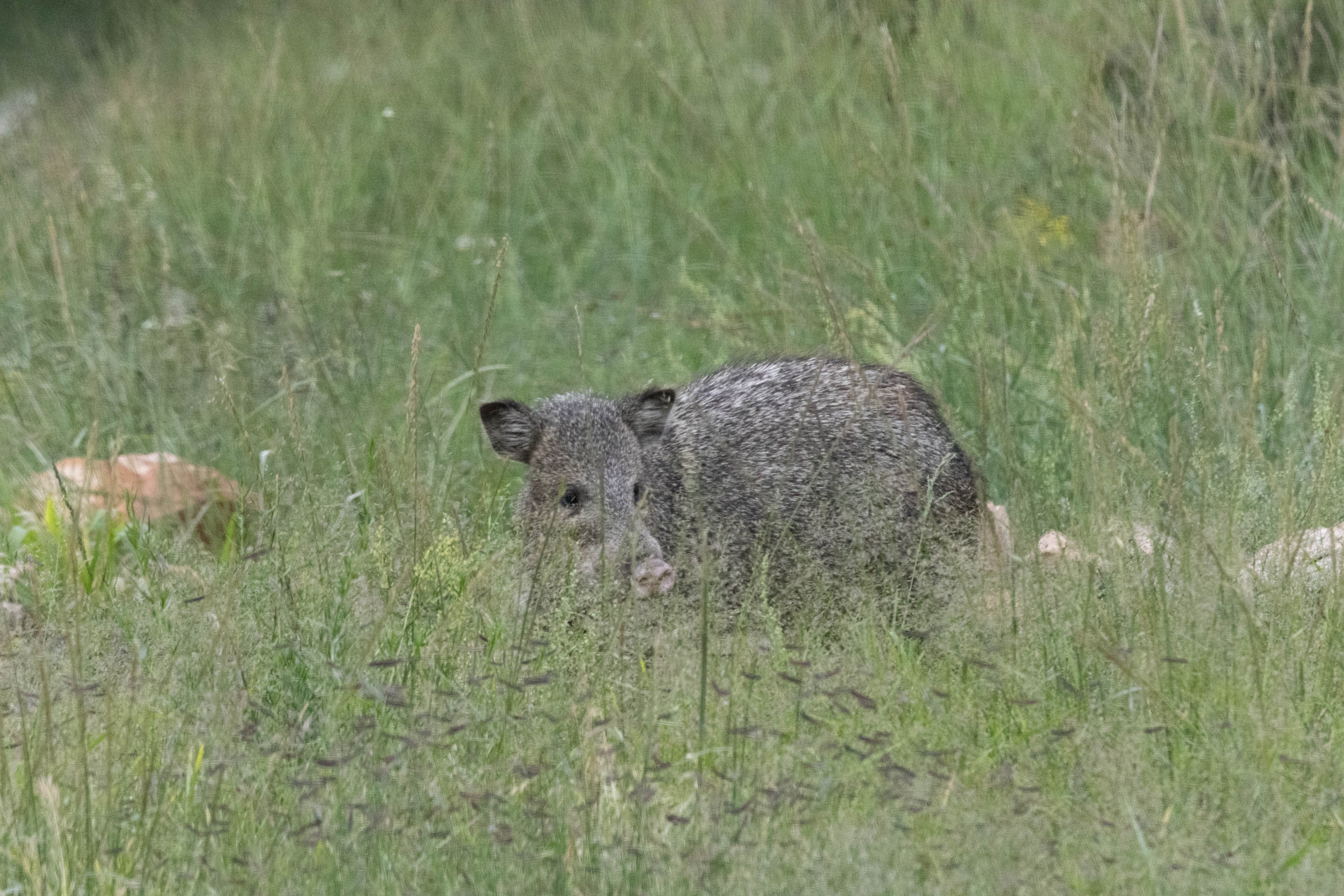
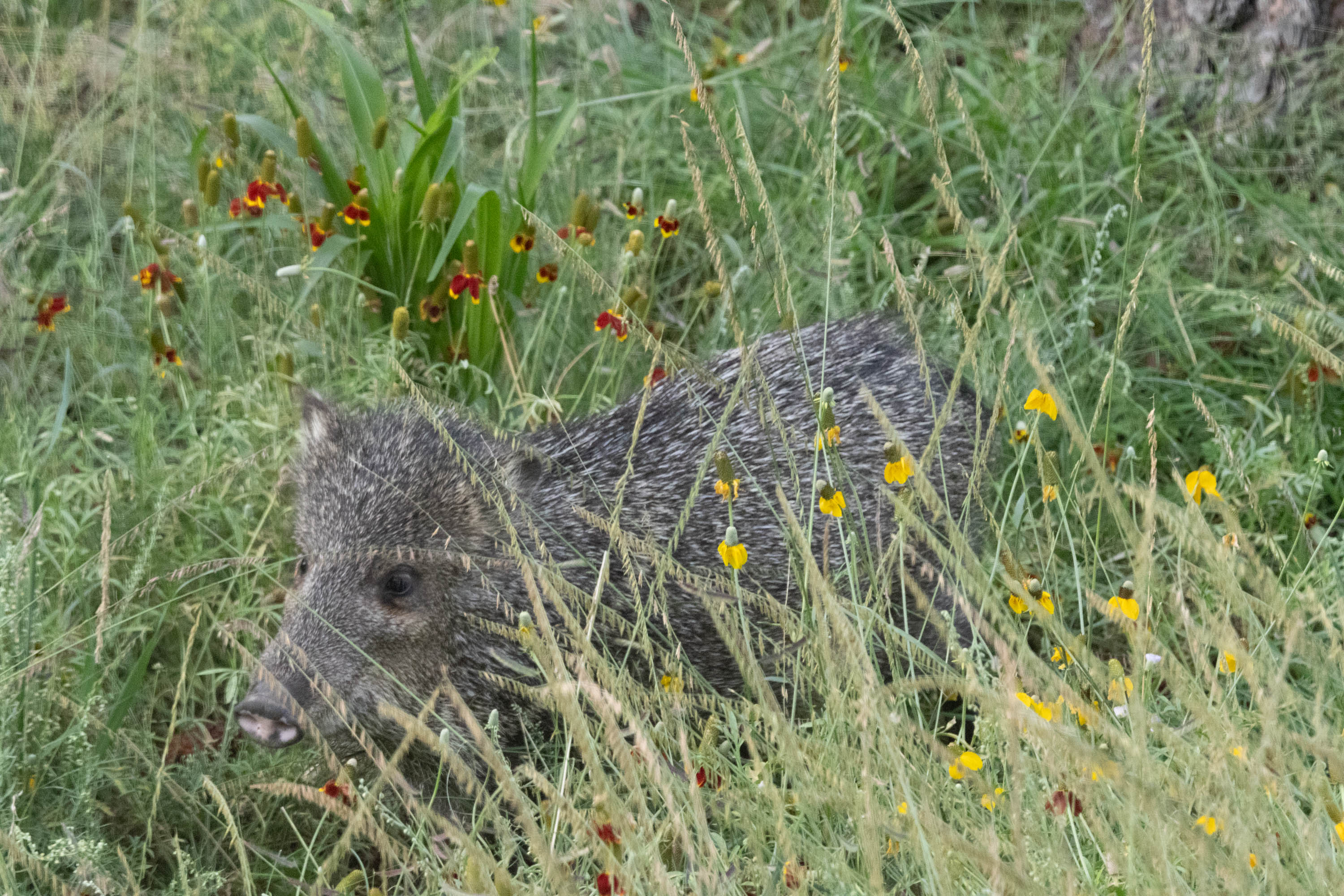
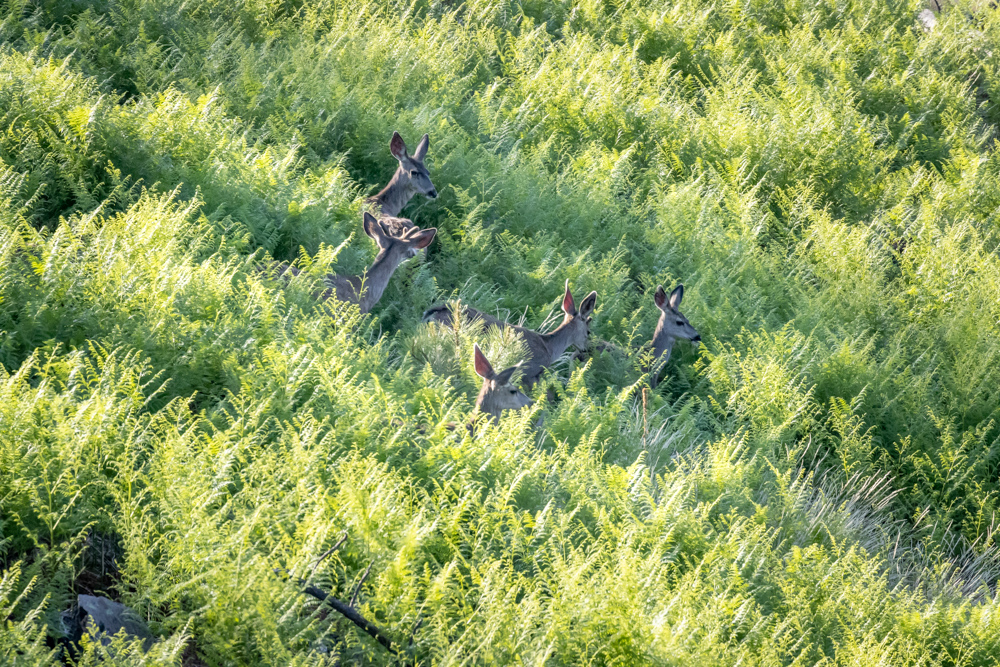
It sounds like a spicy green you put in your salad. But in reality collared peccary is better known as javelina. It’s as foreign to these parts as spicy greens. Down South, you know, Phoenix / Tucson area is a more suitable home for the herbivore desert swine that subsists on desert fauna like mesquite beans, prickly pear, and desert greens.
The collared peccary is so called for their light colored collar around their neckline.
These small ‘pigs’ are relatively small in stature – only 2′ tall by 3-4′ long, generally 35 – 55 lbs. We encountered a small family of three – presumably the mother, father, and baby. They were very affectionate with one another and rubbed their scent on their skin to identify with one another.
The javelina are myopic and have poor eye sight, but rely heavily on their sense of smell and hearing. They spar with one another in a playful manner, as if to teach skills for the wild with predators such as coyotes, bobcat, and mountain lion lurking.
They were quick to vanish at the sound of danger, but slow to notice me watching with my camera.
They were more interested in the patch of lush green grass they enjoyed in an otherwise field of fallen dry pine needles in the thick forest they found themselves in.
Despite their unusual sighting, we were happy to see them and capture some fun shots of the peculiar beasts.
Pursuing my passion of photography has been difficult for me lately, but one must use what they can to ‘make it happen’.
As a result of a recent accident, I have a bum hand, but have found that with my camera on my tripod, I can set the camera up so that I can release the shutter from the camera’s rear LCD screen.
The simple tap of the rear screen focuses, and takes the photo in one fell swoop, making it not only possible, but easy to snap photos.
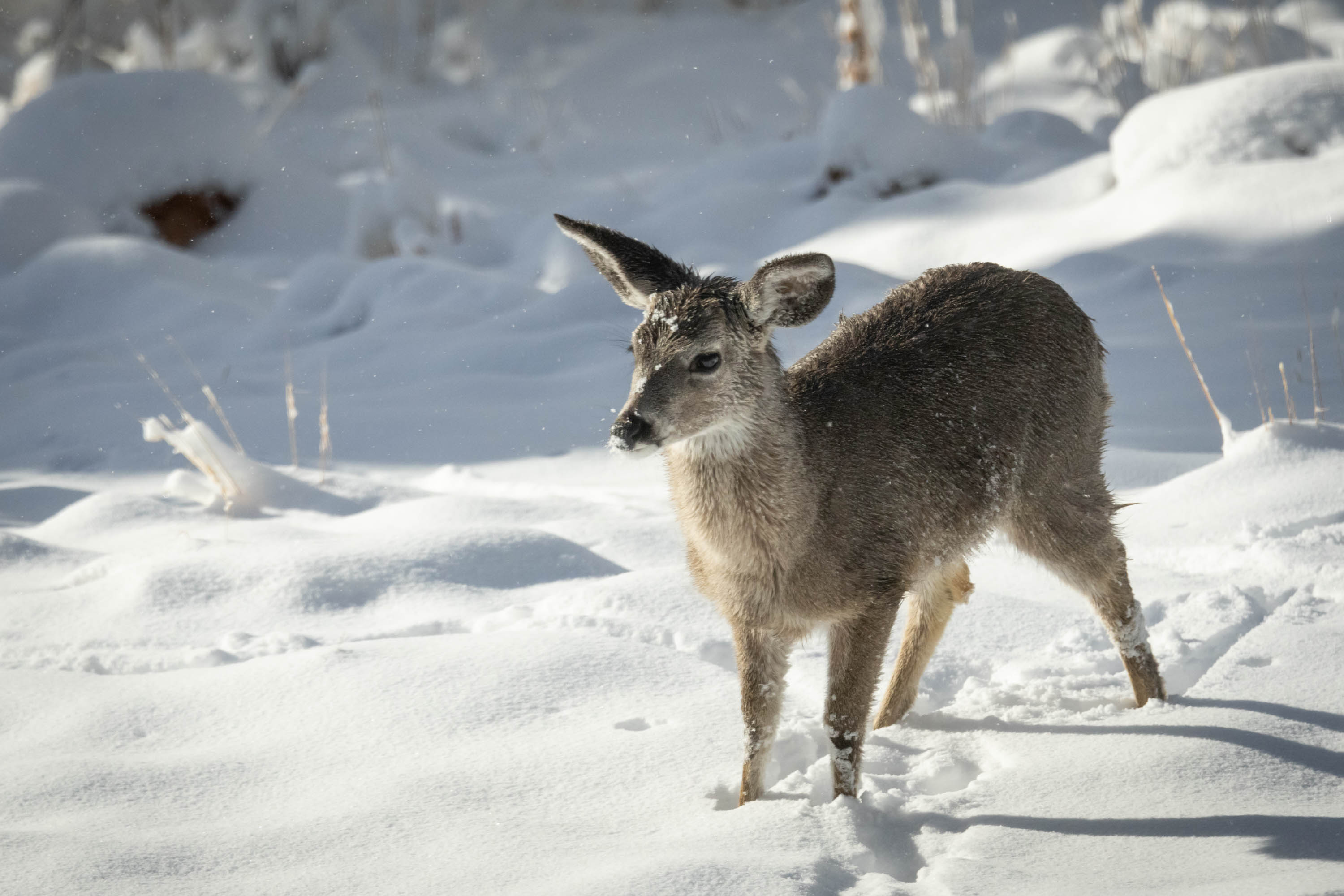
It seemed criminal to not take pix during our recent 2′ of snow. Where there is a will there’s a way.
I try to look back at my photos and my trips from the last year to improve on the next. While it may be a good idea, I am not always successful in taking the initiative to do so. They say the best photographs tell a story, or at least come with a story. So, in that vein, I have tried to seek out my best animal stories.
In no particular order are a few of my favorites.
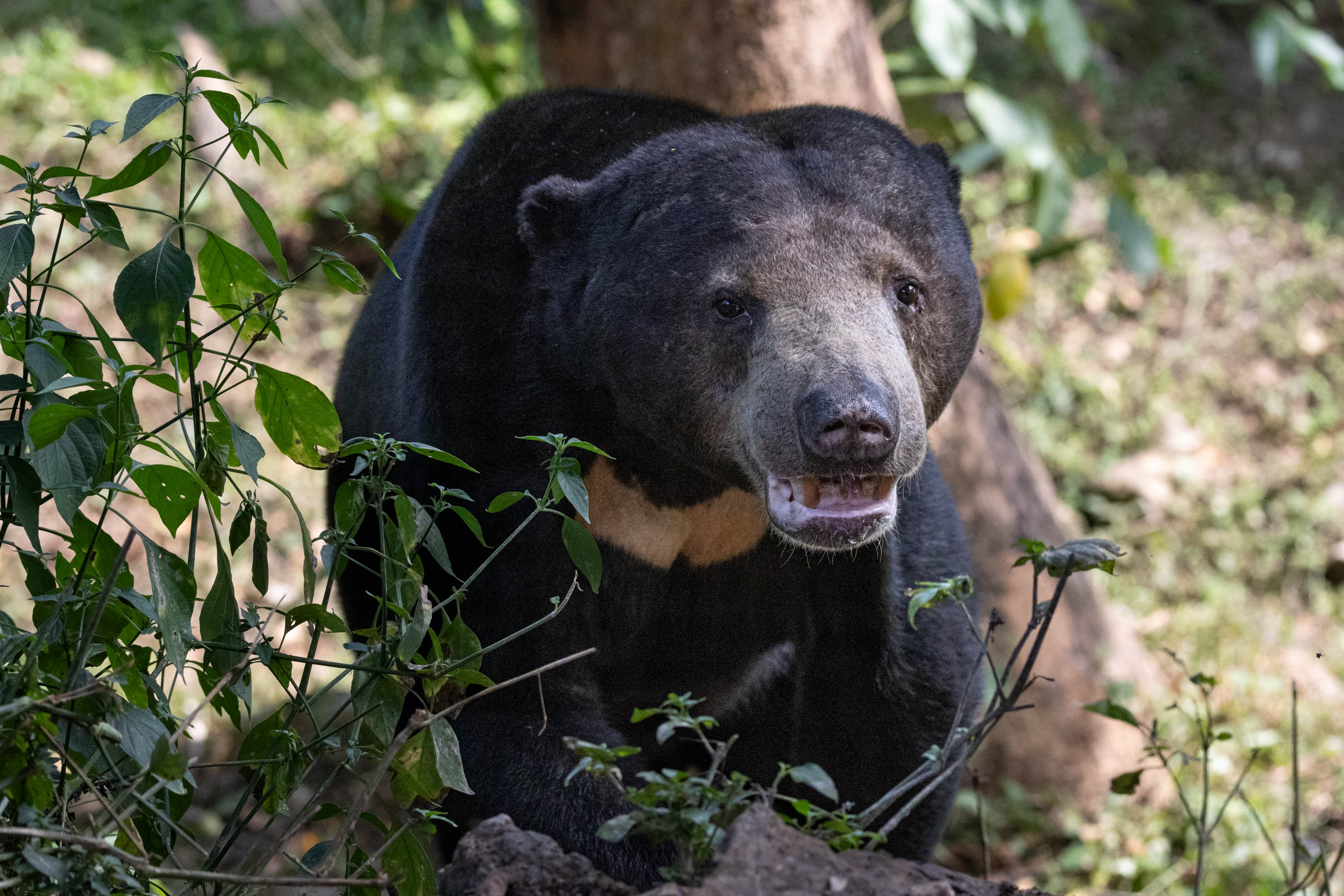
In one of my most exhilarating animal encounters and experiences I have every had, was this close encounter with an Asian sun bear in Thailand. I was enjoying this lovely Thai lunch when someone yelled “BEAR”. Of course my first instinct was to grab my camera and run toward it. When it came in closer to check out the tasty smelling food, the proprietress grabbed the chicken off the charcoal hibachi grill, and I heard in the background, ‘back away… s l o w l y,” and they weren’t talking to the bear.
While in Thailand I did go to an elephant sanctuary. But it left me wanting more than seeing elephants held in captivity being fed by hoards of tourists. I wanted to see elephants in the wild. So when I saw my first wild elephant walking out of the jungle toward me, I was beyond thrilled. As it turned out, I was very fortunate and saw a number of wild elephants on multiple occasions.
While we are in Thailand, let’s talk about dusky langur. Until we went to Thailand we had never heard of this endangered monkey. We got into a troop of these unusual primates and had a terrific time watching them jump around feeding off this tree. It was fantastic to witness.
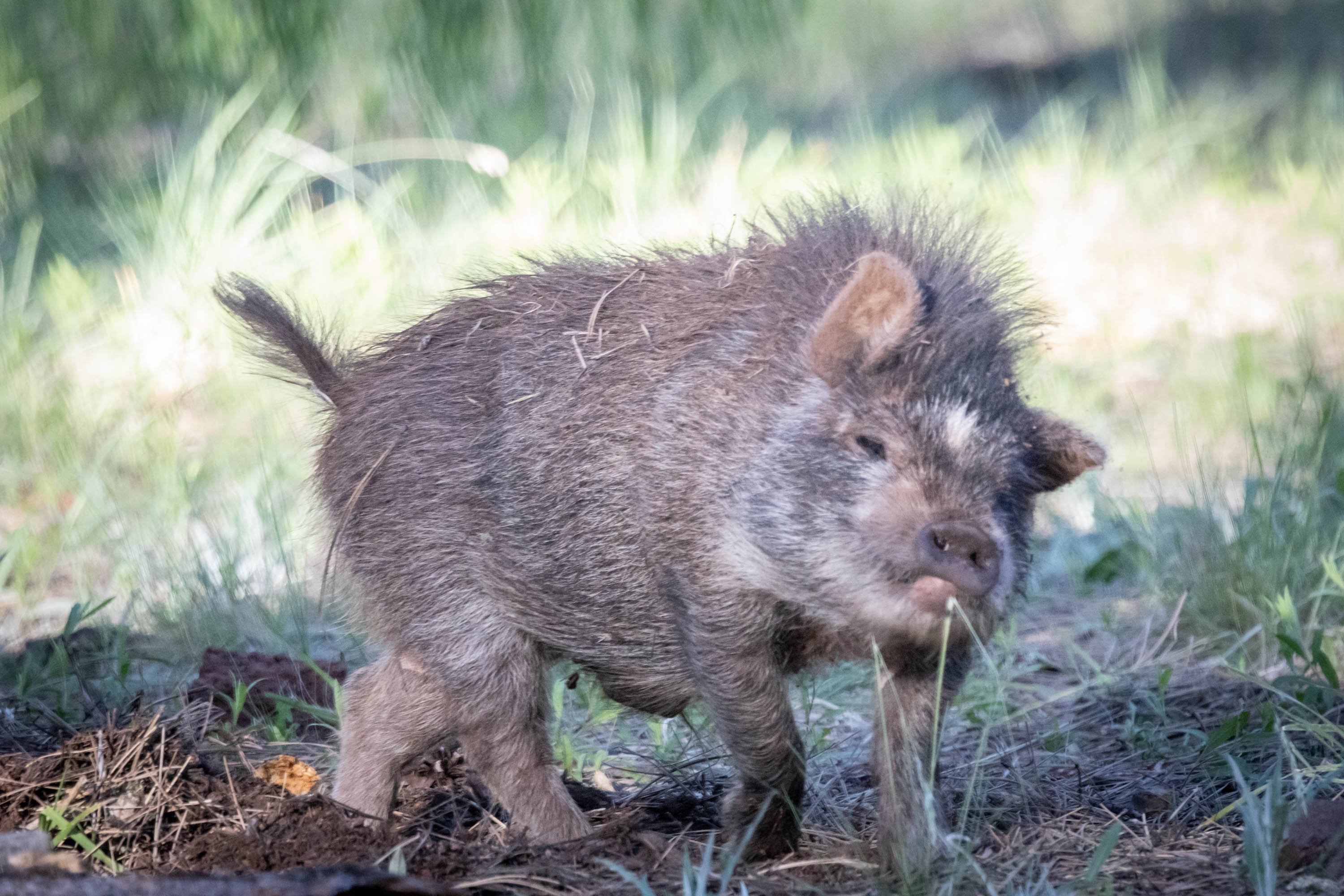
I was thrilled to find this little guy at Whitehorse Lake. This jovial little guy wandered very comfortably around the Lake, as I snuck behind trees and laid down on berms waiting for it to come in. I thought it was a baby javelina, but with some help of the AZ Game & Fish Dept, it was identified as a feral pig, who apparently loves strawberries (according to fellow campers).
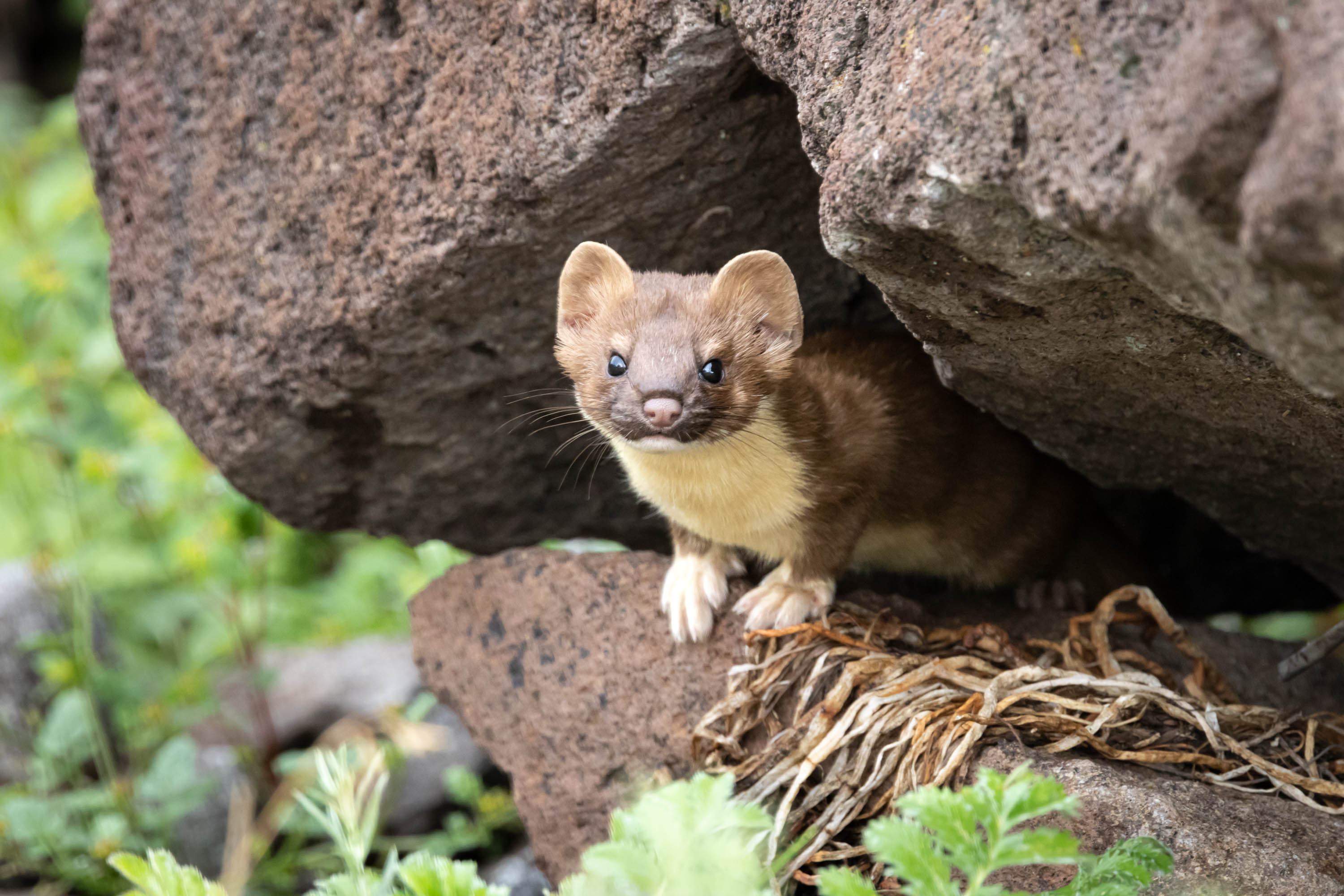
I’ve been fortunate to see a lot of animals in the wild. Of course some of the most common are elk and deer, with the occasional antelope, big horn sheep or coyote. It’s rare and very difficult to encounter (and photographically capture) the more uncommon animals, many, if not most, of which only come out at night. There are a number on my list I would love to see and never have, and maybe in time I can add them to my roaster. But, I must admit this long tailed weasel wasn’t even on my list. I had never even heard of it! He made an appearance while I was unwittingly taking landscape photos. This curious little guy kept poking his head out from behind a rock, then another rock, playing a little hide and seek as he tried to check me out. It was a fun ‘dance’ and he made it a fun challenge to capture his portrait.
I spent some time in my blind this year. There is something so special about animals coming in on you, while you go completely unnoticed. You can watch the animals interacting in their own environment, and if you are fortunate enough, with one another. It is peaceful, relaxing, and time consuming, but an amazing experience with nature. I was lucky enough to capture a white tail mom and baby deer, and a red fox.
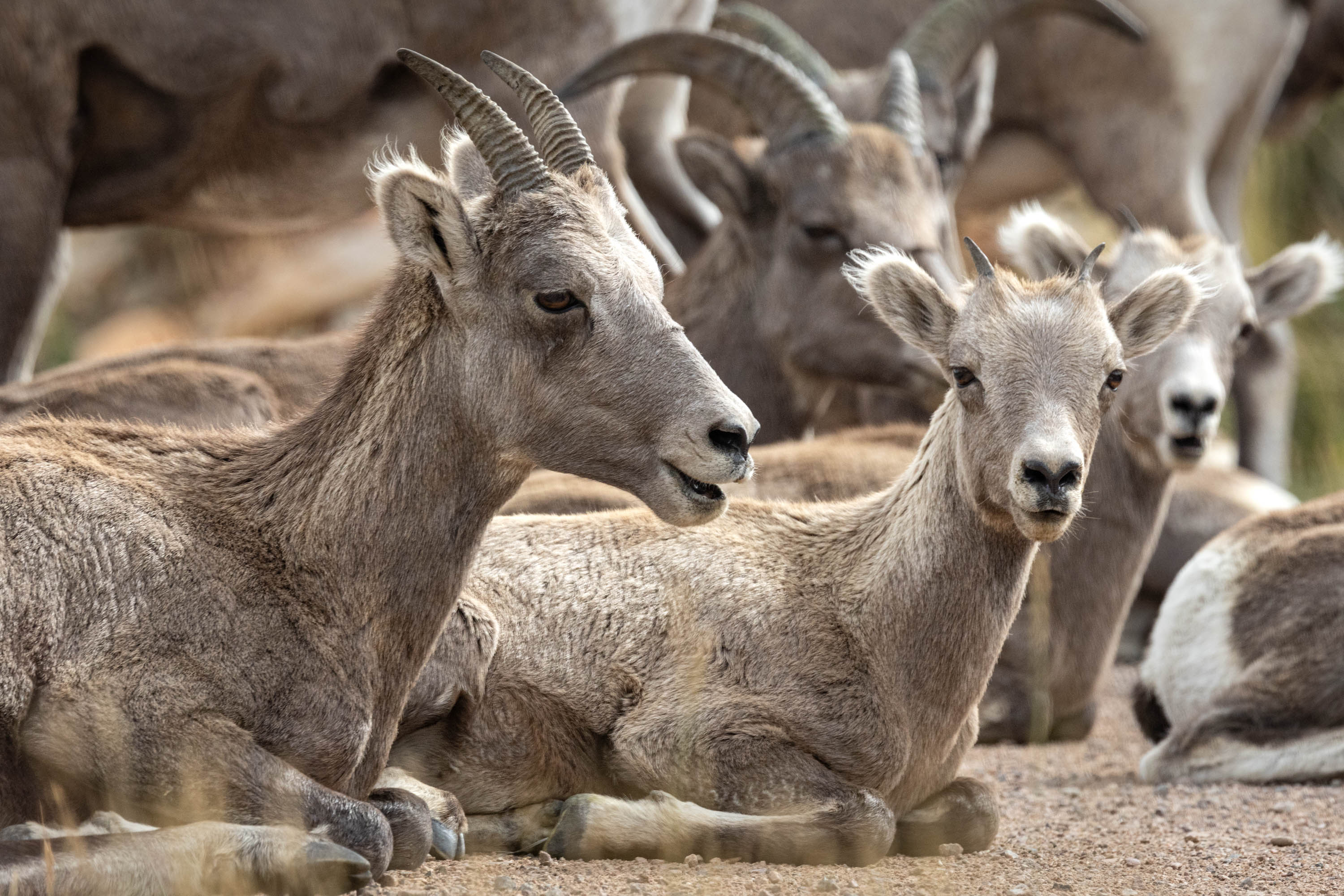
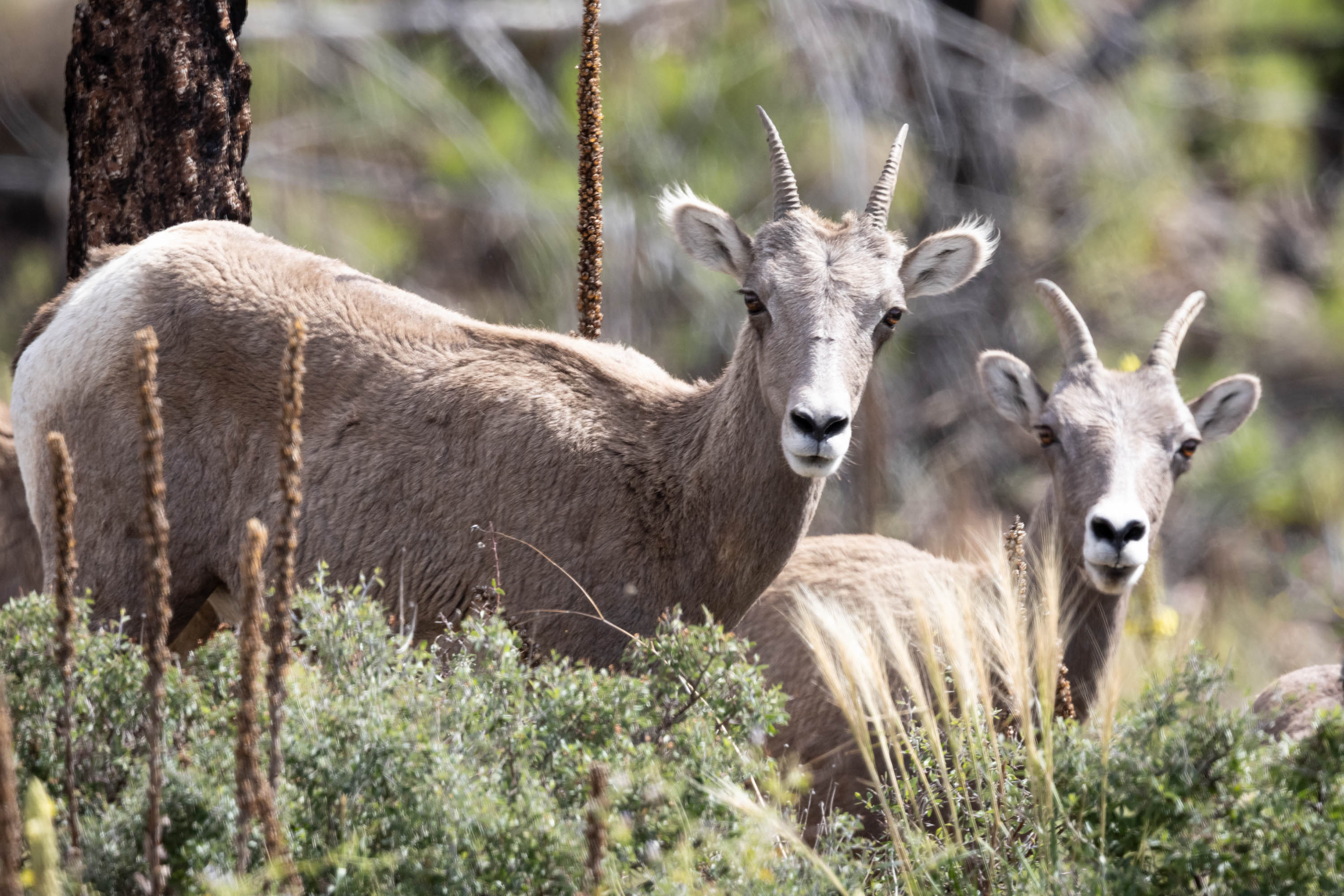
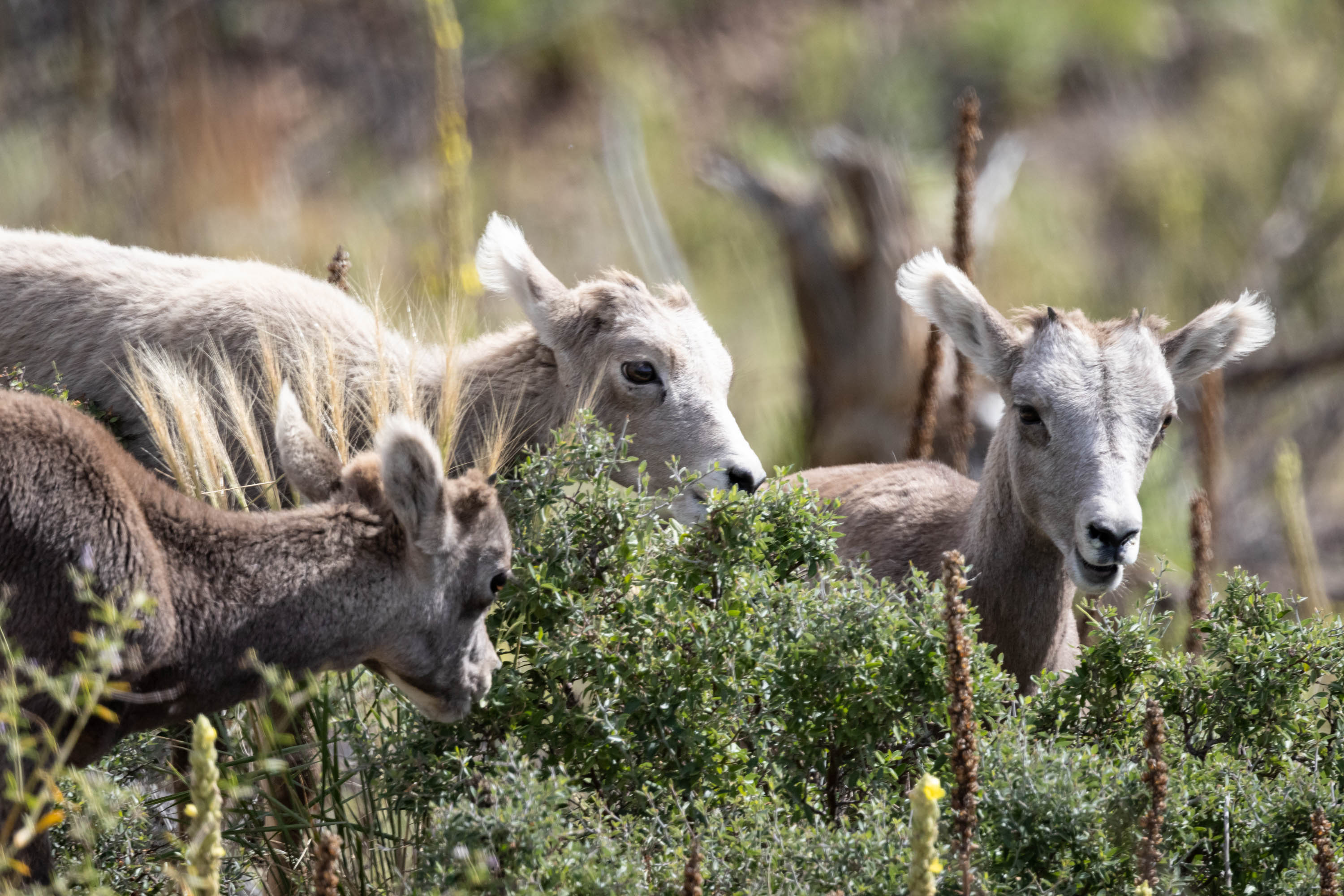
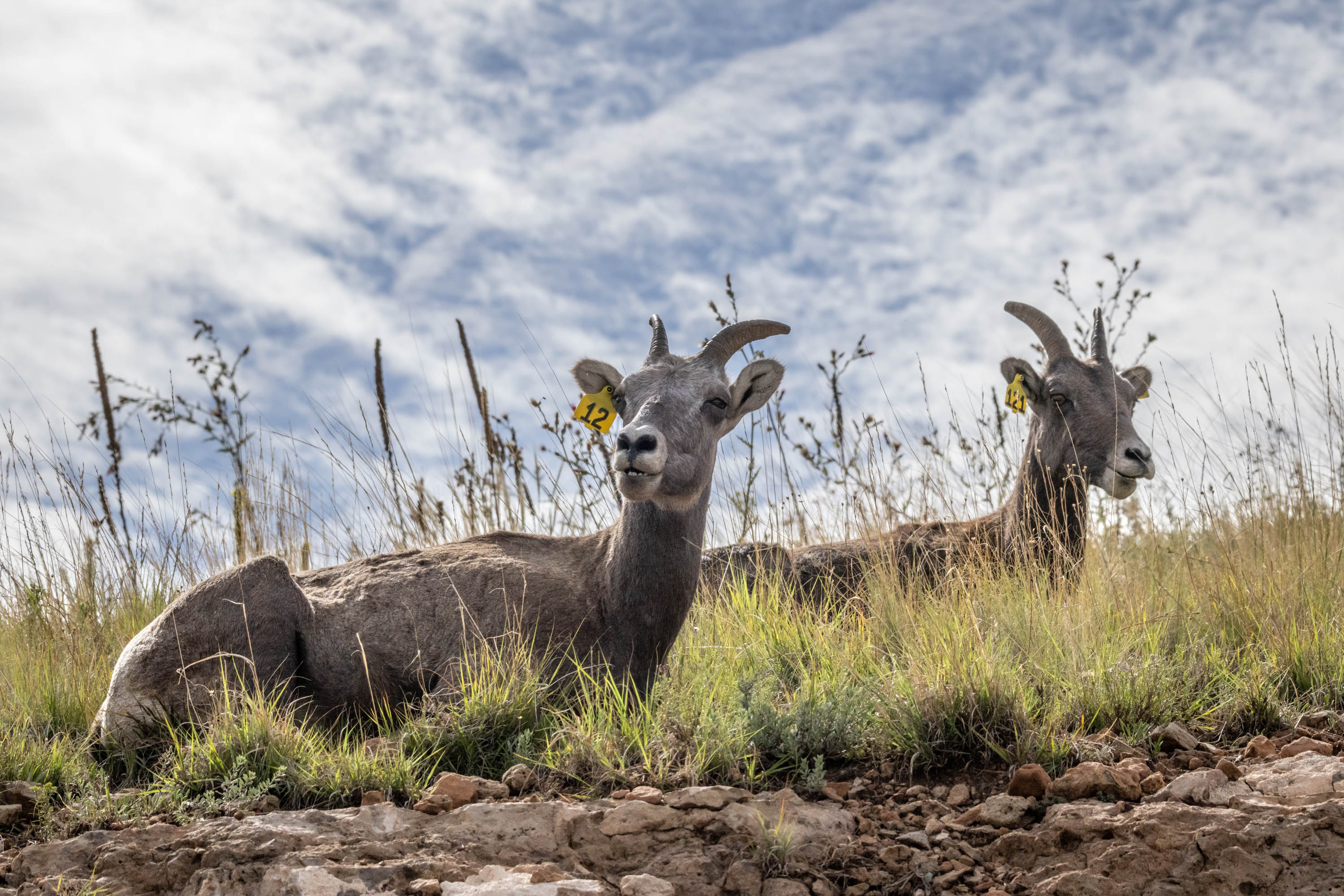
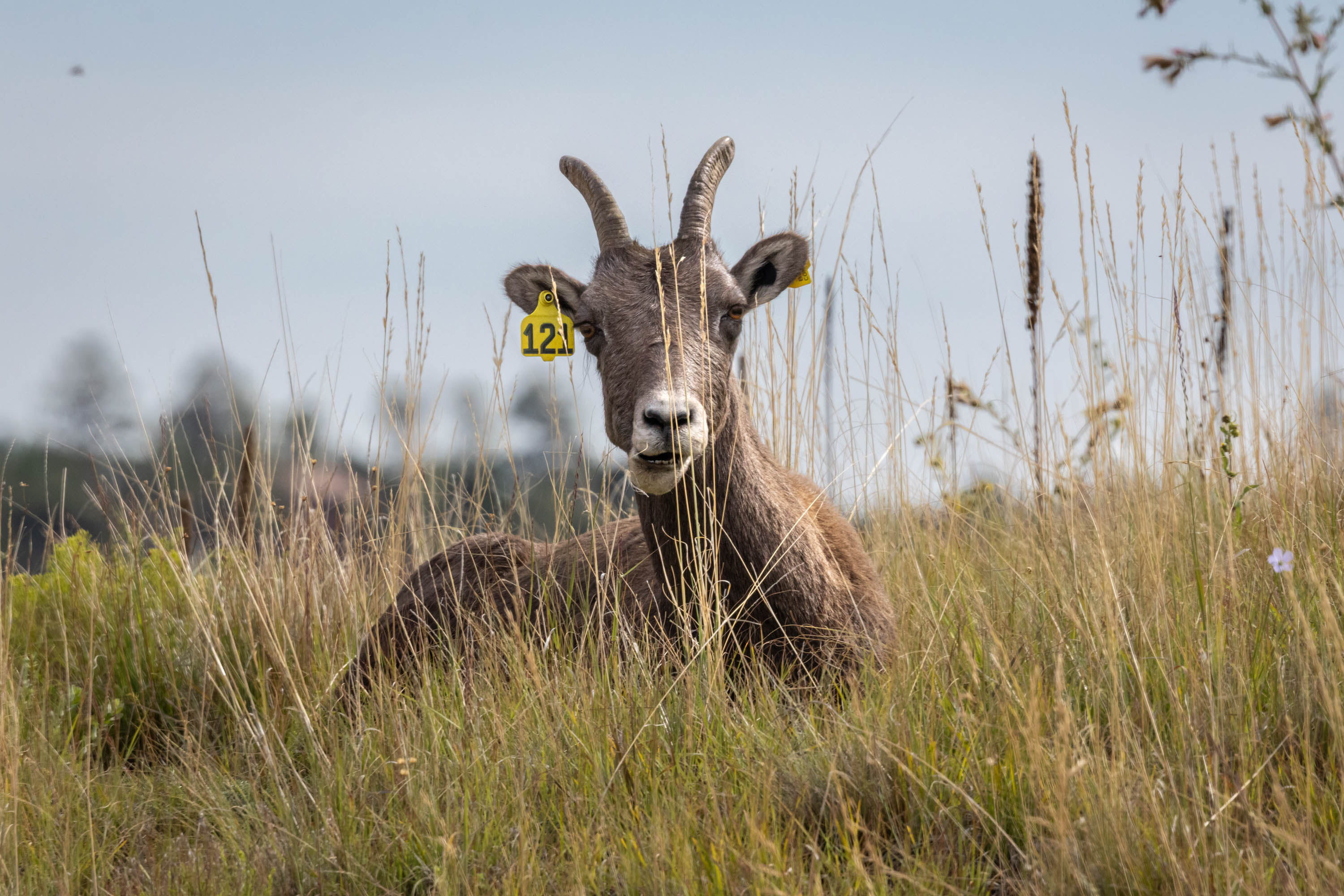
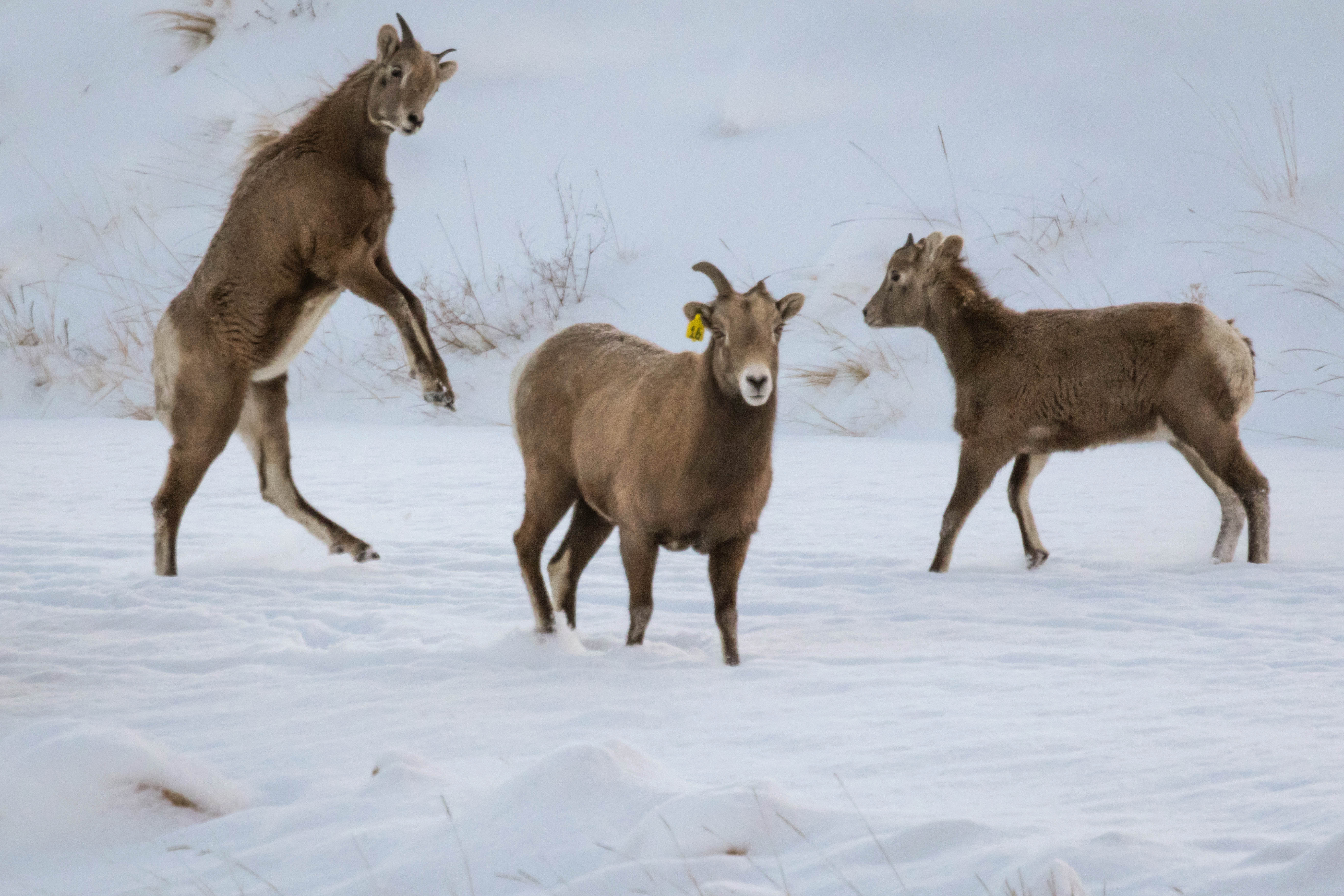
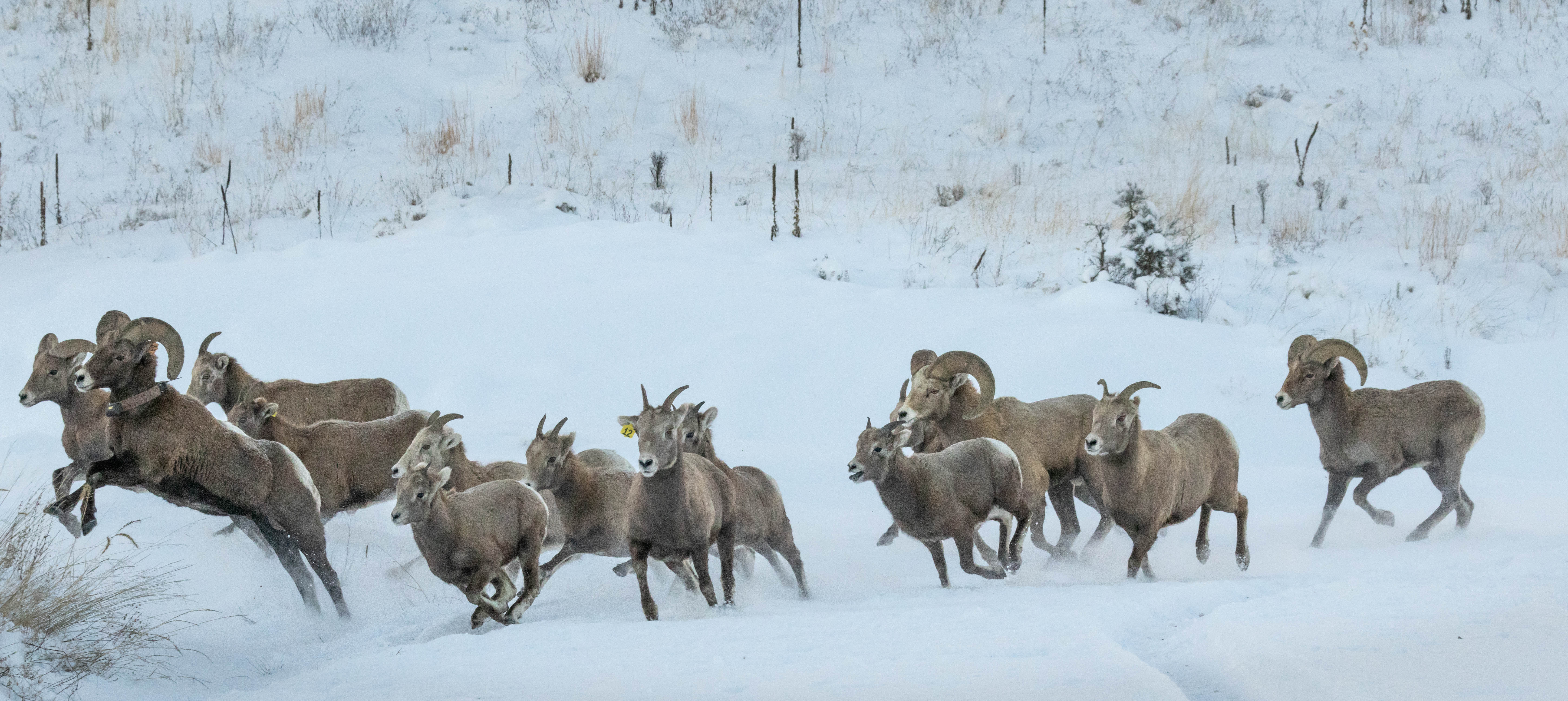
Ok. I’m a sucker for big horn sheep. I could fill these pages with favorite big horn sheep pix, but I won’t do that to you, but I couldn’t pick just one.
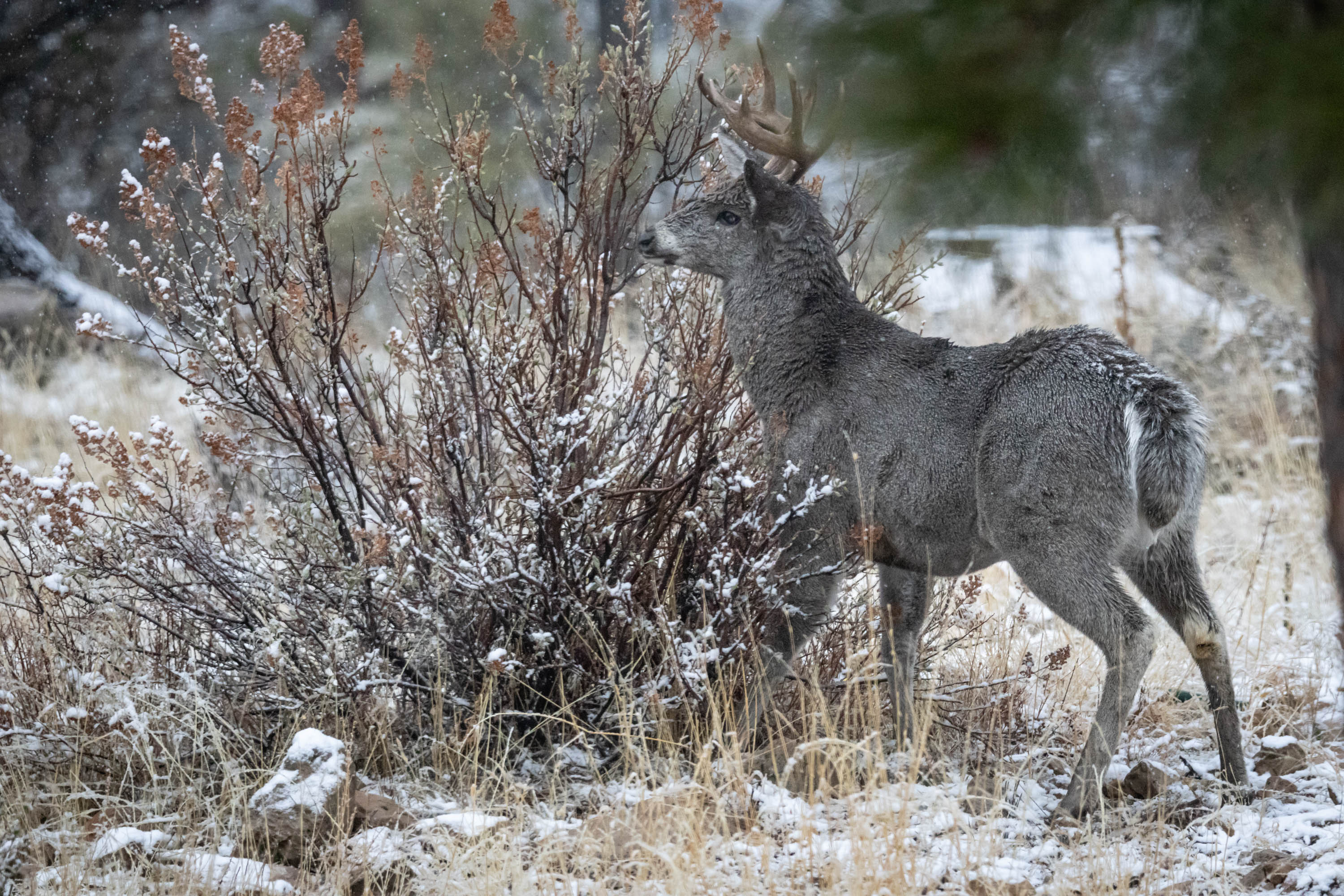
We have seen our fair share of white tail deer, but it is unusual to get bucks hanging out together and not being territorial. I suspect these boys are brothers enjoying one another’s companionship. I found it very en-dear-ing. Sorry, couldn’t help myself.
It’s not very often we see 6-point bull elk, particularly in the daylight, so I was delighted to see him, I only wish it has been for longer and more often.
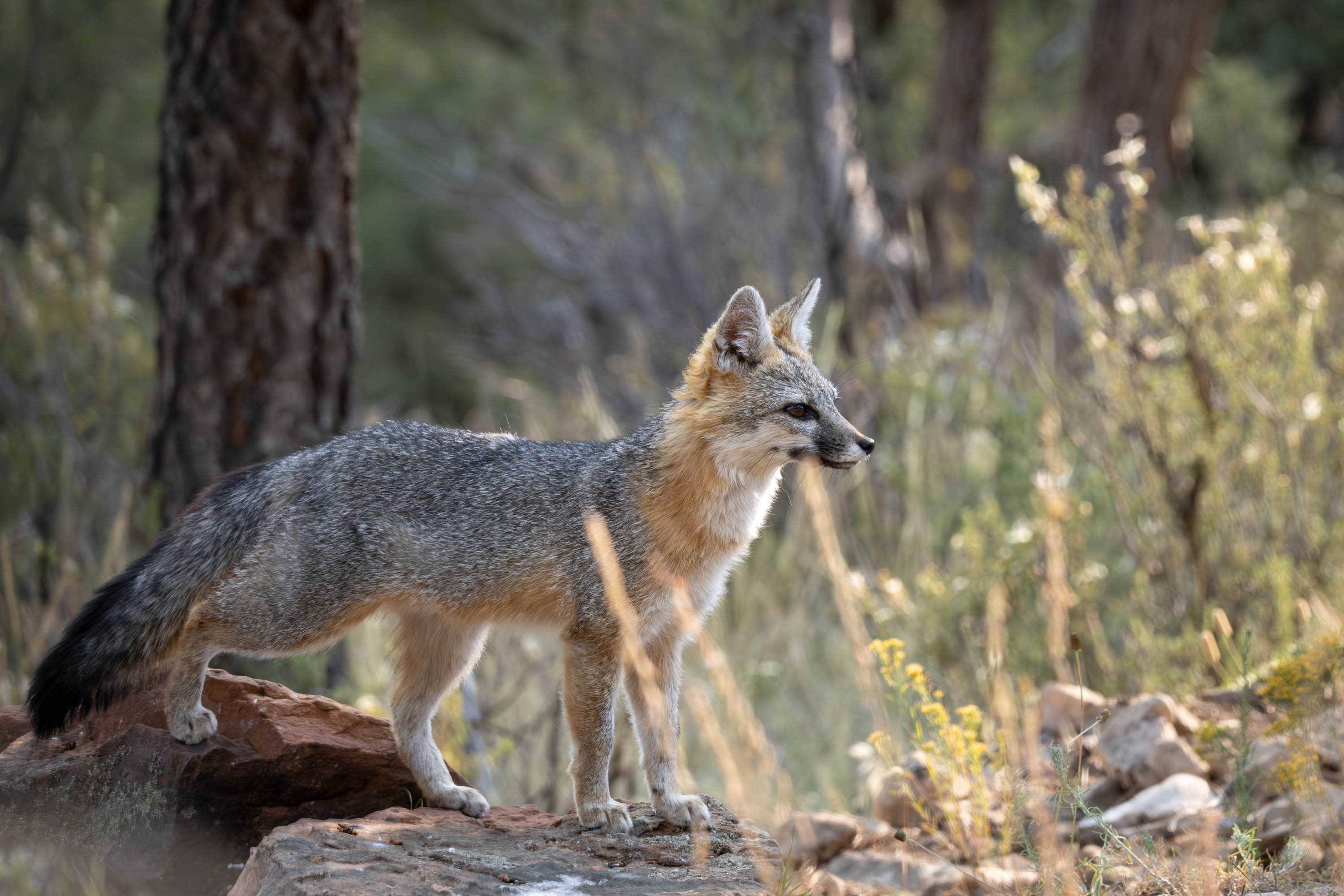
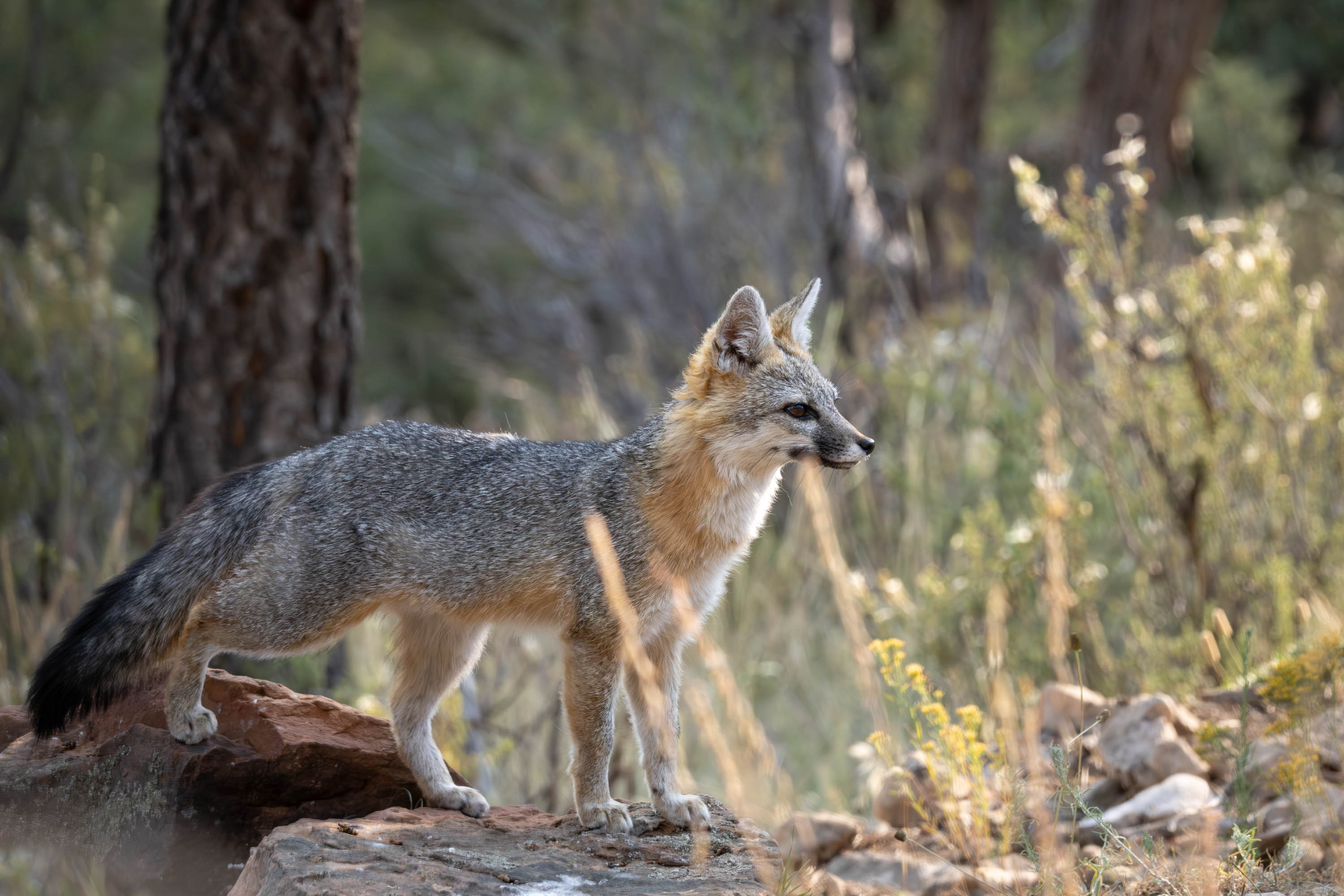
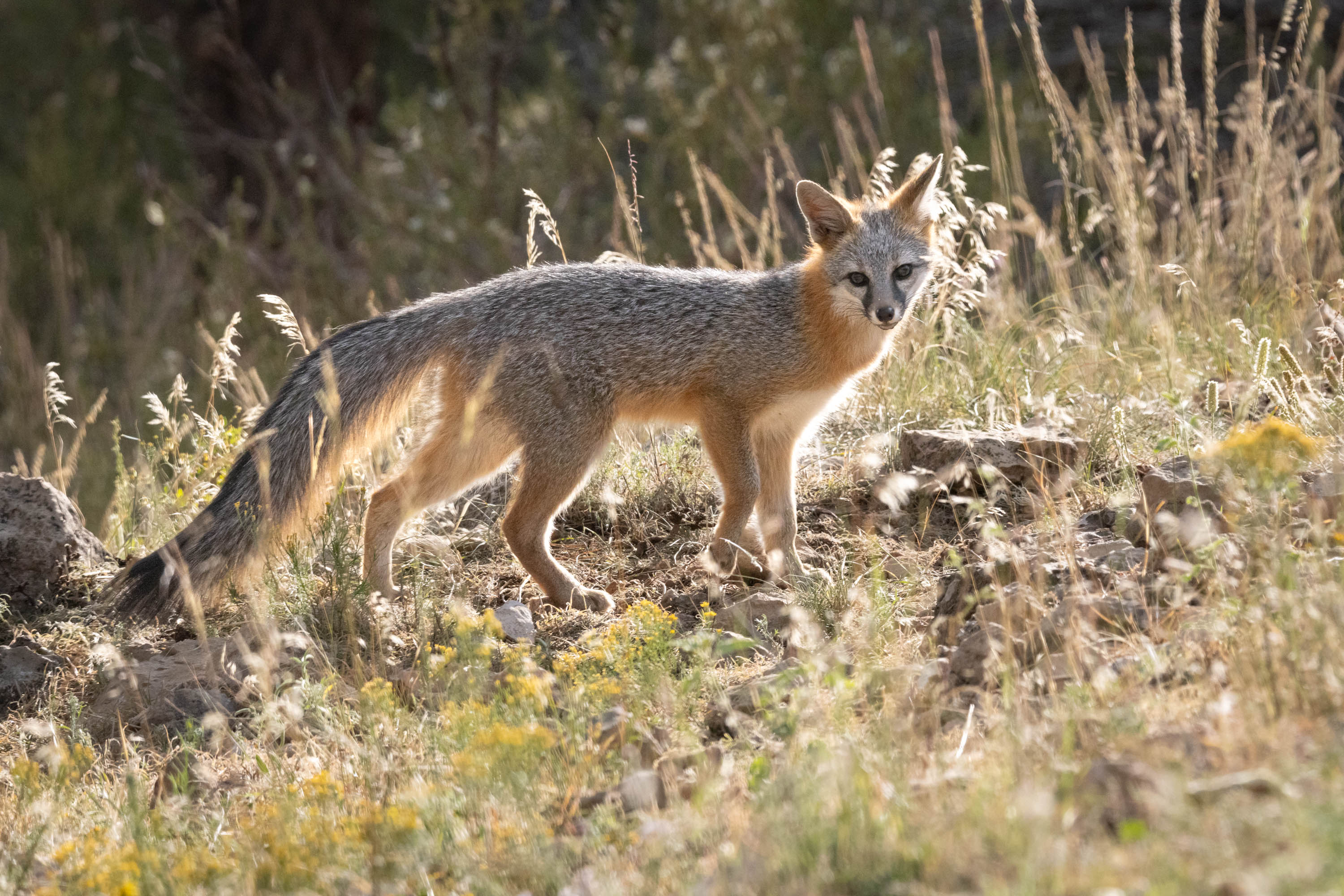
We have been fortunate enough to see gray fox this year, which is fortuitous given its nocturnal nature.
The gray fox normally frequents ridges and canyons, but can be found in wooded areas and grasslands. We were lucky enough to witness mom and 2 kits playing.
Our sightings were limited though, as the gray fox can be quite skittish, particularly during daylight hours.
Their predators include mountain lion, bobcats, coyotes, eagles, owls, and hawks, all of which we have our fair share, particularly the pesky mountain lion that wants to eat our pup for a snack.
The gray fox are mostly omnivores and prey on chipmunks, mice, bunnies, and the occasional bird or insect. Whatever brings them here, we are happy to see them, for as long as they happen to visit.
The big horn sheep used to number in the millions between 1850 and 1900. Unfortunately, parasites, disease and modern city growth have dwindled the numbers of desert big horn sheep to 20,000 and about 45,000 Rocky Mountain big horns. In Arizona the total population across AZ for both desert and Rocky Mountain bighorns is estimated to be about 6,000. We were lucky enough to run into a herd of big horn sheep, complete with a number of small lambs.
As I relished in the joy of trying to photographically capture these beautiful animals, I was struck by all the tips I have learned over the years flooding into my mind as I framed and composed my shots.
With so many animals, I had to keep reminding myself to cut the clutter for clean shots devoid of distraction.
Maintain a tight frame, and check all the borders for any complications that might take your eye away from the subject. Avoid ‘butt’ photos and isolate the face and body. Try to avoid cutting off body parts. Though, when necessary, be careful of cutting off feet, heads, and ears, and maintain at least front half of animal, behind front legs or major joints. Be cognizant of post process cropping to maintain large pixel size for best sharpness particularly when enlarging images.
Look for gestures, cute faces, and action to make more interesting and inviting photographs. Make sure the animal is looking at you and you can see the eyes, straight on or profile. Use narrow depth of field (large aperture) to blur distraction from background.
I try hard not to spook the animal or change it’s behavior. Stop, look, and enjoy the encounter of nature’s wildlife and her habits, characteristics and mannerisms. Knowing these things helps to achieve better results at the next lucky encounter.
Give the animal room to roam, allowing space around the animal. It’s not lost of me that some of these methods contradict one another. That’s the fun of photography, despite my own guidance, ‘rules’ are meant to be broken. Different situations call for different solutions. Creativity and vision are in the eye of the beholder. When dealing with wildlife, it is difficult to create a perfect clean shot, so we must adapt to what we encounter.
The more ‘exotic’ the better as far as I am concerned. But those more rare animals are indeed harder to find, particularly in good light to photograph.
So I am thrilled any time I get to observe any animal, so much so, that I solicit my friends and neighbors to let me know of any sightings. My friend and neighbor did just that when they told me of this herd of big horn sheep.
They caught me on the street during a walk around the neighborhood. I quickly jumped in their truck and asked them to take me home so that I could go get my camera and check it out.
Fortunately, I was able to catch them, and delighted to find a large group of baby sheep practicing climbing on the bunny hill ledges.
It was one of those memorable magical moments that I hope I was able to capture the fun and delight of these babies experiencing ‘firsts’ right in front of me.
People have often asked me, ‘how do you get so close to the animals?’, or ‘where do you find them?’. It’s not rocket science. The short answer is, I go out A LOT. It’s not like the occasional trip I get lucky on. It’s a whole bunch of trips… and every once in awhile I get lucky.
Luck definitely plays a part. But the more I find myself in a situation, the more I can use my gear, the more I can practice. All these things allow me to be better prepared when an opportunity presents itself.
I do find that the storms bring out the animals, and add more interest to the photographs. So we go out after most storms, whether it’s rain, sleet or snow (kinda like the postman). Where I find certain animals, I tend to go back, hoping I’ll get lucky again.
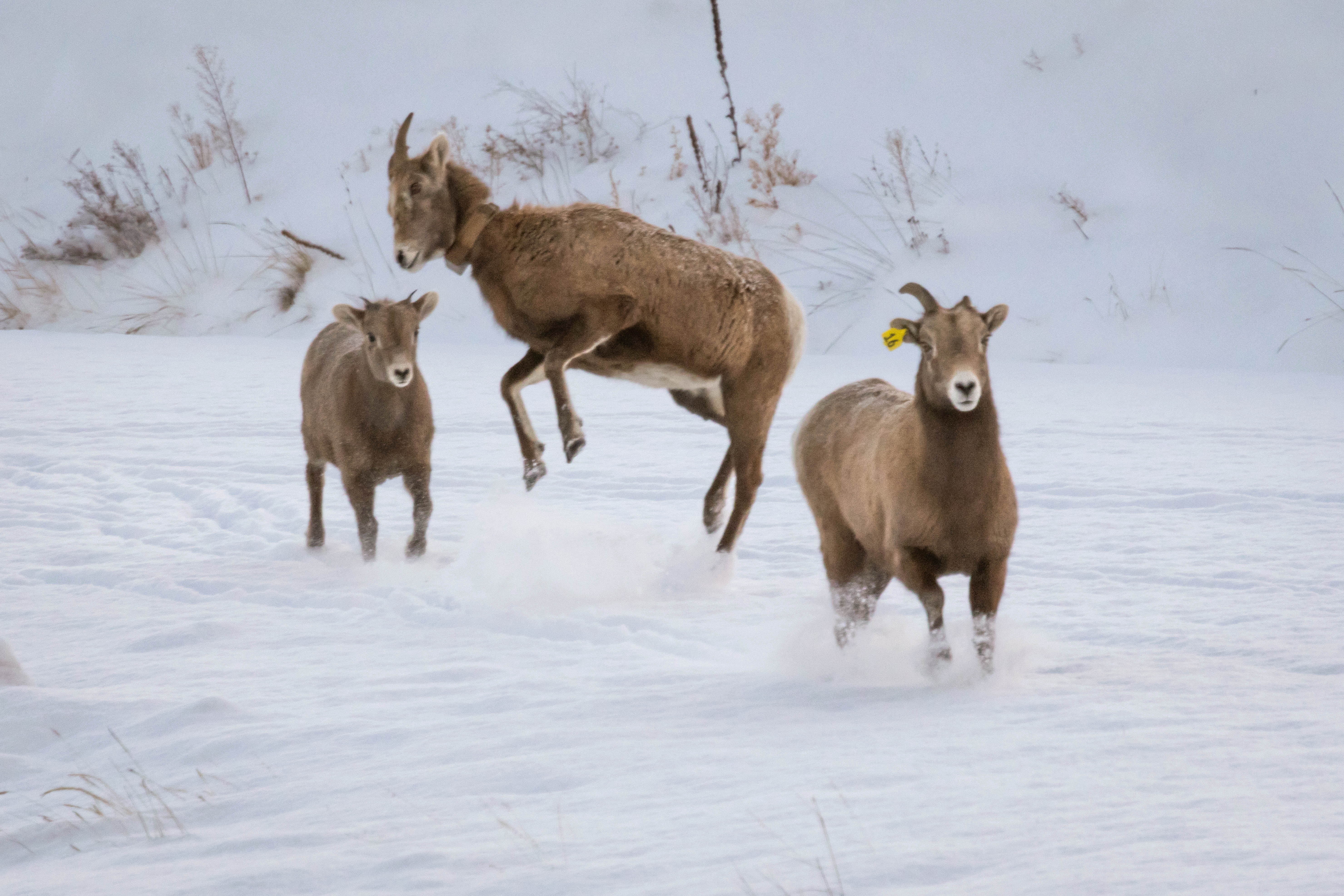
Having warm gloves that aren’t too bulky helps, making sure I can still operate my camera. When I encountered this herd of big horn sheep after a recent snowfall, it was 19F. I could barely feel my fingers, let along depress the camera release… and that was with good gloves and hand warmers. Being prepared allowed me to stay the course and get some nice shots.
Being able to take action photos, hand held, was a matter of having had proper settings, fast enough shutter, and panning the scene and composing the photo on the fly.
I know I need more practice to continue to improve my craft and to pay attention to what I do wrong, so that I can get better. It’s always a challenge, and I welcome the opportunities that may come my way so that I can.
The more I embrace this Wildlife Photography the more I learn about what I don’t know. Much of my animals have been by luck by golly, and a product of many many outings. At the risk of stating the obvious, we are learning that you can actually ‘predict’ (as much as that is possible with wildlife) where and when the animals might be.
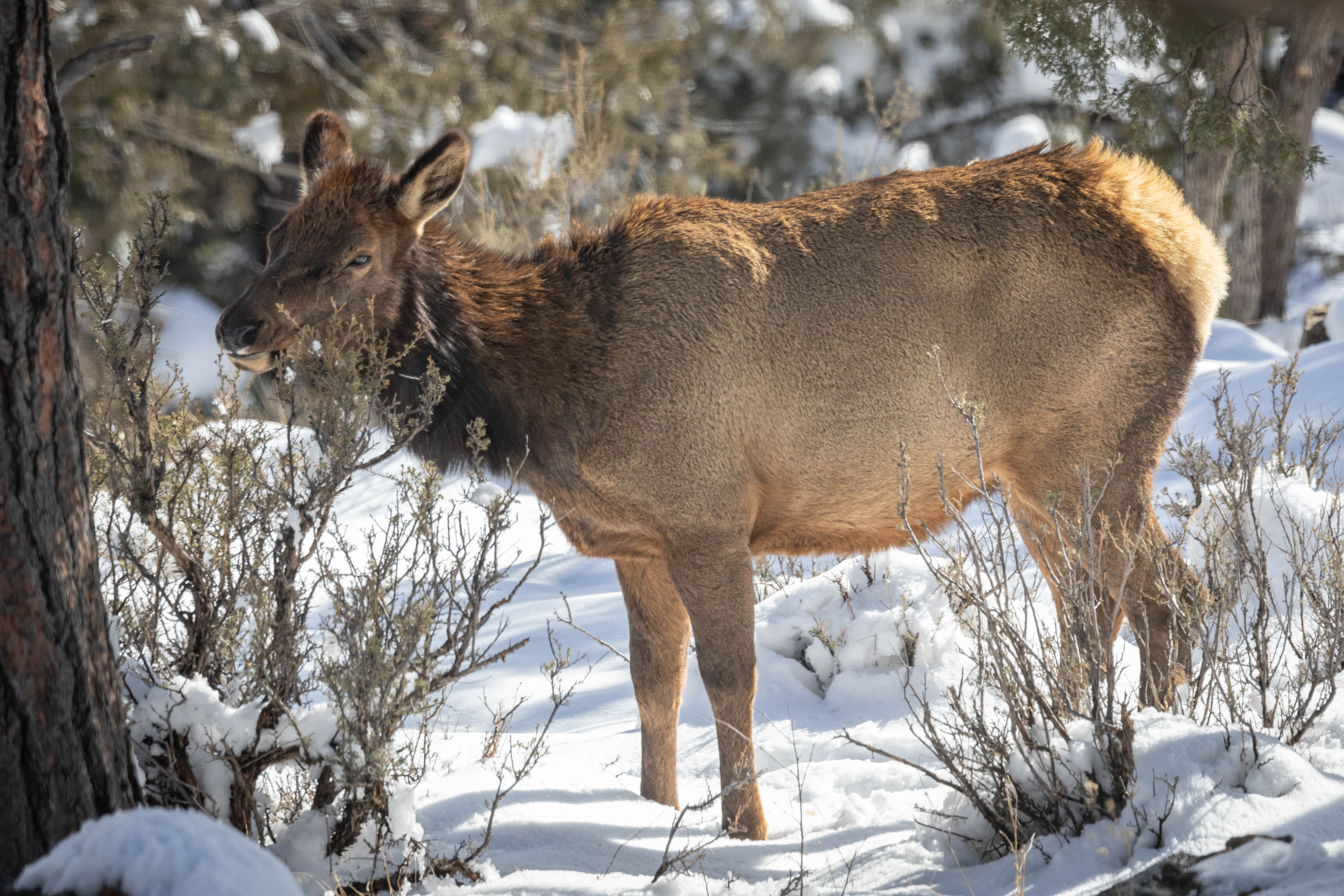
Their habitat will help to identify where you might find a particular animal, both in terms of weather, climate, and environment. For instance, antelope like the low plains and fields to graze on. Elk are partial to the dense wooded areas, and of course water fowl (and beaver) can be found on lakes and waterways.
If you can follow footprints and / or scat (poop) to track the animal you can lay in wait for them. All animals, particularly when rain is sparse are attracted to water holes, and in search of food. They come out early morning & evenings (or middle of the night).
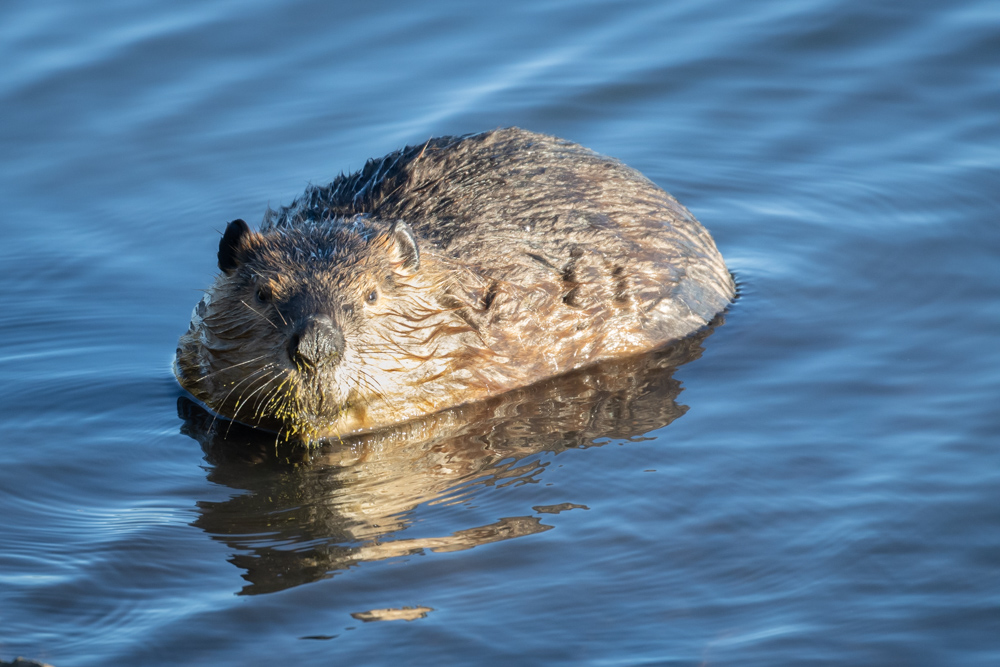
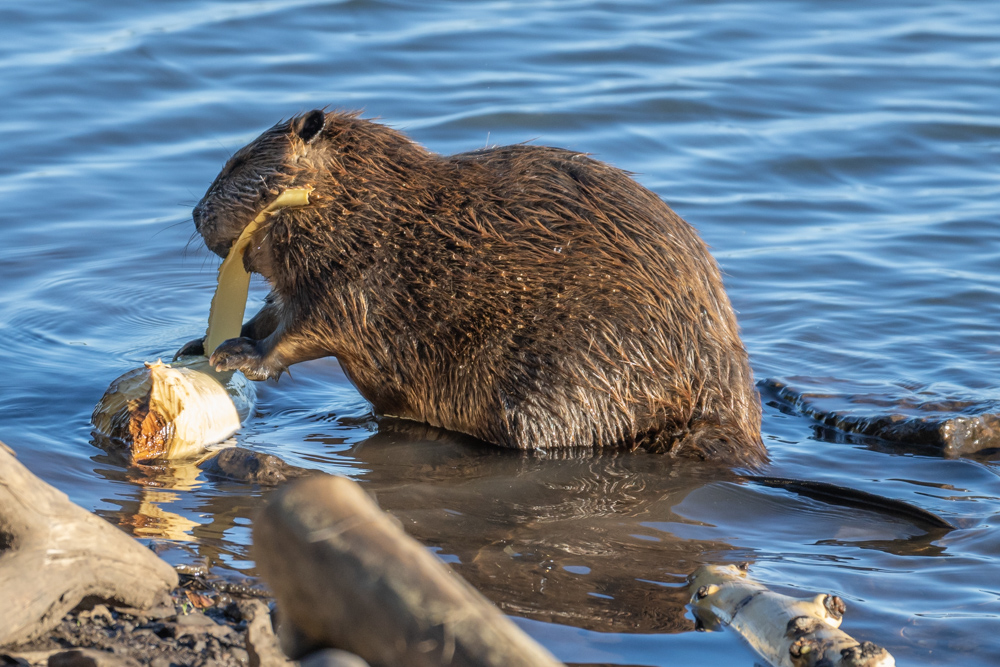
If you can find their home – a nest or den – you are much more likely to be able to camp out and wait for their arrival or departure. We were lucky enough to encounter a beaver den. Sometimes they are abandoned, but fresh cut trees will lead you to where you might find them.
It’s gratifying when a plan comes together and persistence pays off. It keeps me coming back for more.
It’s interesting to witness the evolution of my own wildlife photographs.
I recall oh so many years ago taking photographs of animals so very far away. Today, I look at those photographs and wonder what it’s of. Oh, there it is, that little dot in the distance is some almost unrecognizable animal. Hmmm, I guess I have improved!
When I bought better equipment, bigger lenses, and learned more, I began filling the frame with the animal. But it’s more than that, it’s clearing the clutter of a messy background.
It’s including some background that shows the animal in it’s environment.
It’s including action, if you’re so lucky.
It’s catching that glint of it’s eye, making sure it’s sharp and looking in your direction.
It takes anticipation of the animals behavior and patience to wait for the animal to come to you, look your direction and capture what it does in it’s environment.
It’s a ‘sport’ that is humbling, gratifying, and frustrating at the same time. It takes practice and time, lots of it. Something I try to apply as I continue to learn and improve.
With everything going on in the world, I guess it goes without saying that everything changes. I’m not talking about the prices, lack of workers, or social upheaval. If you go someplace or do something long enough you are bound to see change, whether it’s at a restaurant, a golf course, or a favorite outing.
Considering this a blog for my photos, I’m not talking about restaurants or golf. We have heard of Black River for decades. We were told it had unsurpassed beauty and wildlife. So, finally, after so very many years of hearing about it, we decided to bite the bullet, buy the White Mountain Indian Reservation permits and check it out.
We began our drive from Pinetop-Lakeside, AZ in a cool 70F day and began to decent the long road to the river. Once we got to the ‘border bridge’ of the San Carlos Indian Reservation we stopped to check out the river at the only viewpoint from the road. We found ourselves in 98F heat and considering the hot and sandy environment, lack of scenery, and animals, we made the decision to turn around and head to the ‘U.S.’ side outside of Big Lake.
Once there we were greeted with cooler temps, including 39F overnight. Not having ever been to Black River, we were surprised to see the lack of views of the river. I suppose if we were to hike down the river with waders the scenery would improve. The Alpine / Big Lake side still wore the scars of the 2011 fire that rolled through Hannigan Meadow and Greer. The Black River had remnants of burned trees and heavy overgrowth along the river way.
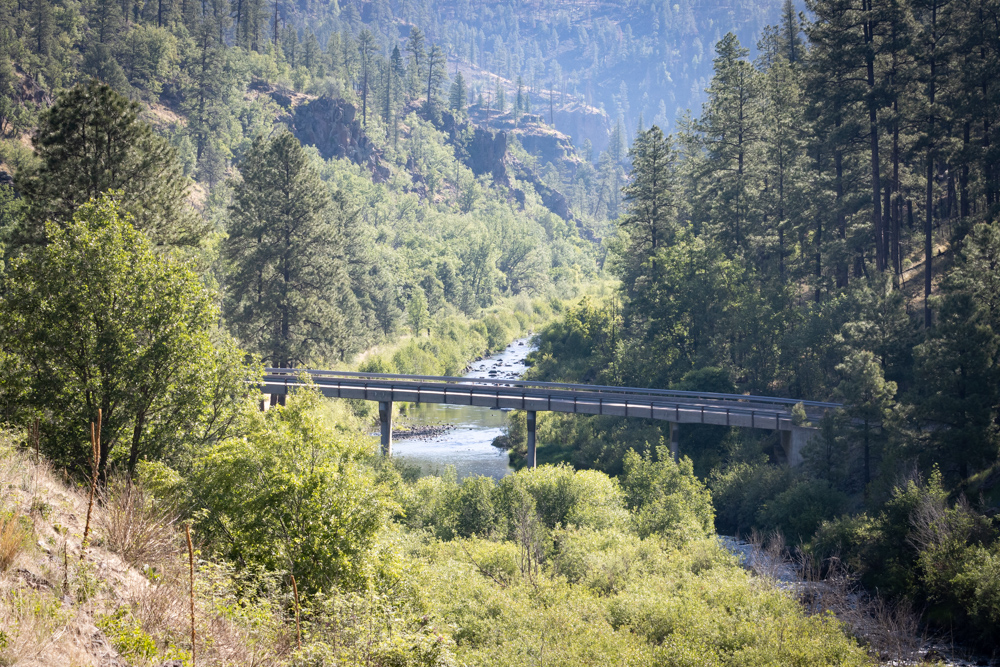
Wildcat bridge across Black River
We were further surprised to see the lack of open dispersed camping. Signs everywhere advised no camping in non-designated areas, only in the Pay-Park here spots. The campsites were dusty and trash ridden with no trash receptacles.
Everything changes. We have camped for years, pulling up in any stretch of earth and calling it home for the night. Over the years we have never paid for camping in the forest land we pay taxes on. We have found very little trash early on, but when we did, we always took home more trash than we came with and picked up anything we found. These days we travel for hours to a beautiful spot only to find heaps of trash littered everywhere. Heck, we find it on our road to our subdivision. Now, we have to pay for the pleasure of picking up others trash with no place to put it, other than take it home with us, and pay for it to be picked up.
More and more there are an increasing number of closed forest roads, gated areas we are no longer able to visit, other than designated spots where we have to listen to someone else’s generator. Sorry for the gripe. Everything changes. I’m glad we camped throughout AZ and saw all that nature has to offer. We will continue to do so, but with limited access from what we have become accustomed to.










































 kritterspix