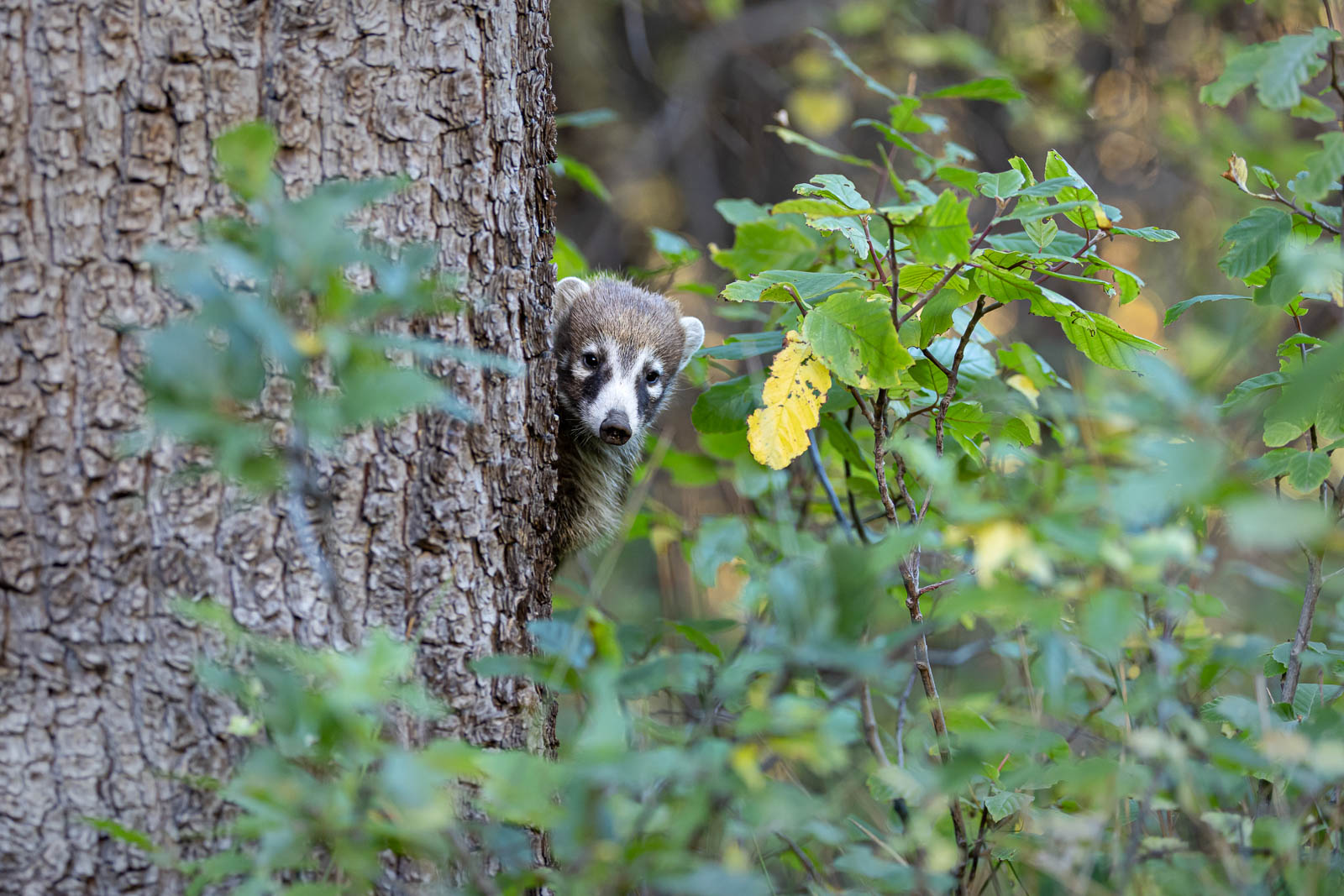
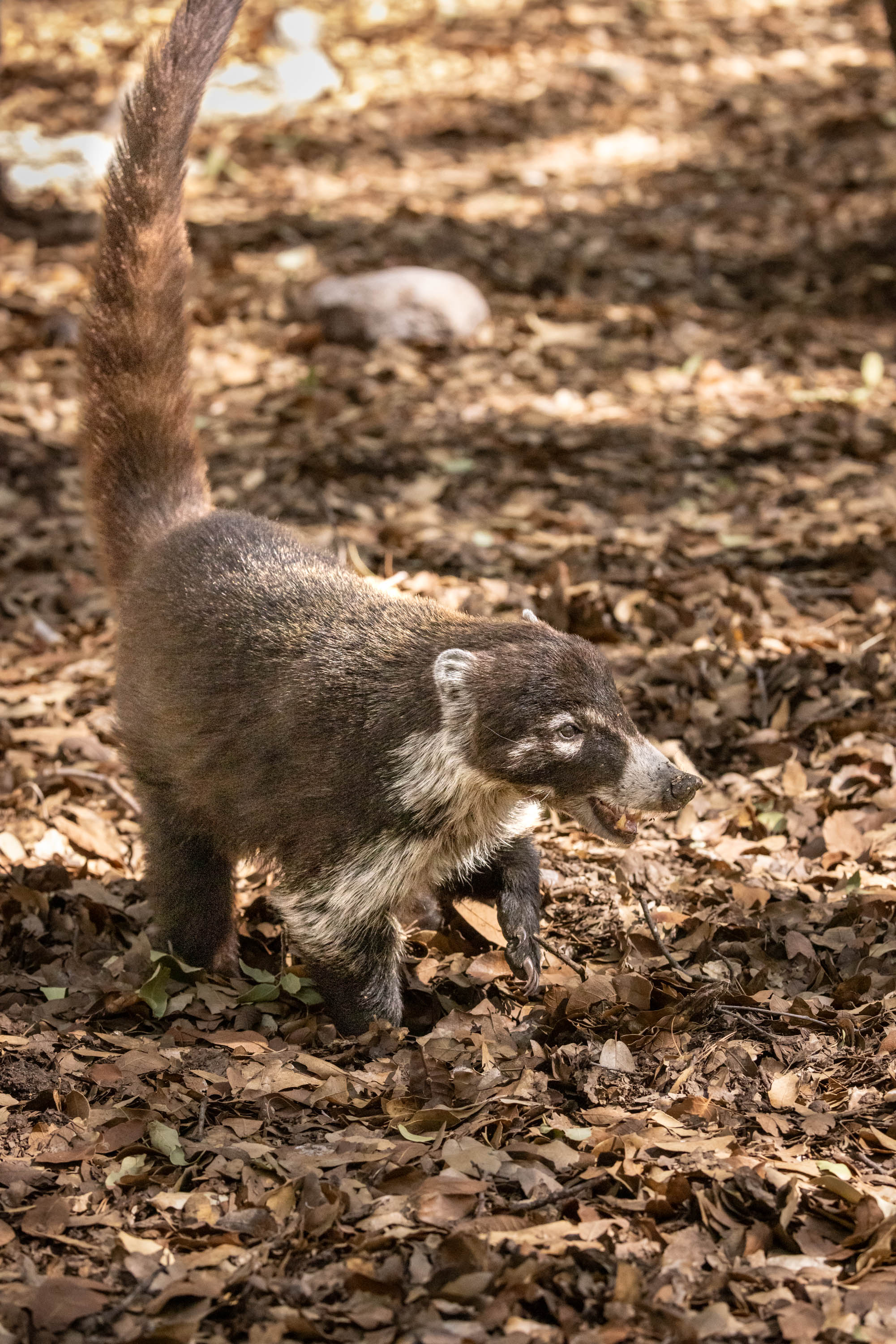
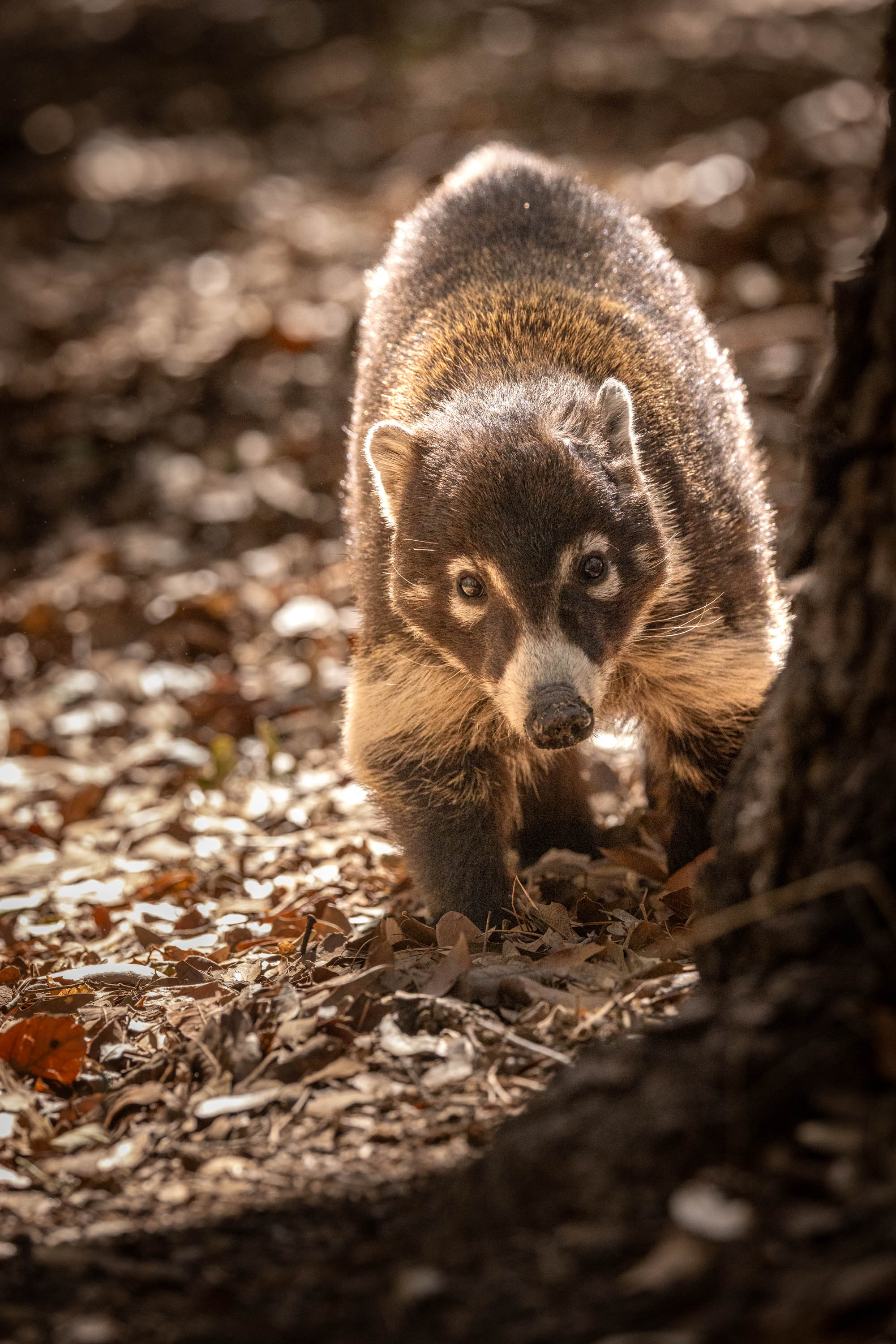
Coatimundi are a rarely seen Arizona mammal that inhabits our Southern and Eastern parts of the state. They band together and where you might see one, there are often more.
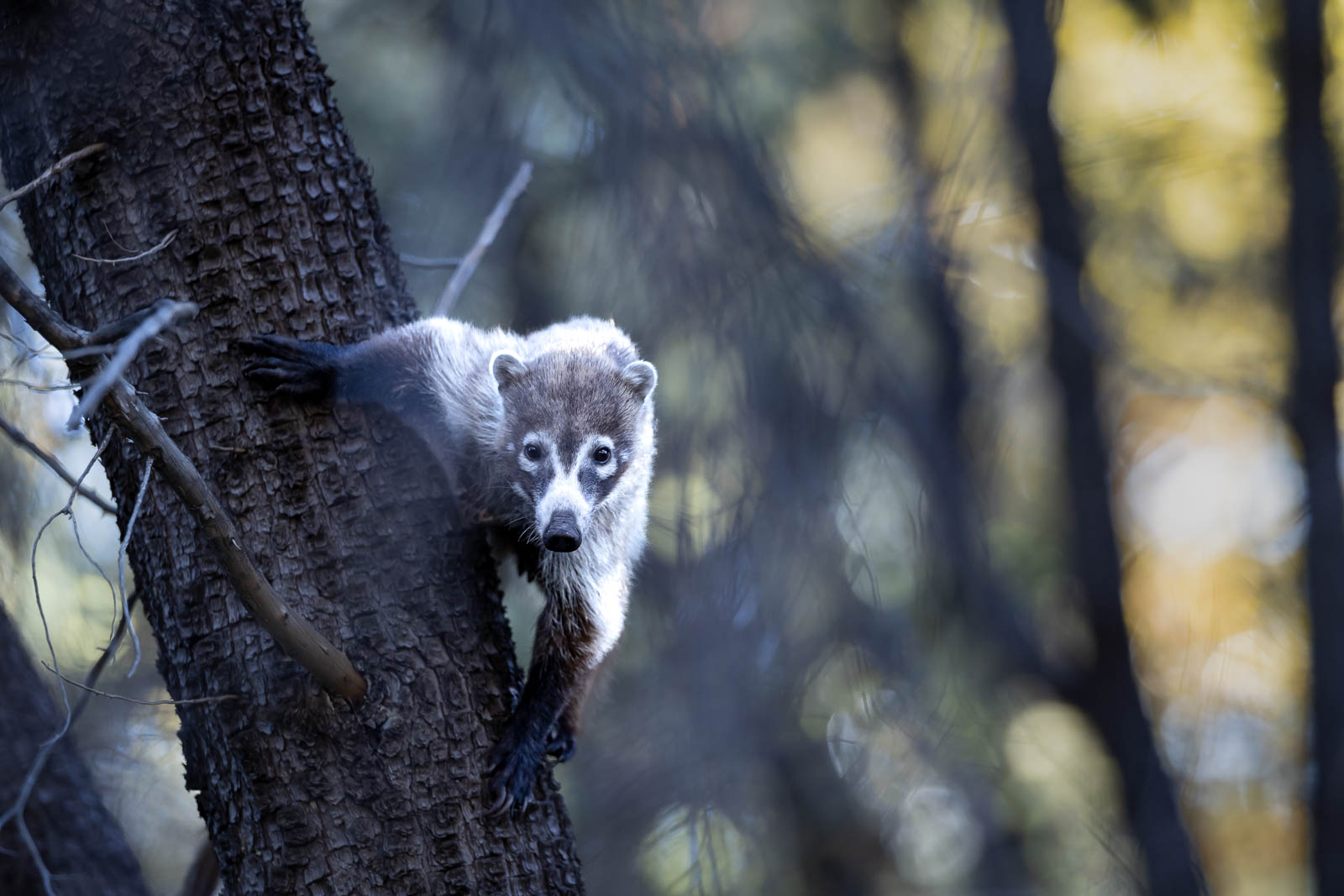
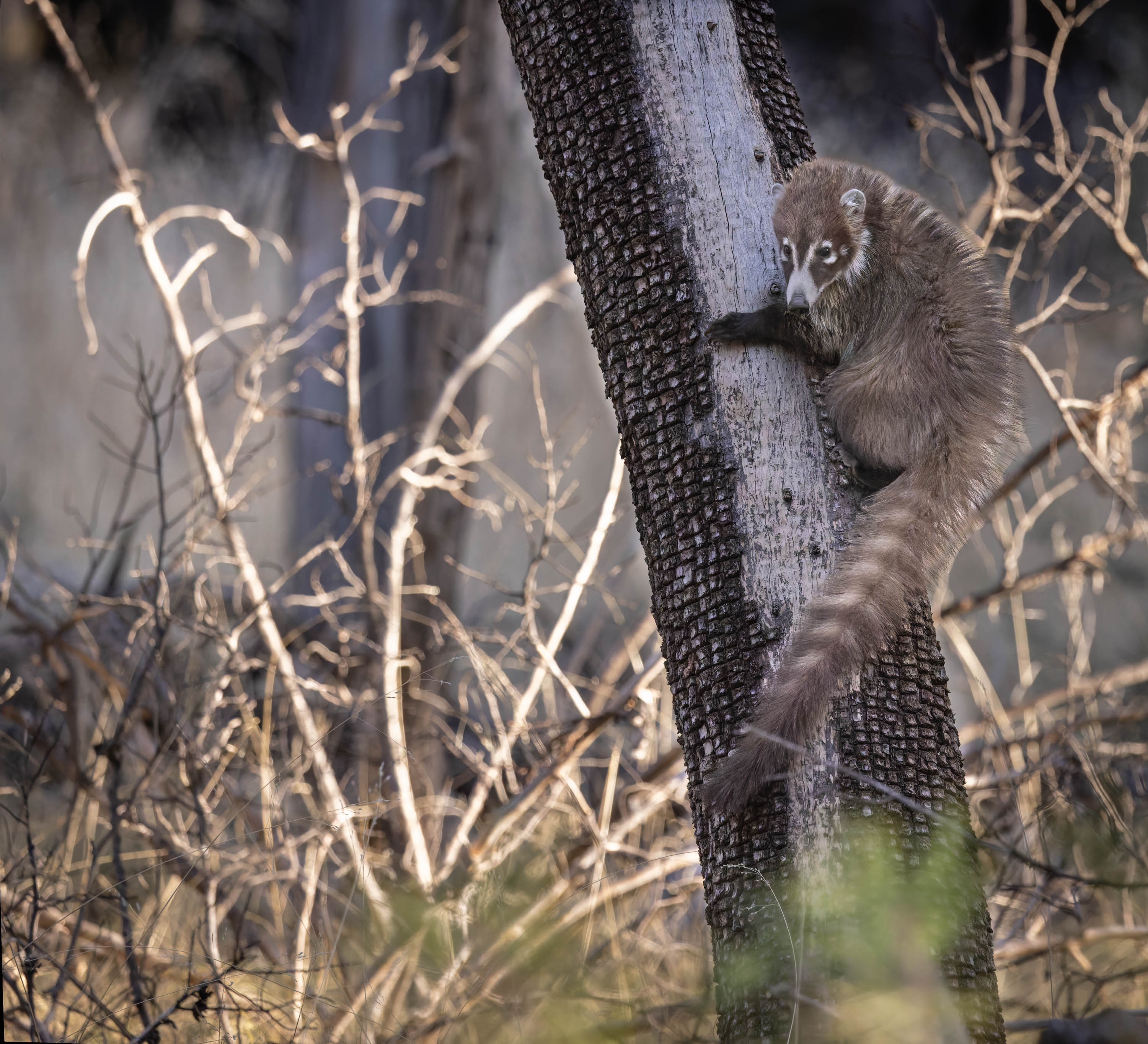
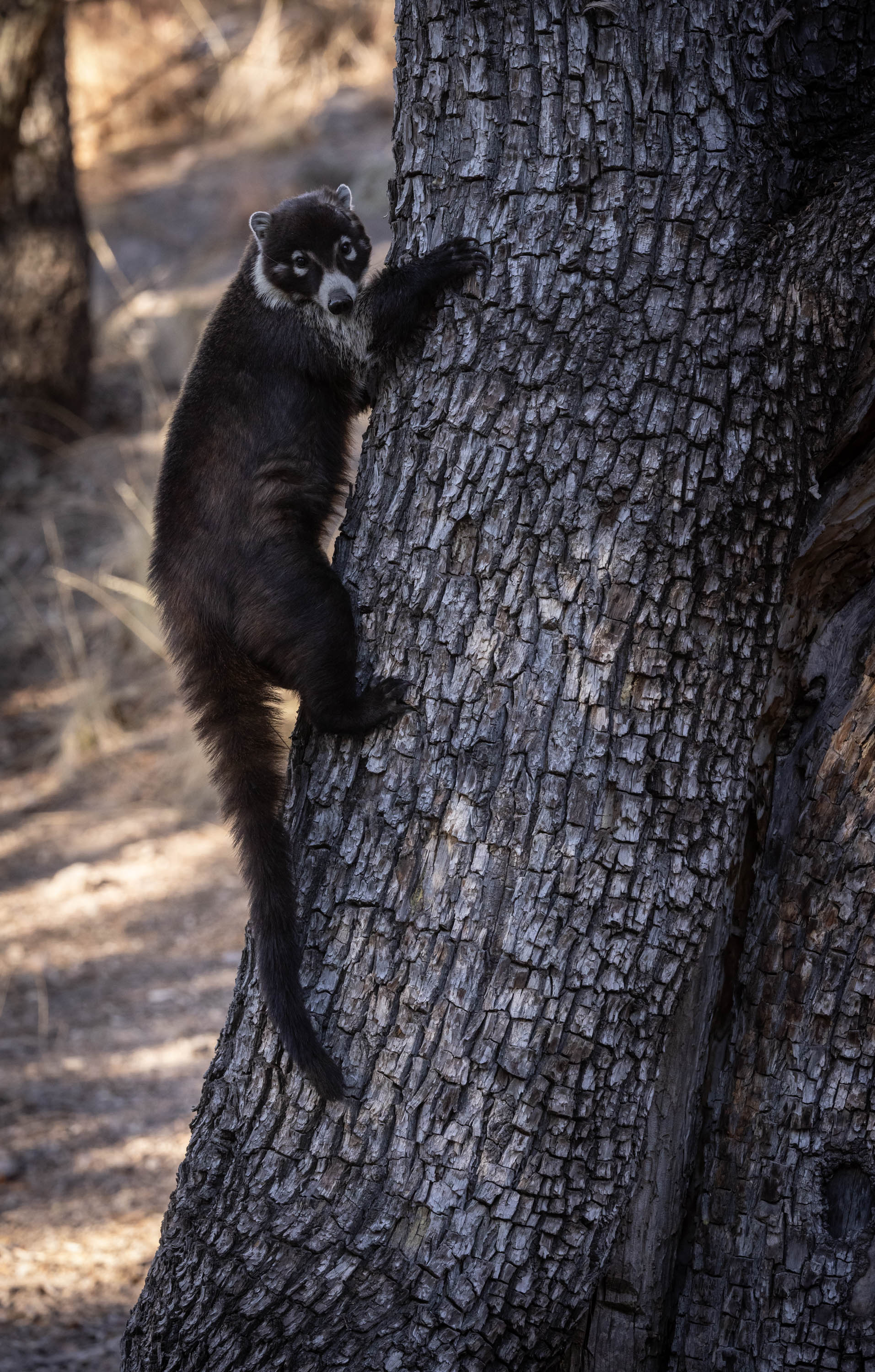
They are cute little guys with a long tail and white snout. They forage for seeds and nuts under the fallen foliage of oaks and sycamore trees. If spooked, they handily find refuge in trees.
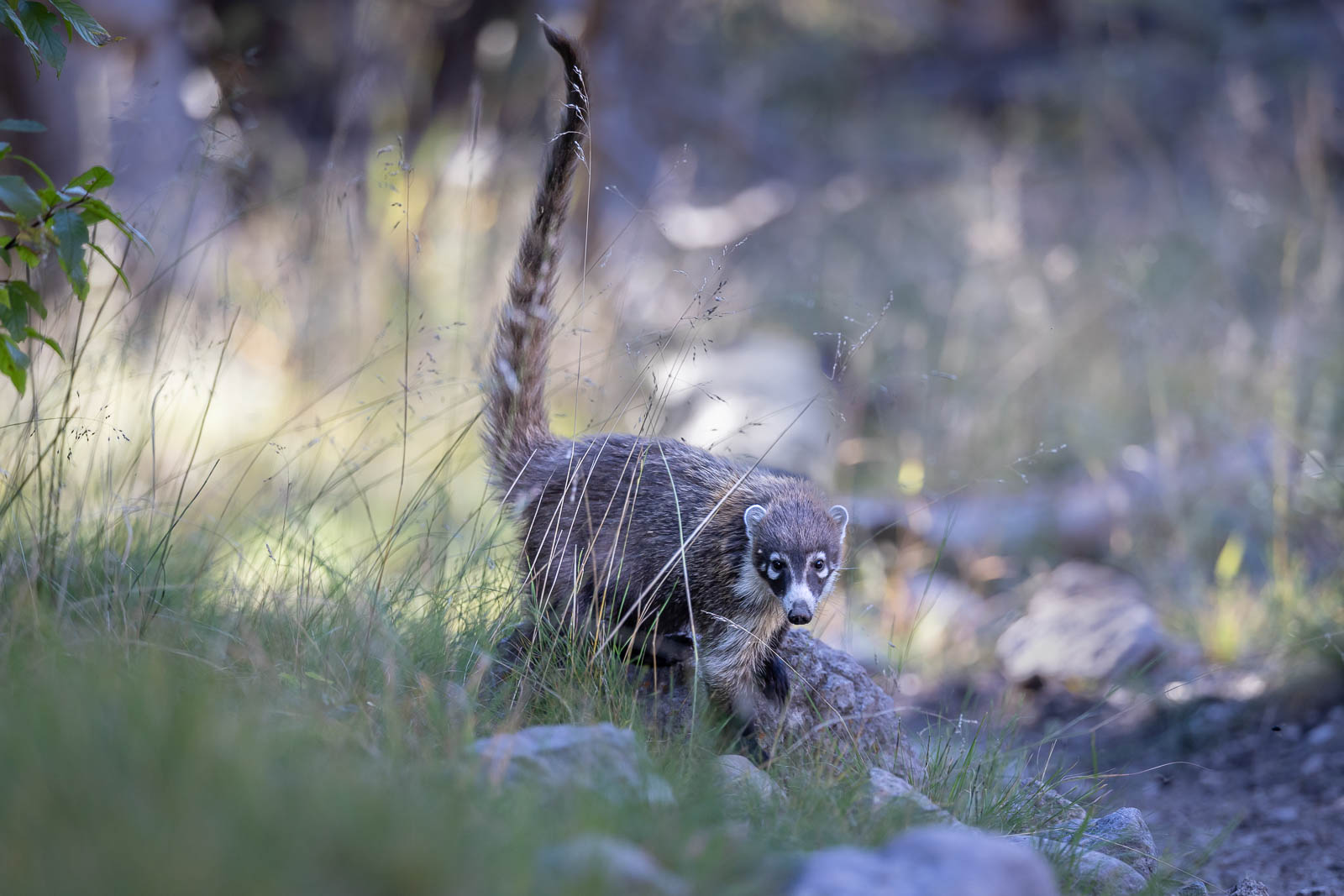
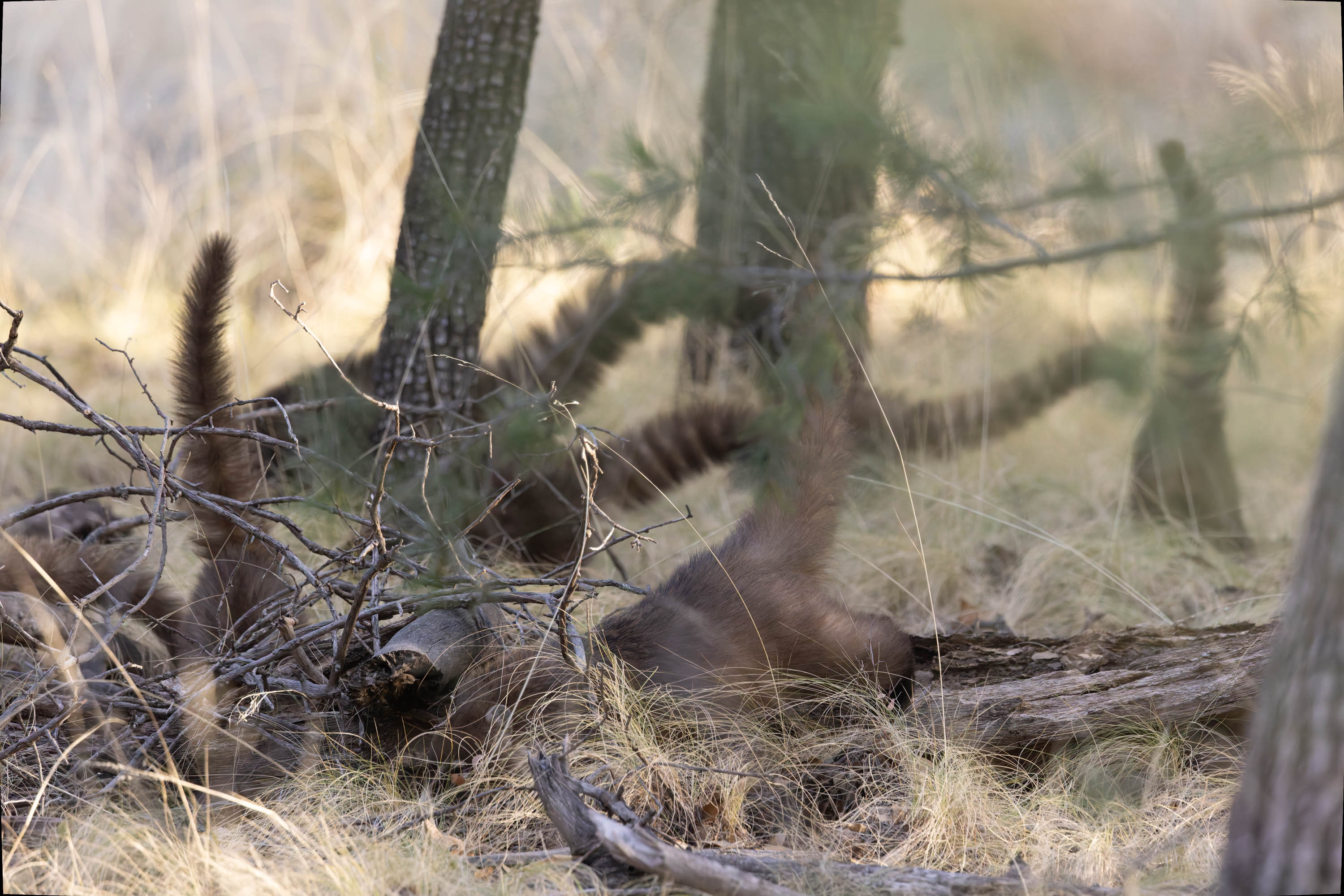
We were lucky enough to see a band of them while camping. They can be found at higher elevations, often near water sources, and can be spotted by their stripped tail raised high in thick grass.
The more of them I see, the more I want to see. Sightings can be fleeting, so I am thrilled for every opportunity to take advantage of it.
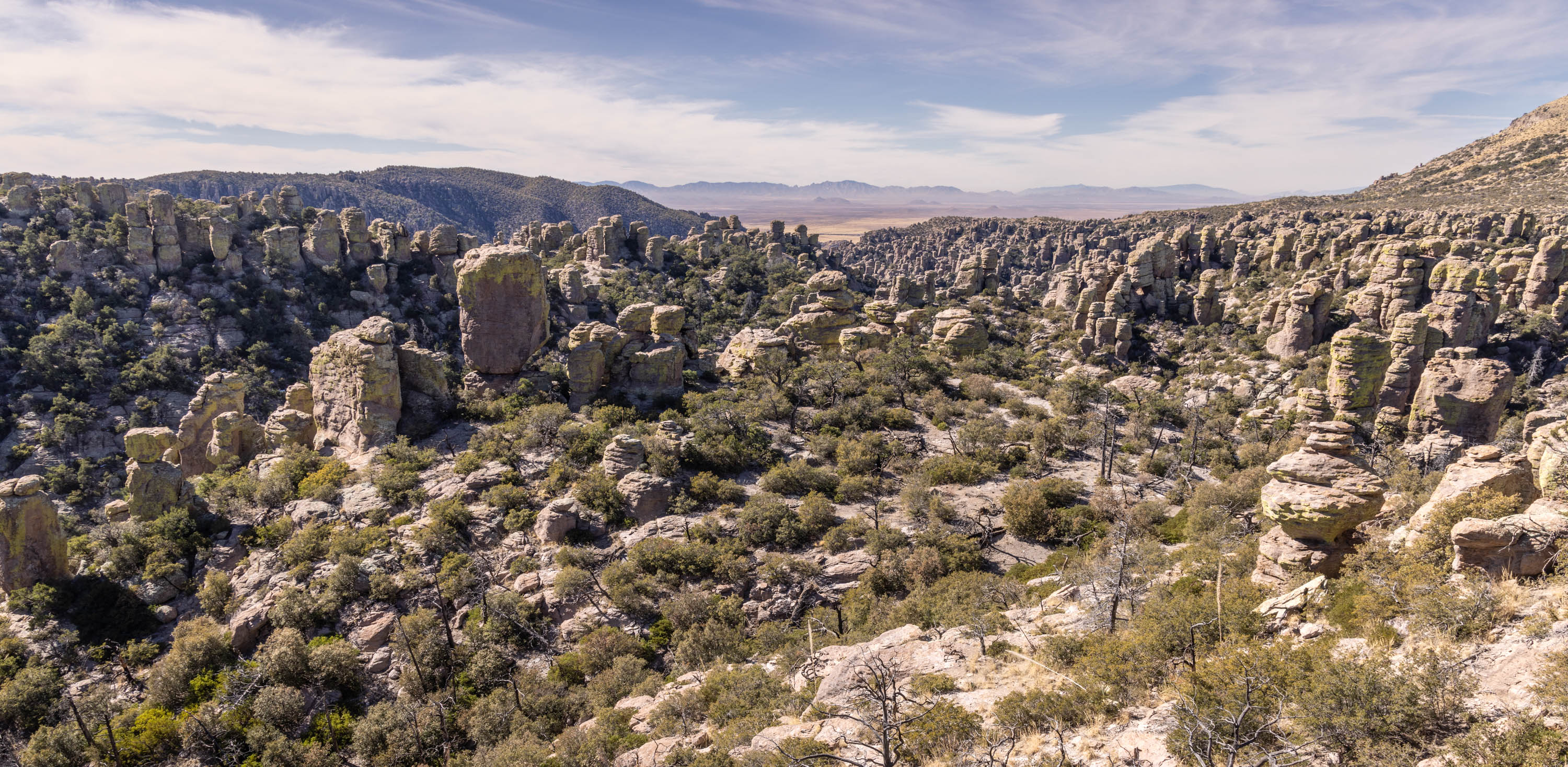
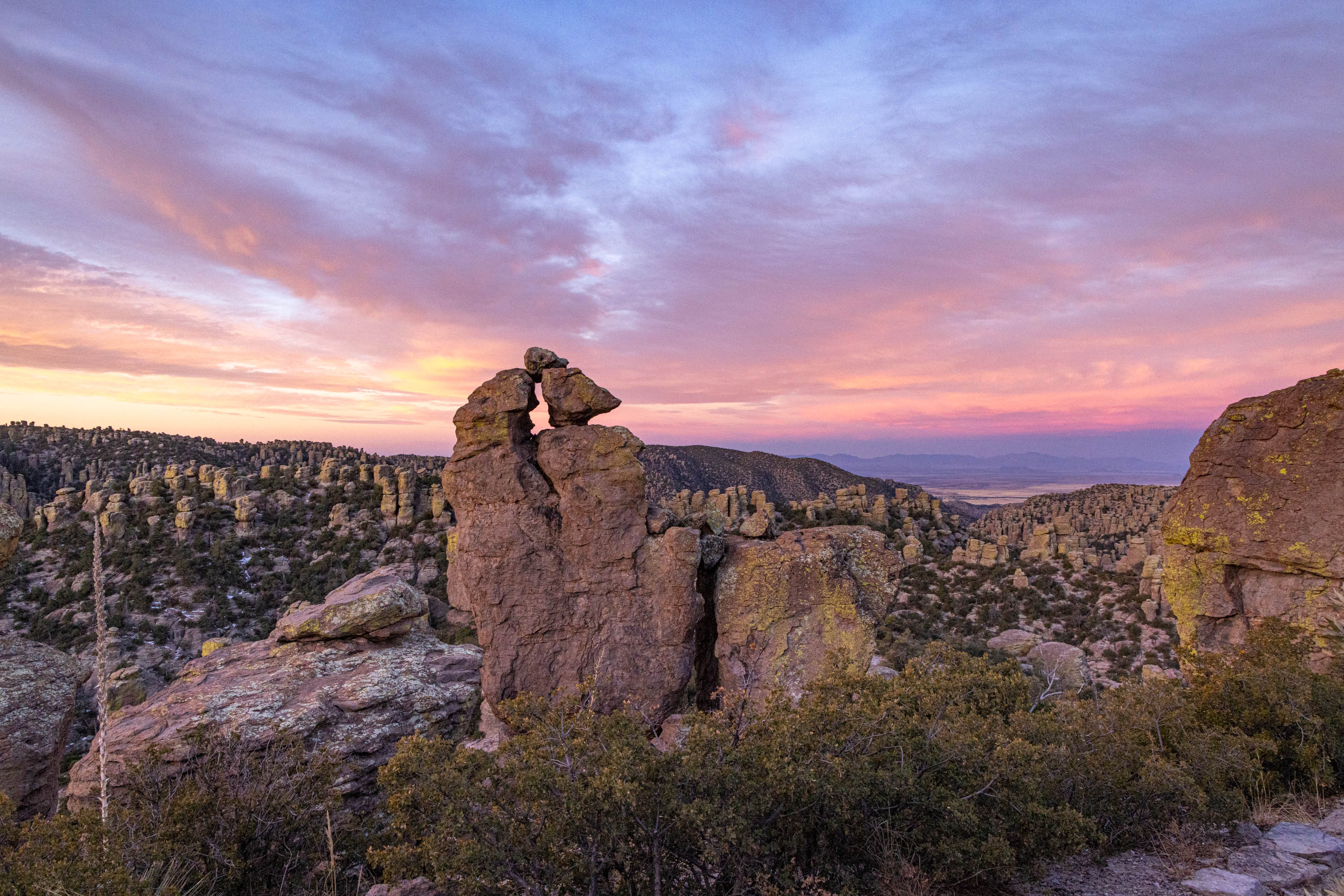
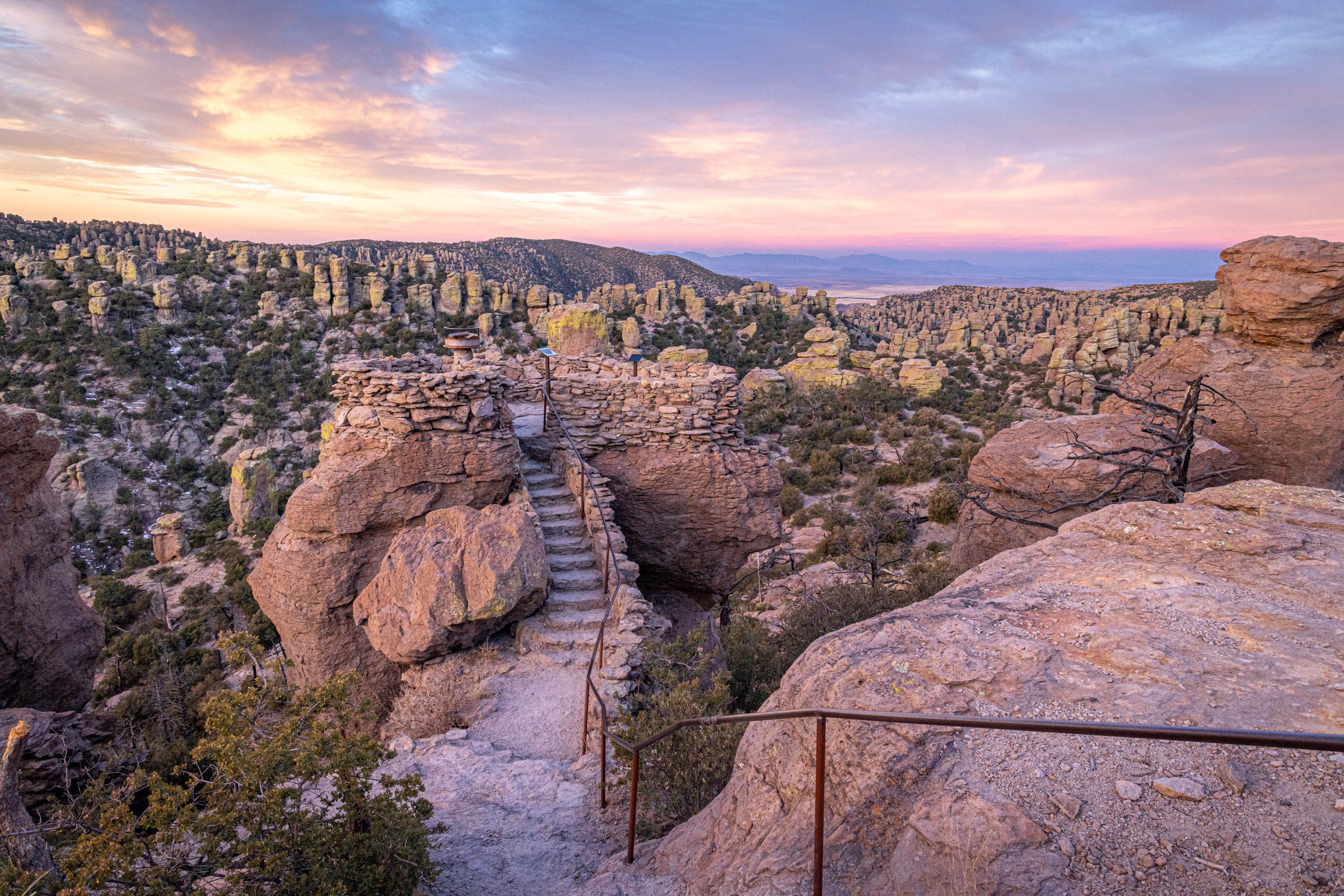
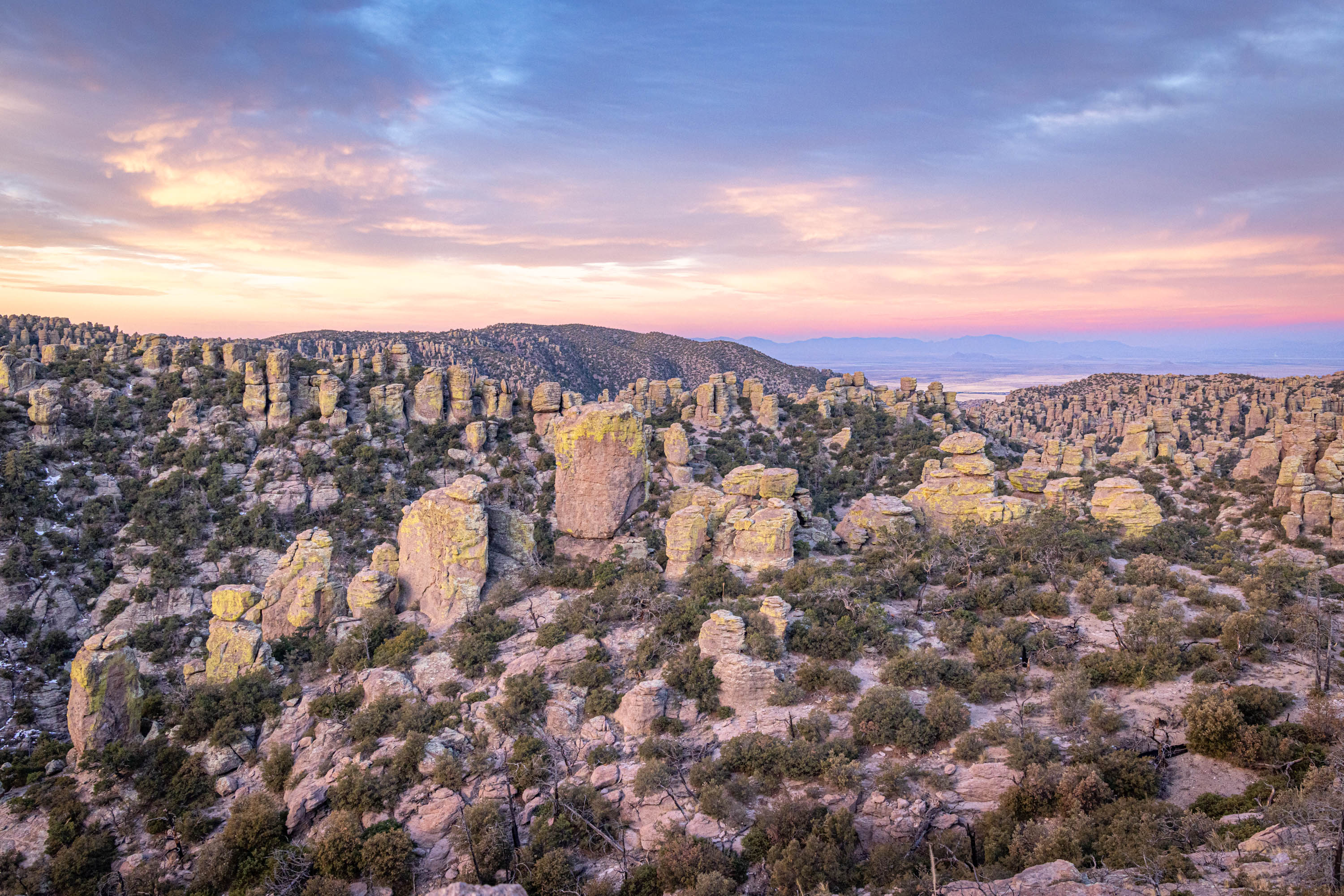
In the Southeast corner of Arizona lies this virtually ‘unknown’ Park managed by National Parks Service as a National Monument.
The site was established as a National Monument in 1924 to preserve and protect the rock formations and many pinnacles and spires that litter the landscape.
In 1934 the Civilian Conservation Corps built roads, trails, and structures to further establish the site and give many out-of-work young men jobs following the depression.
The park is over 12,000 acres; 84% of which is designated as a Wilderness Area. We loved walking the trails and were delighted to encounter a number of wildlife.
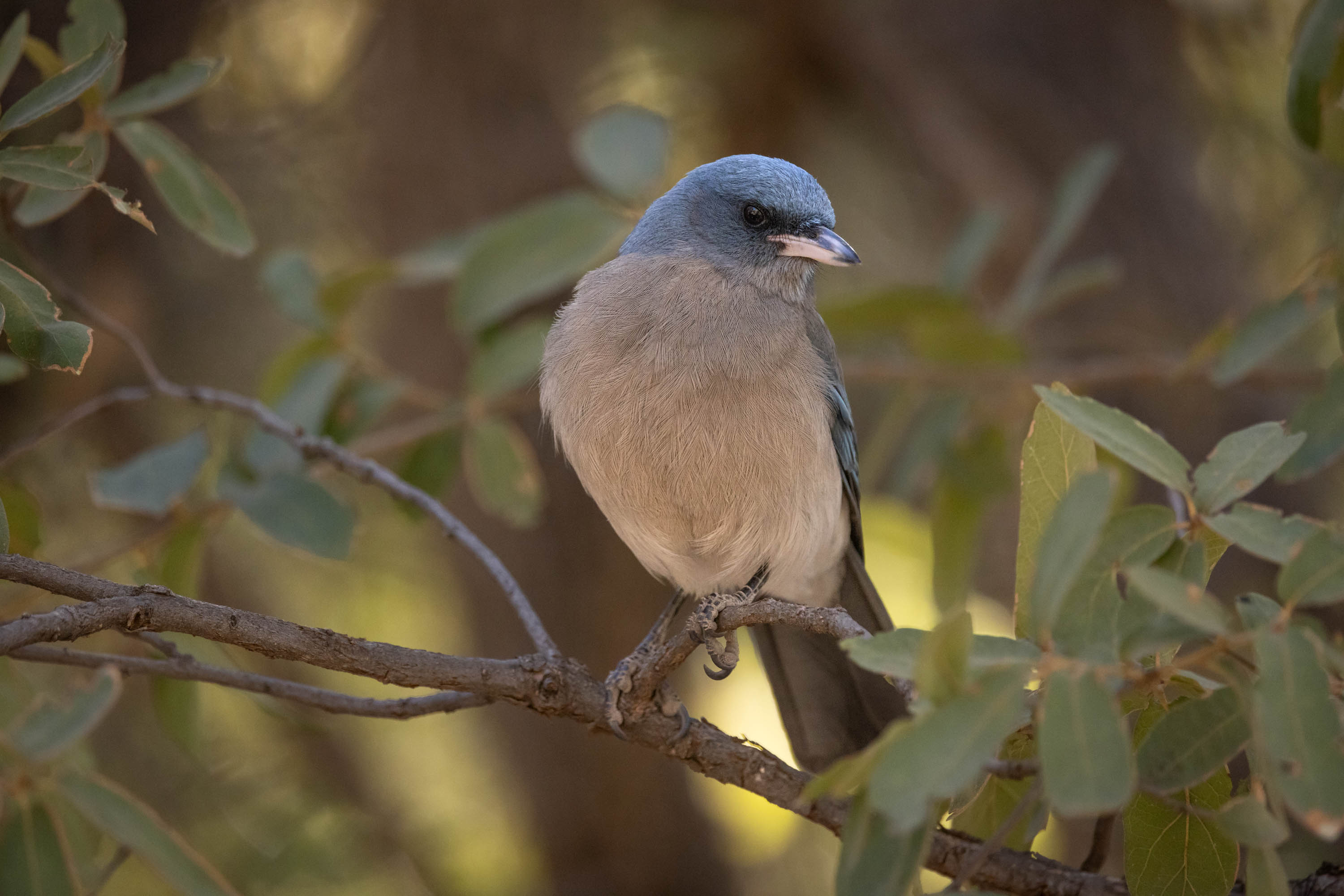
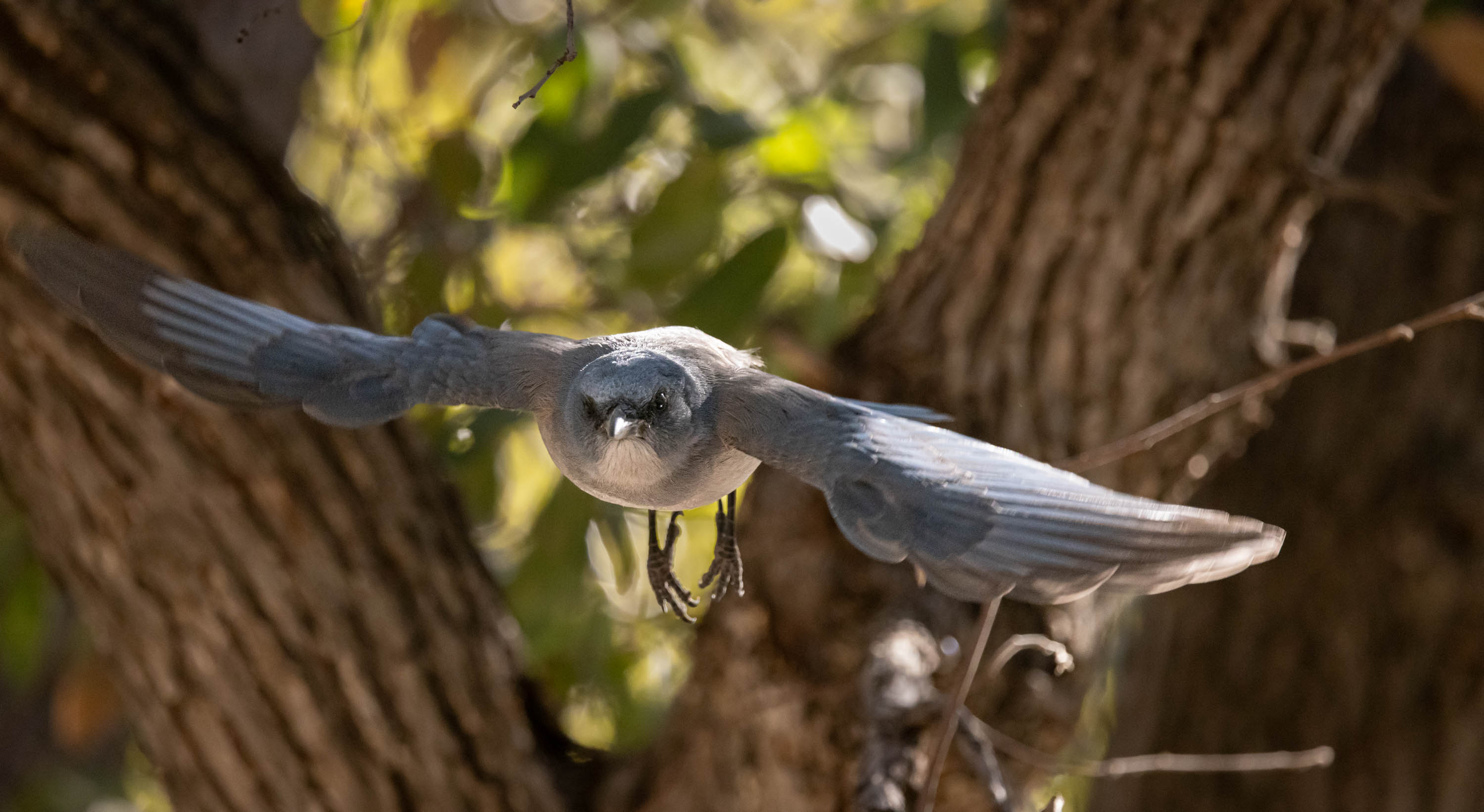
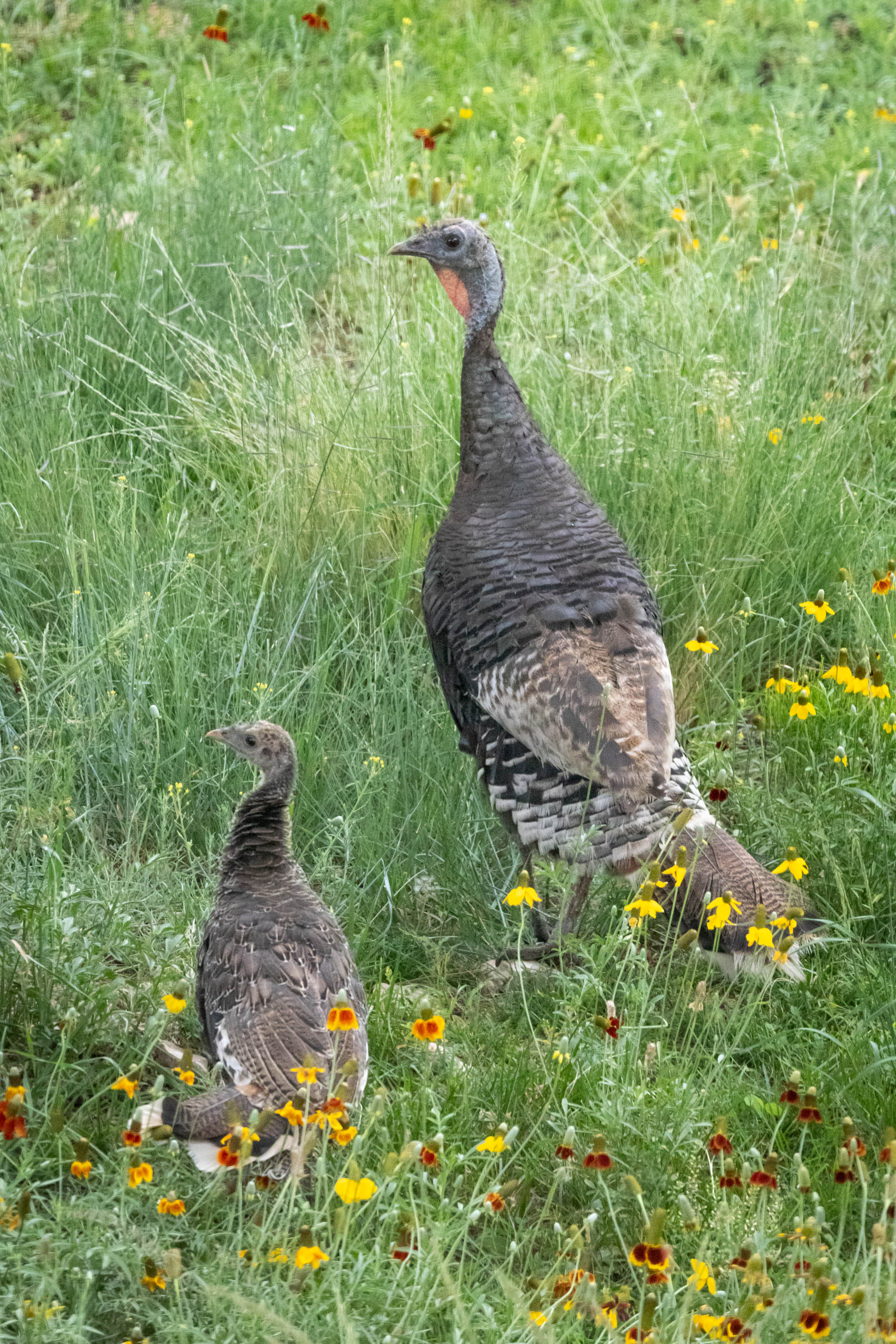
Not only did we see white tail deer and turkey, but quite a number of Mexican gray-breasted jays.
Mostly we were ecstatic to see our first coatimundi. Coatis are a small animal looking something like a cross between an anteater and a bear, but are actually members of the raccoon family. They live primarily in riprarian areas in canyons near water sources.
Their long snout, white face, and long tail make them very distinguishable from other mammals. We have camped out on multiple occasions over the years in areas known to be inhabited by coatis, with no luck, despite long periods of time in remote locations sitting in quiet for hours waiting for them to come in.
So when we saw our first ‘band’ or group of coatis we were beyond excited.
We were told to look for ‘dancing tails’, and it wasn’t until we saw it, that we understood what we were looking for.
With so little precipitation this year, we were lucky to find a stream with water that we frequented at dawn and dusk in hopes of catching sight of a coatimundi. It wasn’t until after multiple trips that we finally spotted our first coati.
We were fortunate enough, as it turned out, to get multiple sightings.
As with any nature, the more you pursue it, the more you learn. We discovered that the coati would come out foraging for nuts and grubs in the heavy fall leaves coating the ground.
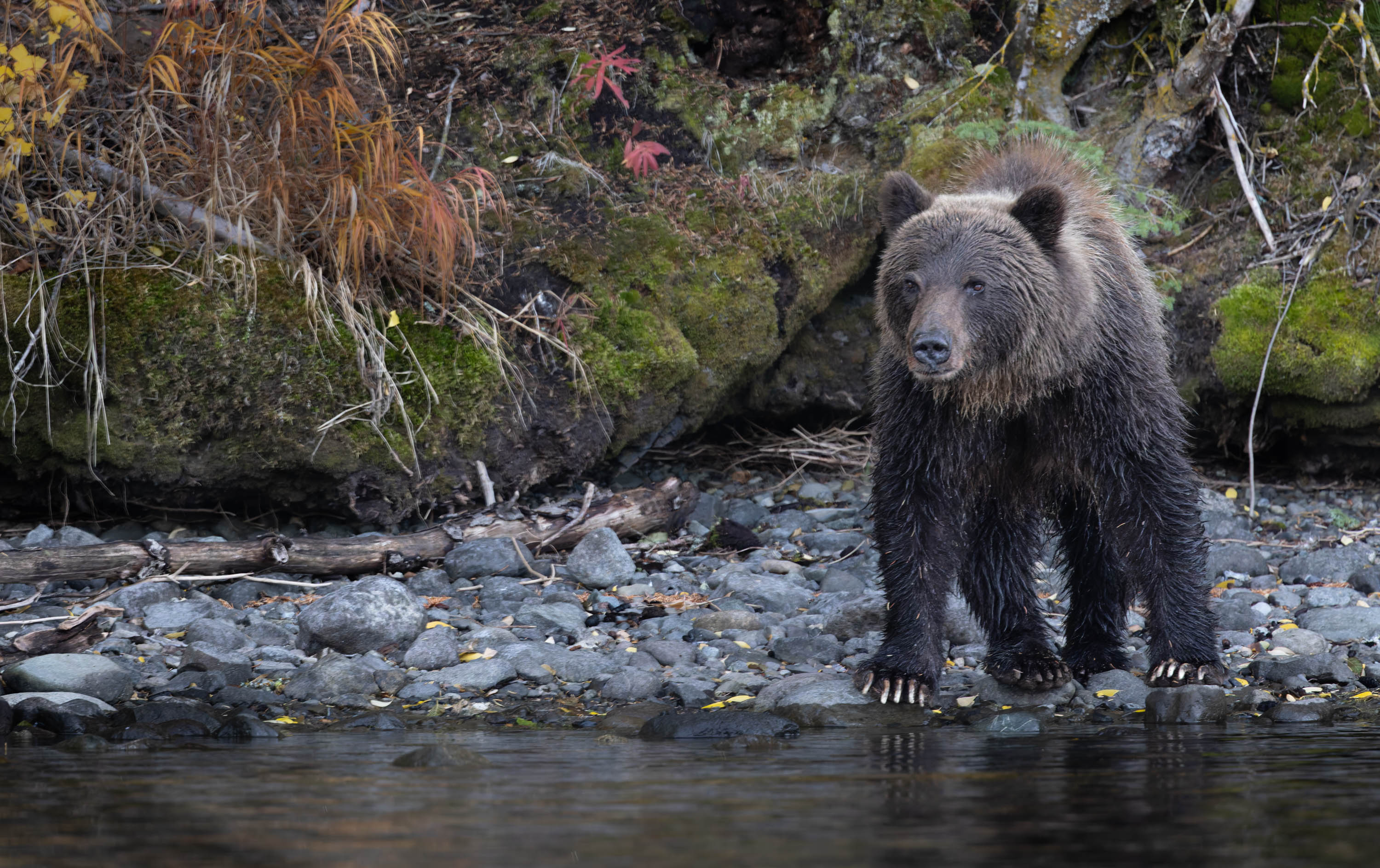
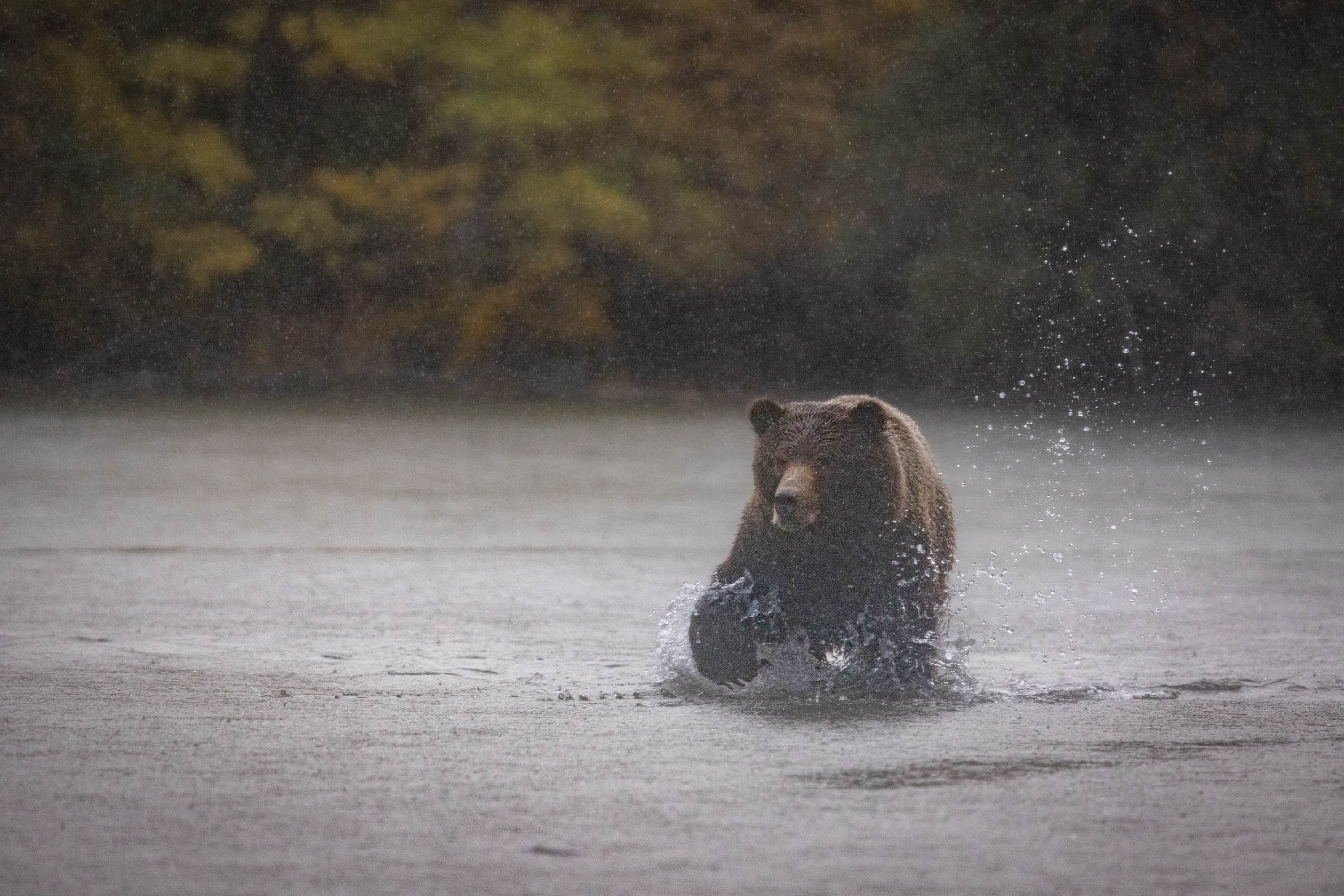
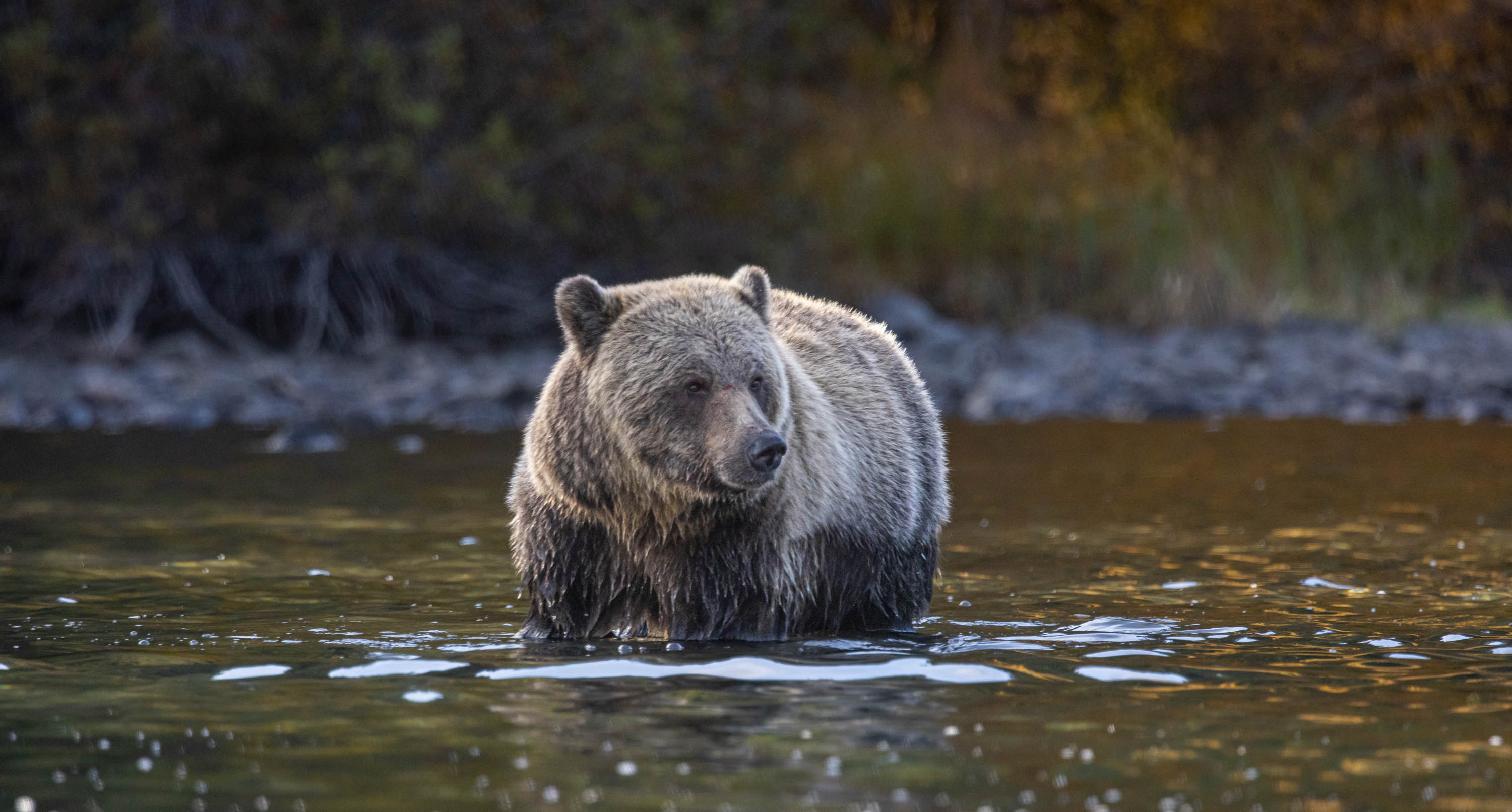
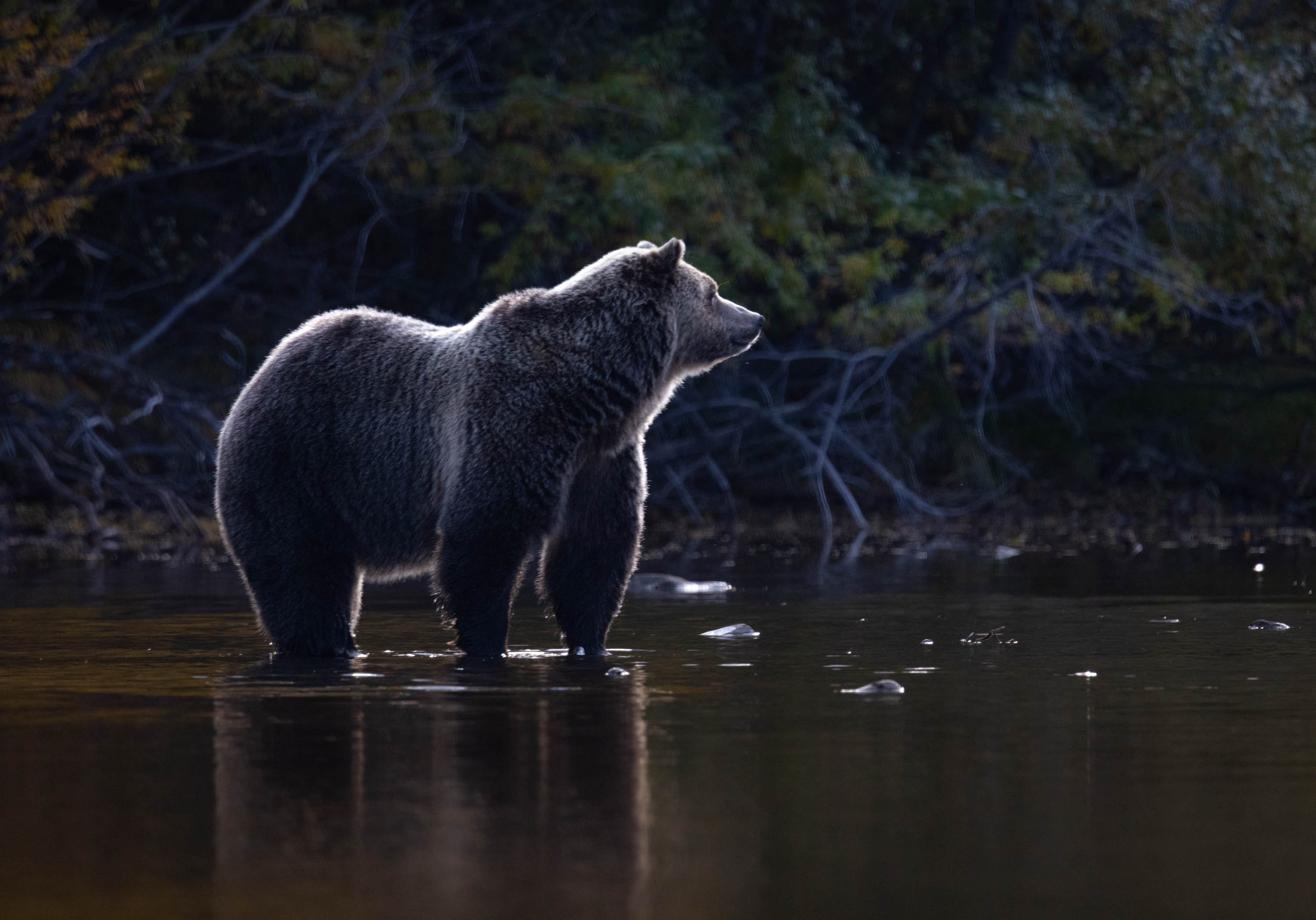
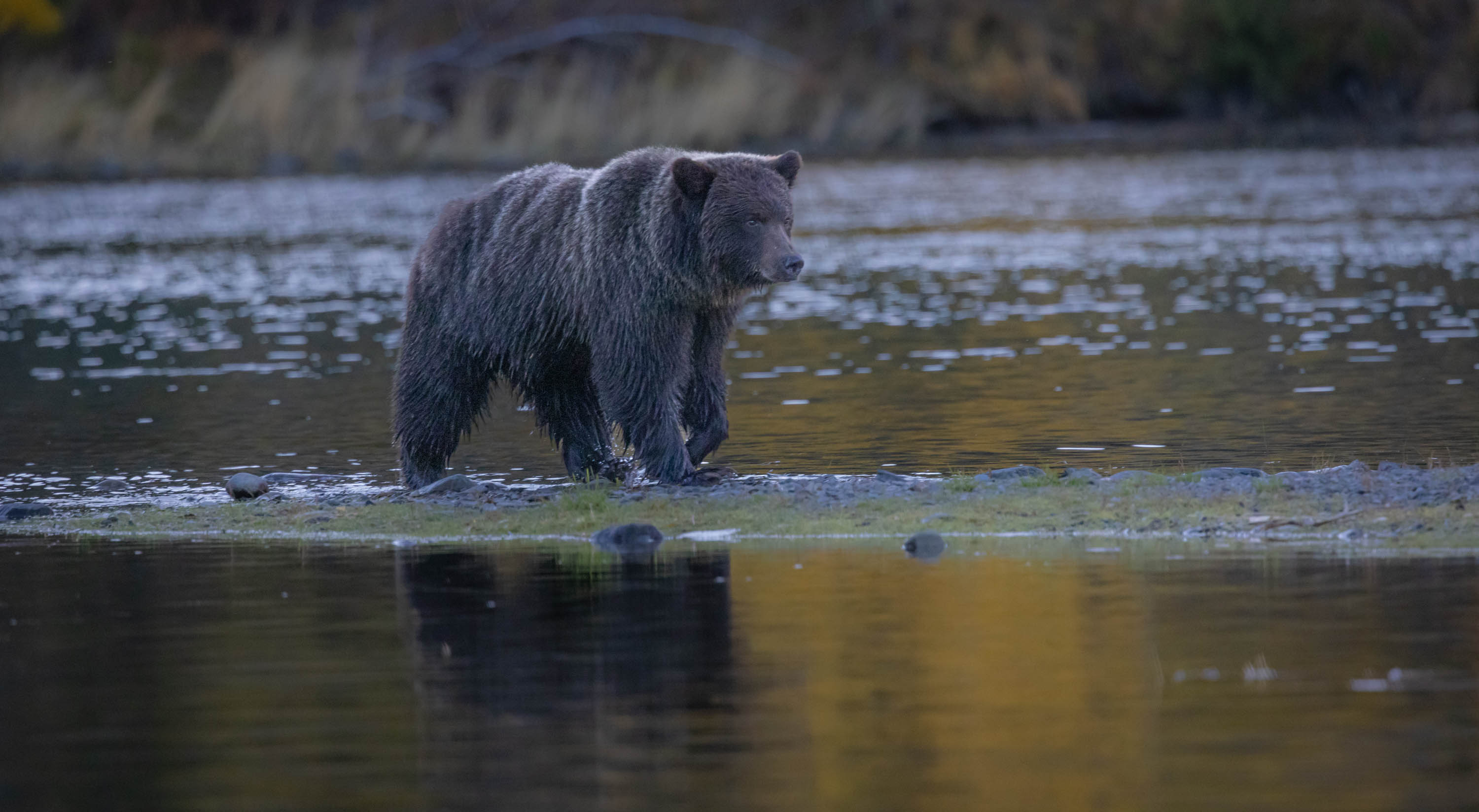
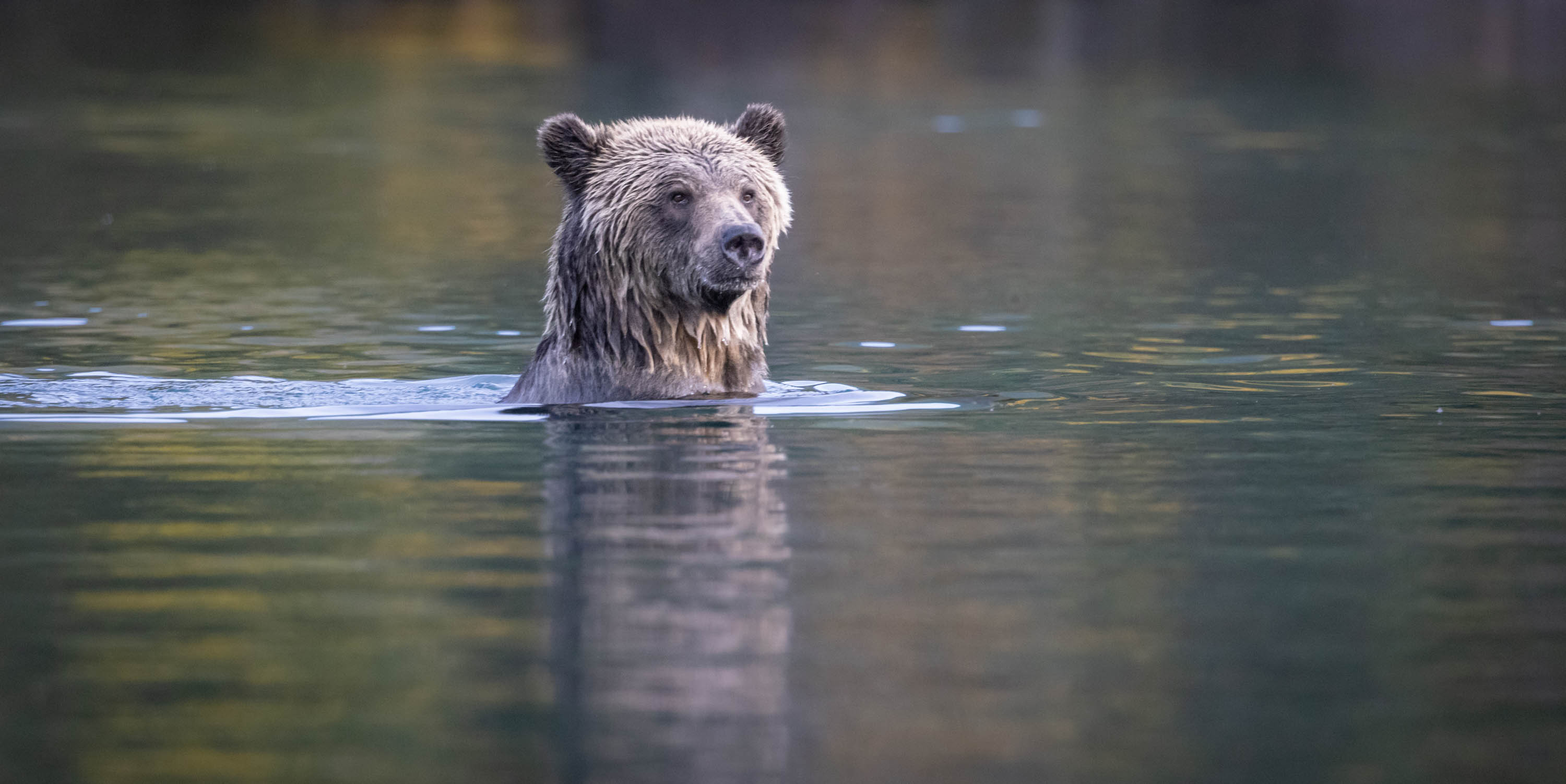
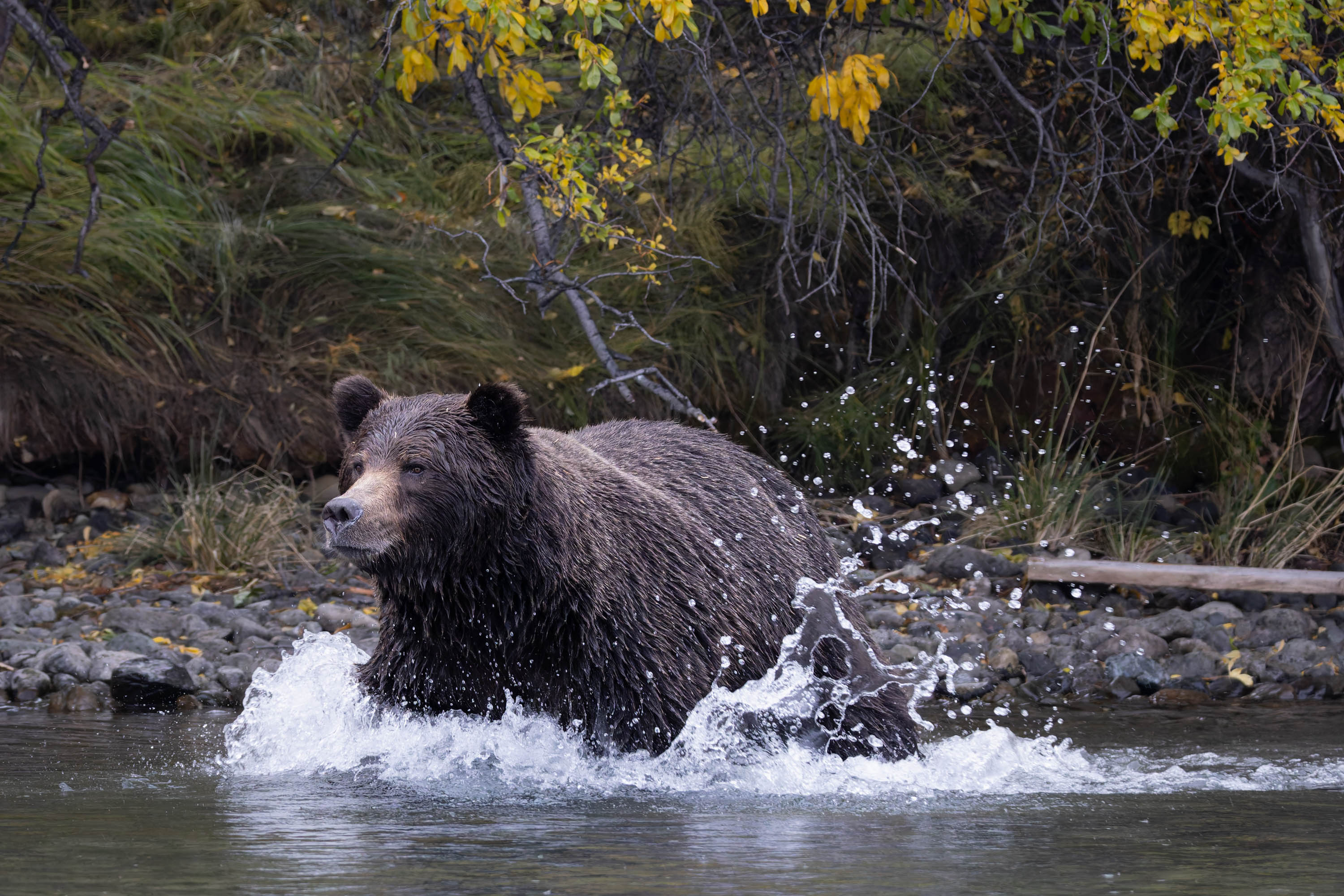
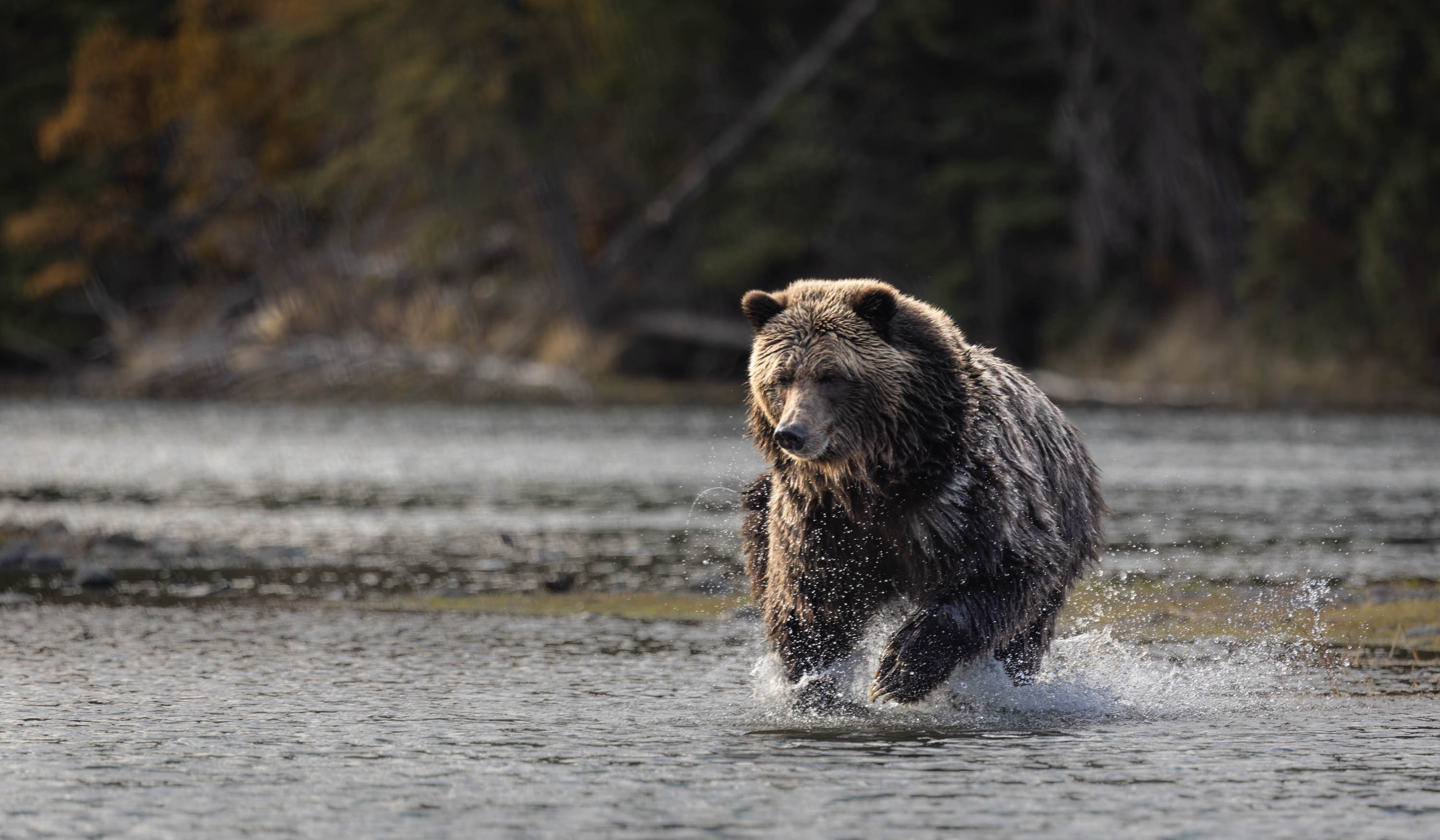
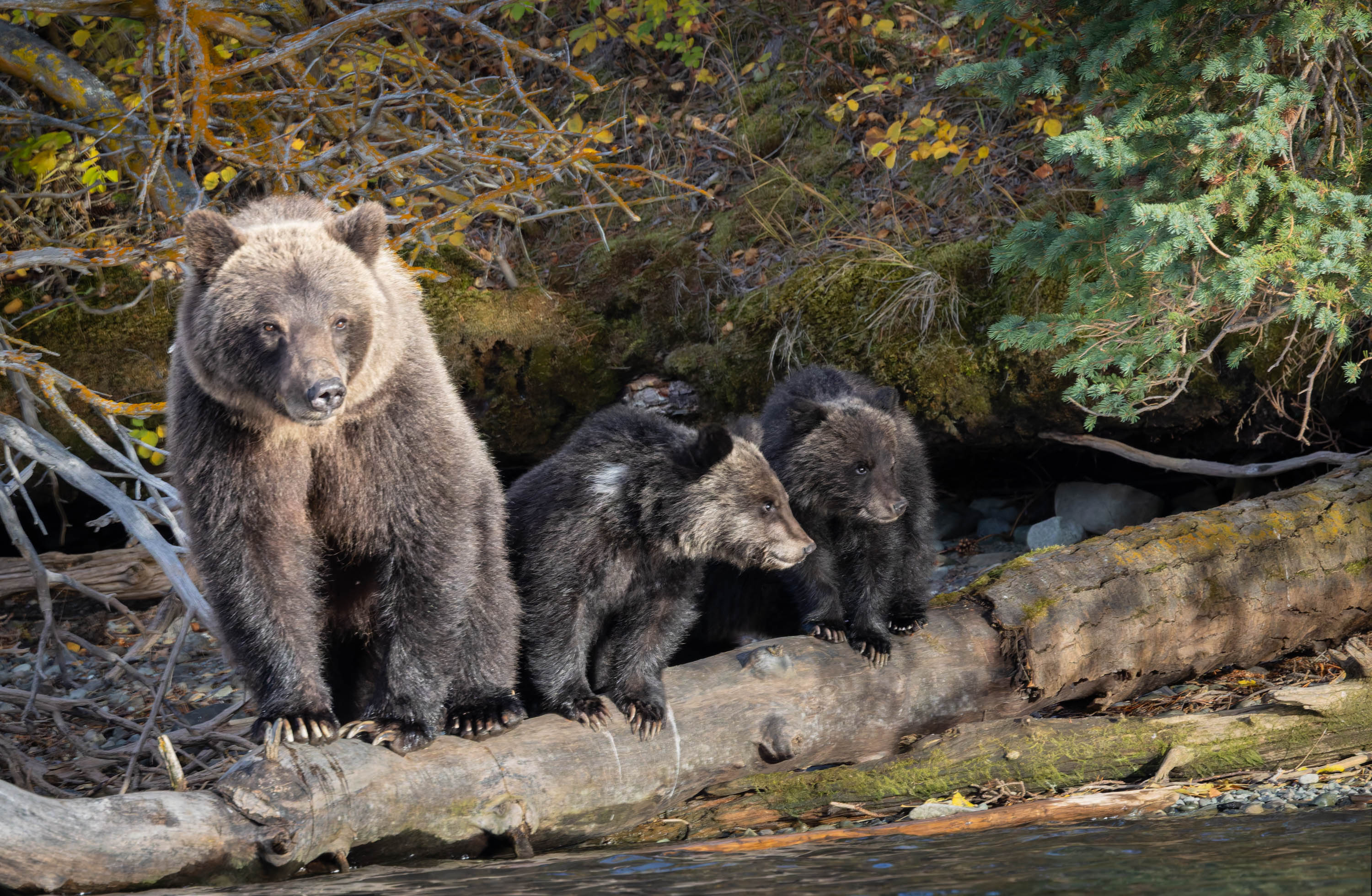
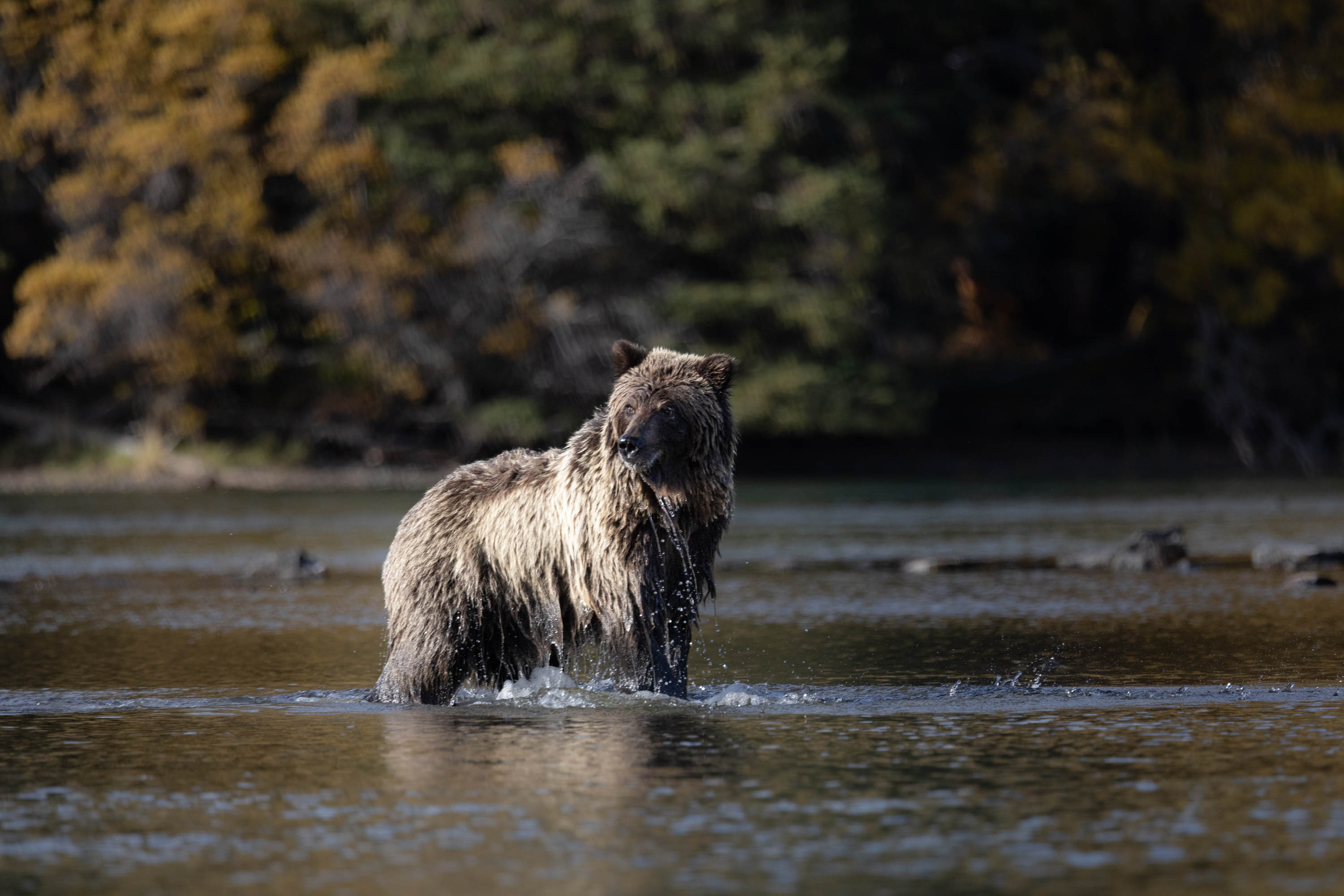
We just got back from a great Grizzly bear trip, and the best part was, aside from the grizzlies themselves, was the people we met. In particular, we met a kind and generous photographer, Mike, who was open to my incessant questions and a wonderful, patient teacher.
It was not only a great refresher of some things I have tried to embrace, but also of new tricks and techniques I had yet to learn.
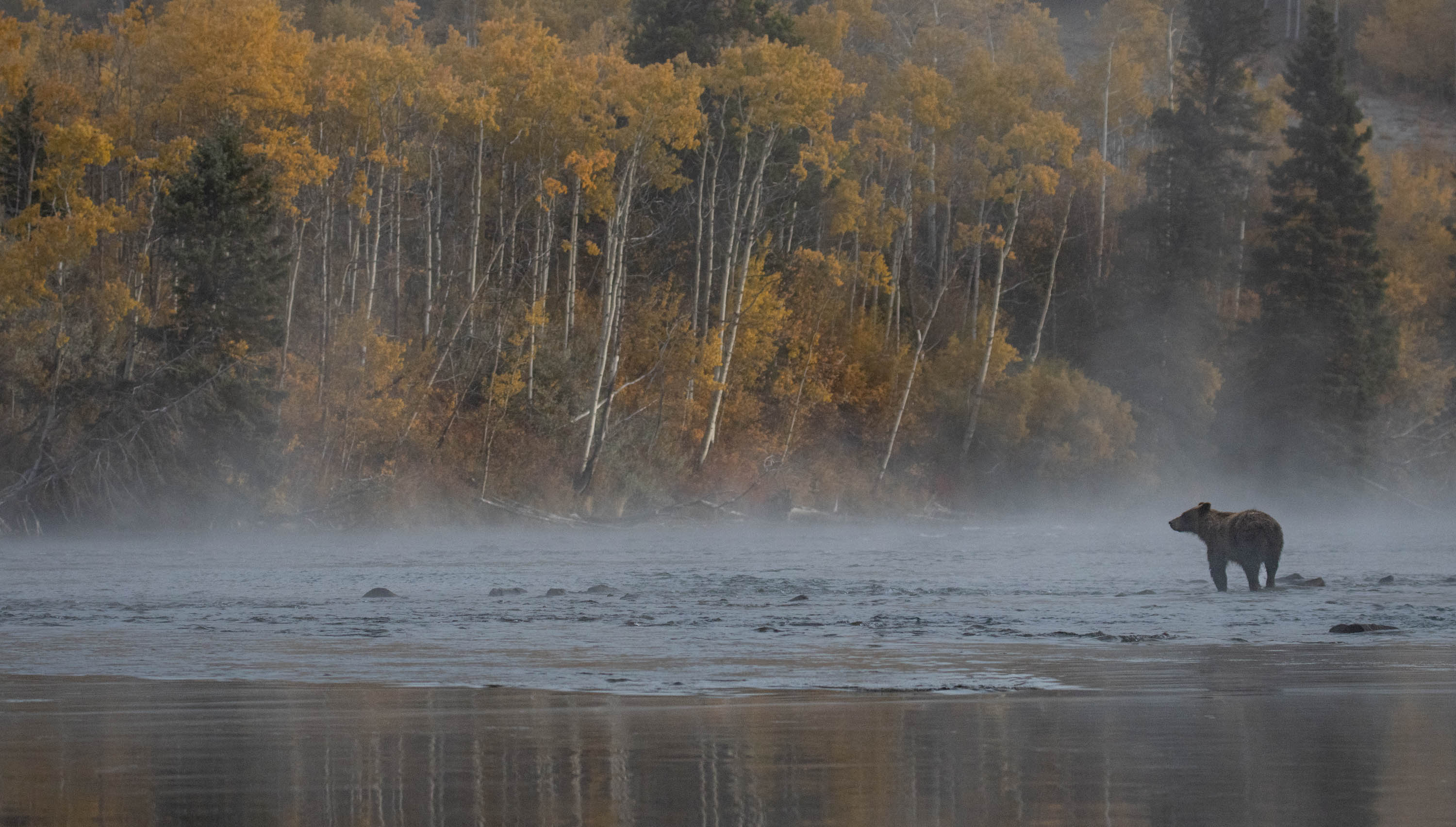
I am fond of the close-up / fill-the-frame wildlife portrait, and Mike reminded me, that while a portrait has it’s place, including some of the atmosphere and environment the animal lives in makes for a more compelling photograph.
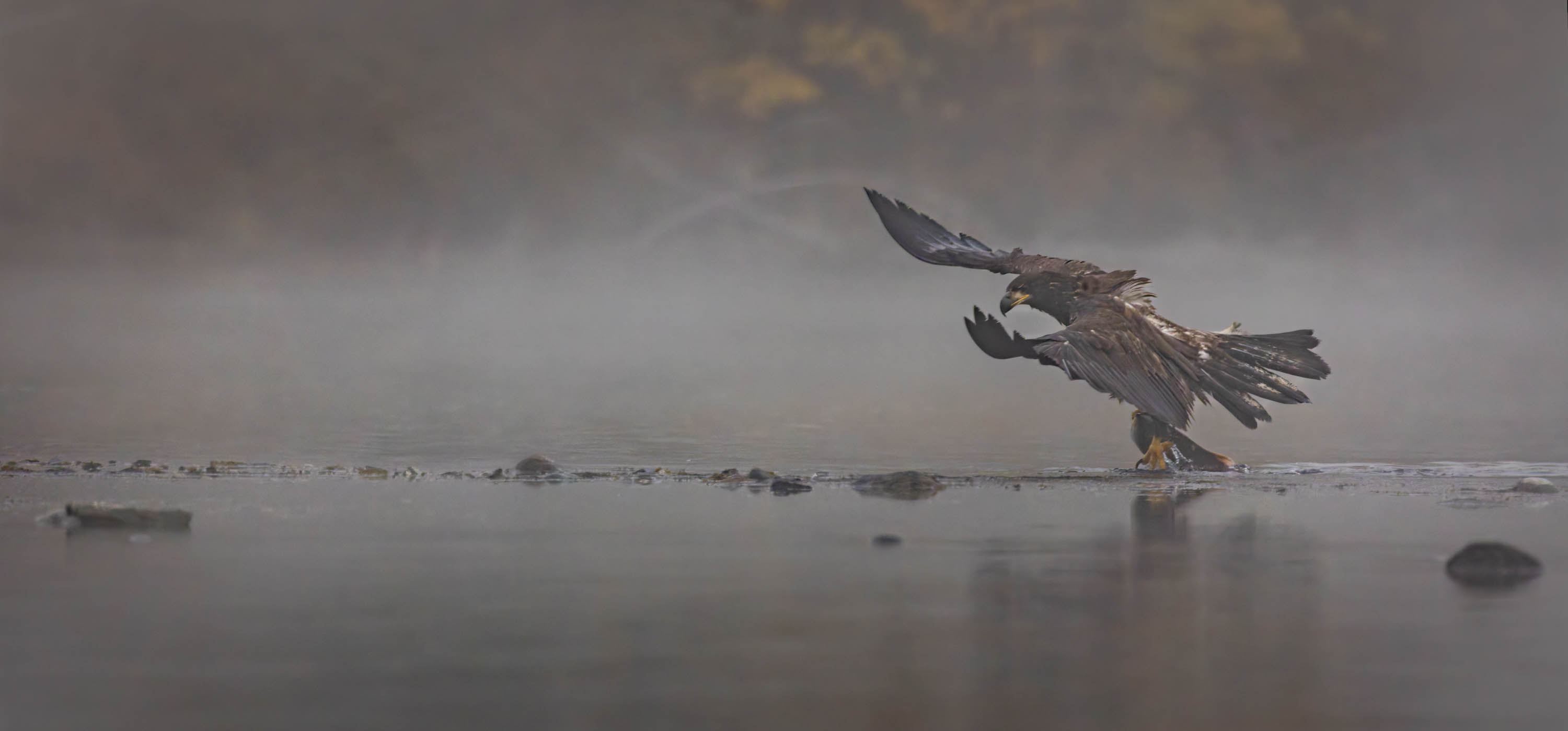
While the foggy and raining days were interesting and added a lot of character and moodiness to the scene, they can also be difficult to get sharp images through the haze.
In bright high contrast lighting situations, I learned to try rim light shots by stopping down my exposure to compensate for the harsh highlights.
Getting low to the ground allows one to take advantage of the reflections on the water, and bring the photograph eye level with the animal.
Action makes for compelling photographs, but it should be of the face with the animal coming toward you, not butt pix of the animal running away.
Capturing personality and gesture are key to a more successful image.
For birds in flight shutter speeds of 1/3200 sec are best. Sadly, I only got foggy golden eyes and eagle.
A blue sky makes for a terribly boring background, made so much more interesting by landscape.
Probably the most important lesson was that there is just no substitute for great light, where your subject is well lit.
I came away with lots of grizzly photographs and furthered my education in my passion of photography. I can’t thank Mike enough for his help and mentorship.
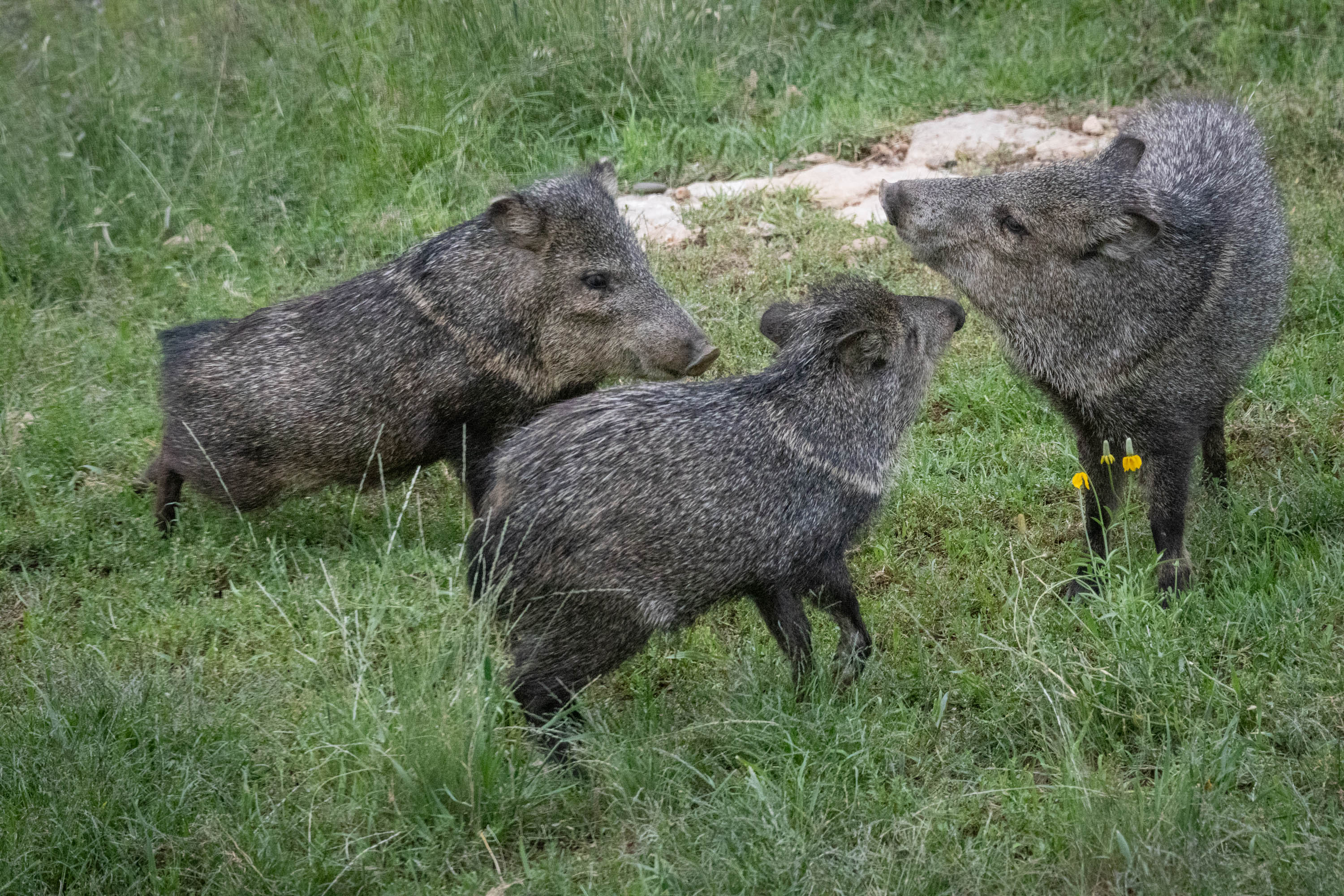
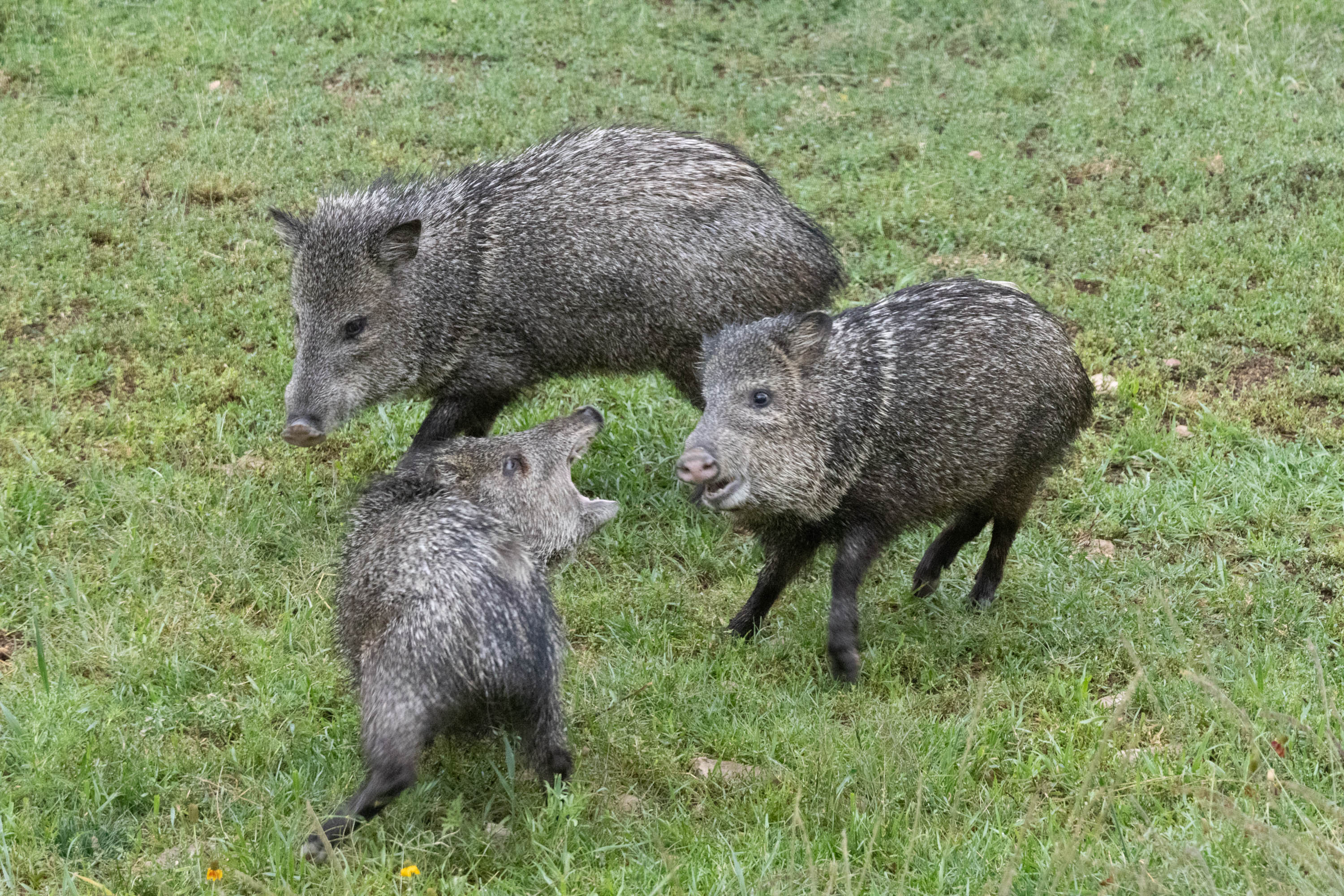
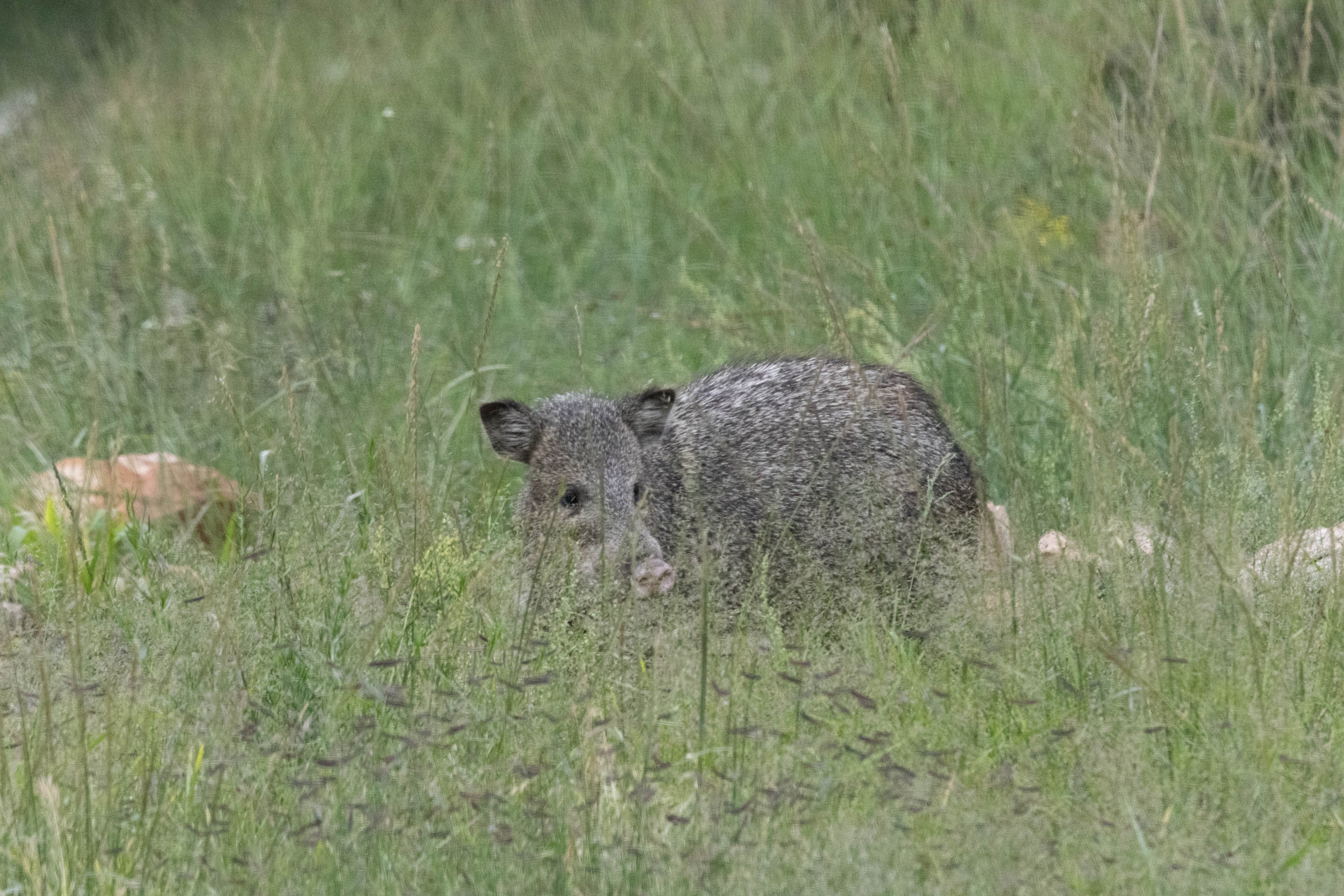
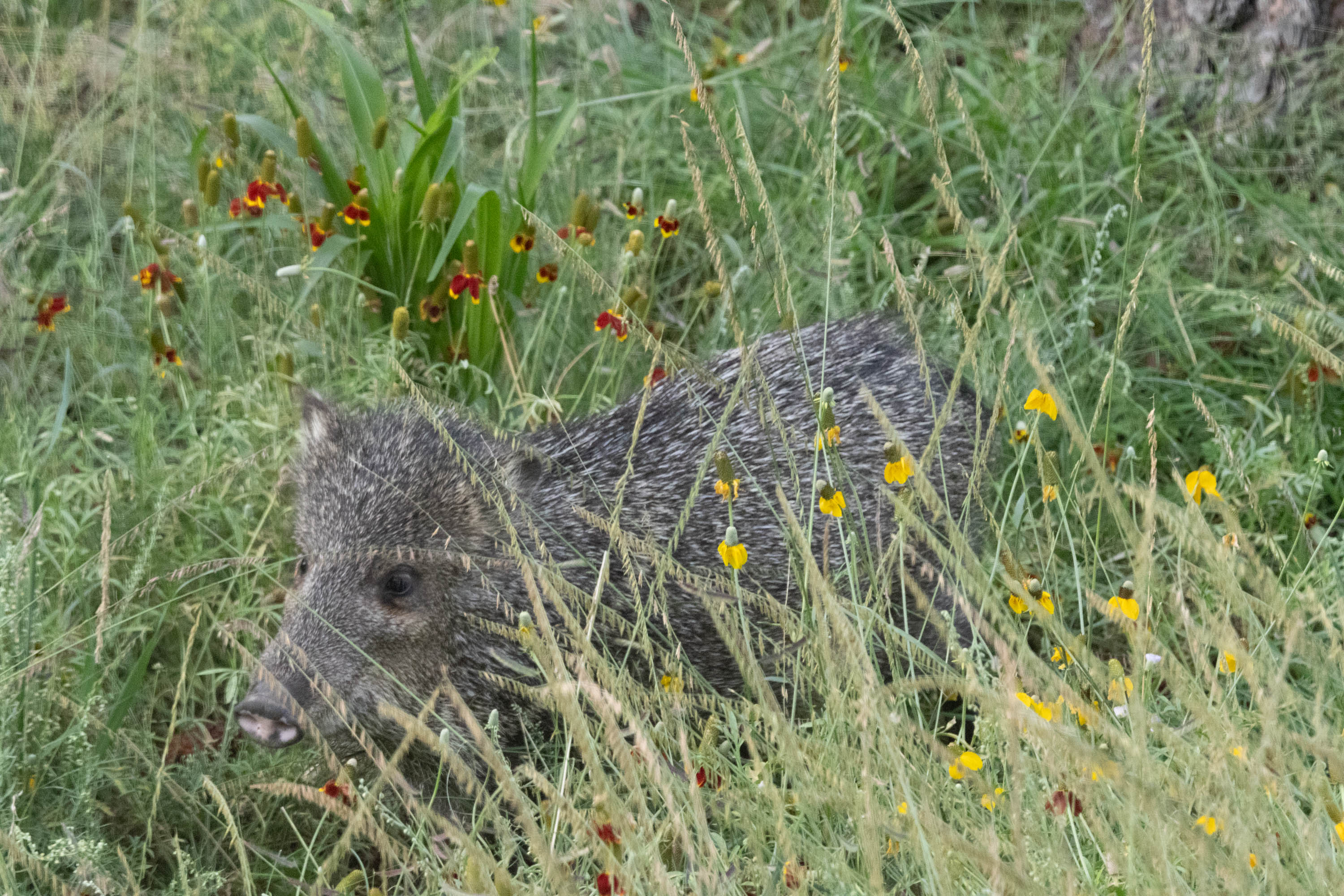
It sounds like a spicy green you put in your salad. But in reality collared peccary is better known as javelina. It’s as foreign to these parts as spicy greens. Down South, you know, Phoenix / Tucson area is a more suitable home for the herbivore desert swine that subsists on desert fauna like mesquite beans, prickly pear, and desert greens.
The collared peccary is so called for their light colored collar around their neckline.
These small ‘pigs’ are relatively small in stature – only 2′ tall by 3-4′ long, generally 35 – 55 lbs. We encountered a small family of three – presumably the mother, father, and baby. They were very affectionate with one another and rubbed their scent on their skin to identify with one another.
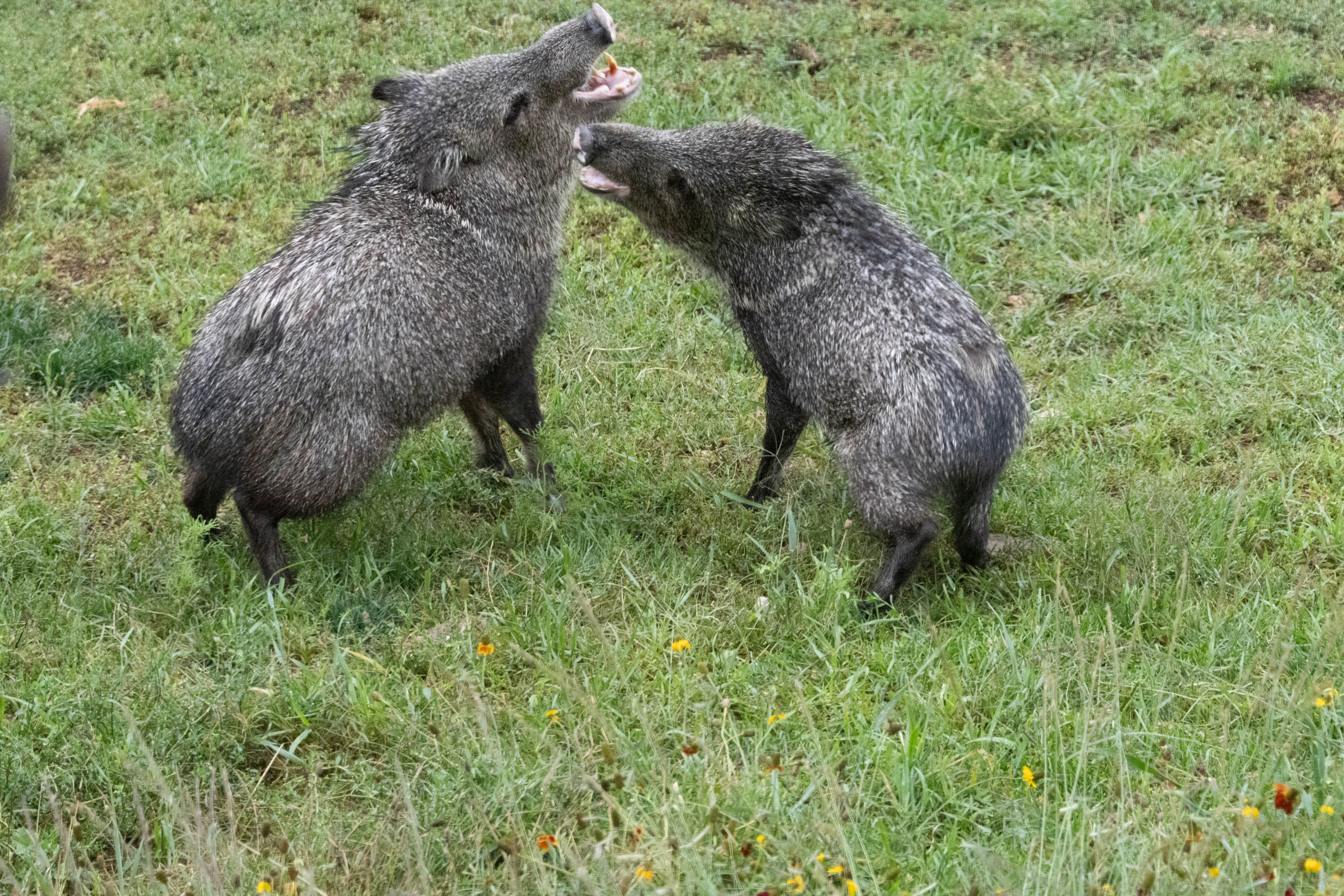
The javelina are myopic and have poor eye sight, but rely heavily on their sense of smell and hearing. They spar with one another in a playful manner, as if to teach skills for the wild with predators such as coyotes, bobcat, and mountain lion lurking.
They were quick to vanish at the sound of danger, but slow to notice me watching with my camera.
They were more interested in the patch of lush green grass they enjoyed in an otherwise field of fallen dry pine needles in the thick forest they found themselves in.
Despite their unusual sighting, we were happy to see them and capture some fun shots of the peculiar beasts.
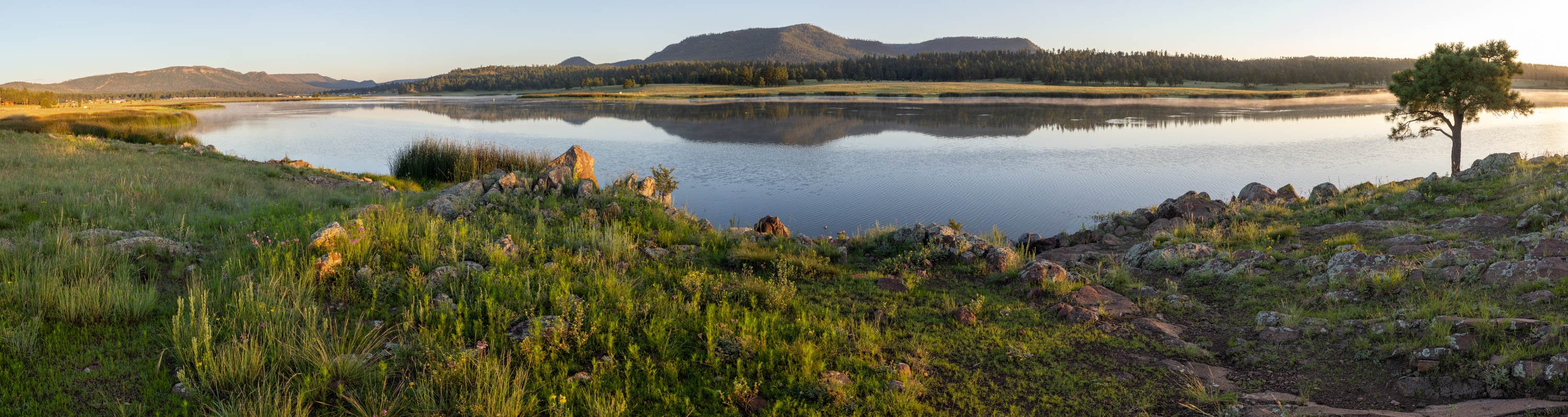
Just East of Alpine nearly to the New Mexico border is a 75 acre beautiful lake at close to 8,000 feet elevation. It’s home to huge herds of elk, turkey, and a variety of waterfowl.
Campers, bicyclists, fishermen, four-wheelers, and hunters flock to the respite. It’s just off Highway 191, otherwise known as the Coronado Trail National Scenic Byway, which follows the trail of the explorer Francisco Vasquez de Coronado, who in 1540 sought the fabled “Seven Cities of Cibola”.
Wildflowers abound during the summer following monsoon rains, attracting birds, butterflies and other flying pollenators.
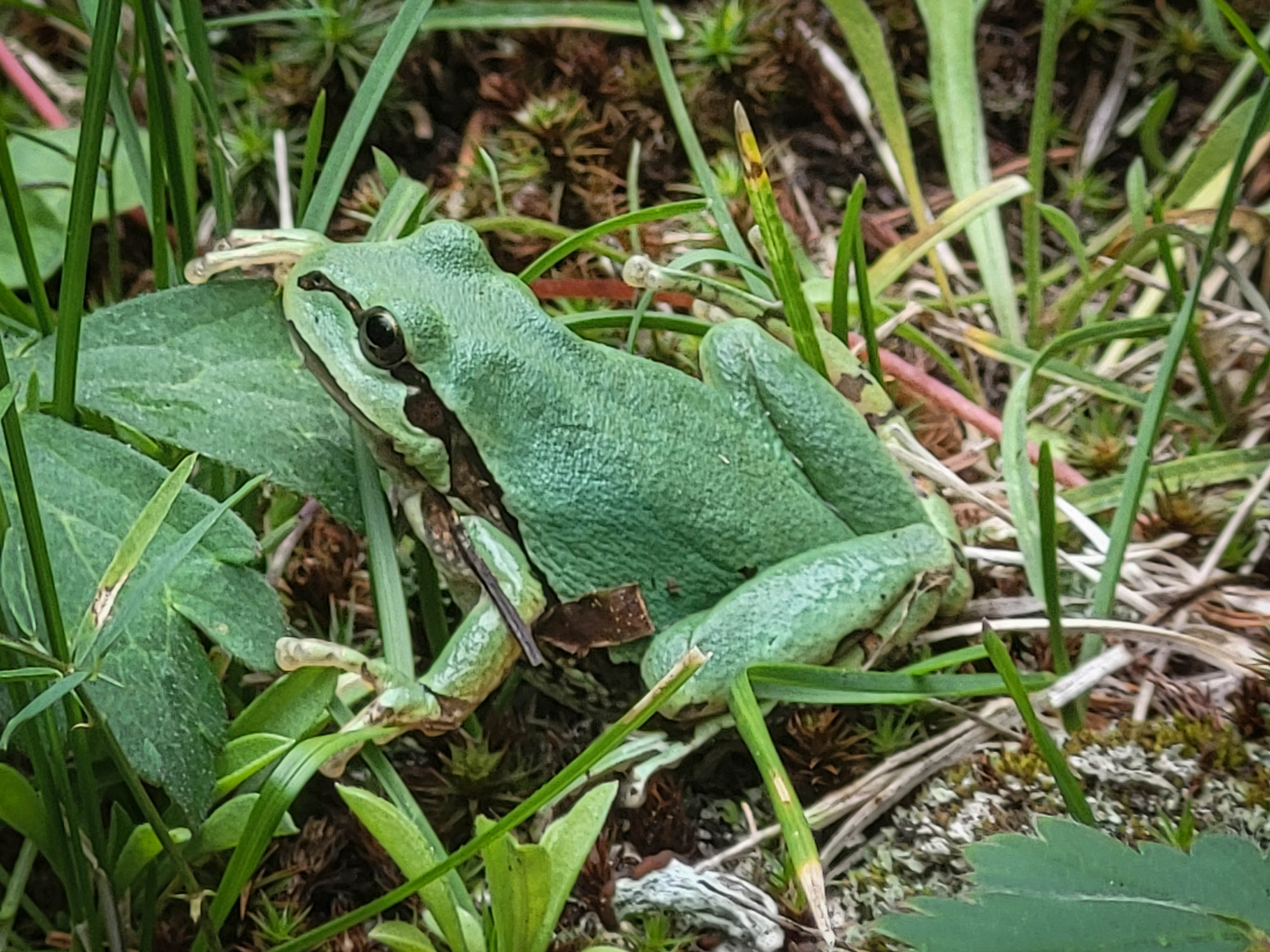
The Wildlife area provides a riparian area enjoyed by osprey, bald eagle, weasels, and tree frogs.
Whatever your allure, Luna Lake offers a little bit of everything for anyone who enjoys the outdoors and nature.
Pursuing my passion of photography has been difficult for me lately, but one must use what they can to ‘make it happen’.
As a result of a recent accident, I have a bum hand, but have found that with my camera on my tripod, I can set the camera up so that I can release the shutter from the camera’s rear LCD screen.
The simple tap of the rear screen focuses, and takes the photo in one fell swoop, making it not only possible, but easy to snap photos.
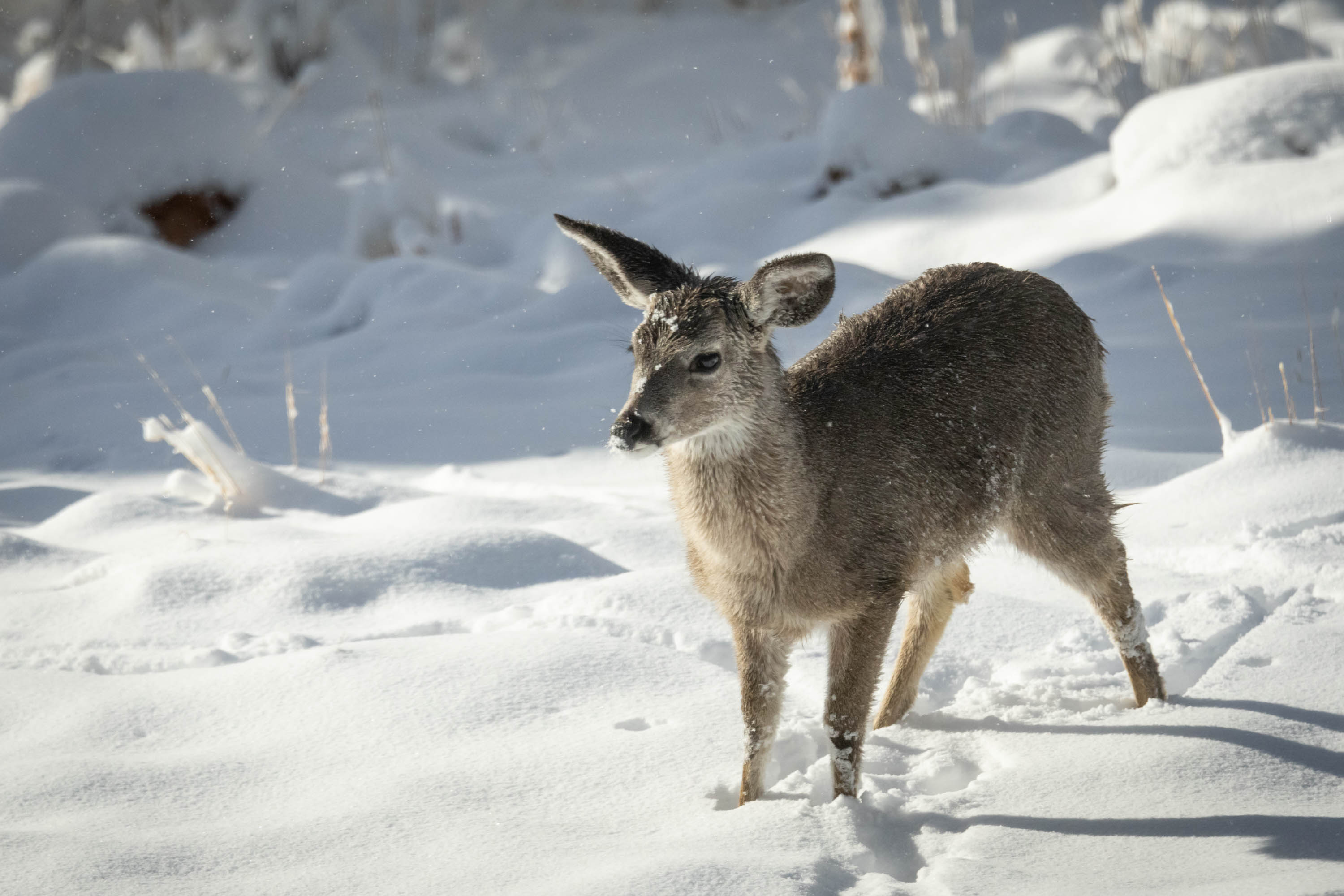
It seemed criminal to not take pix during our recent 2′ of snow. Where there is a will there’s a way.
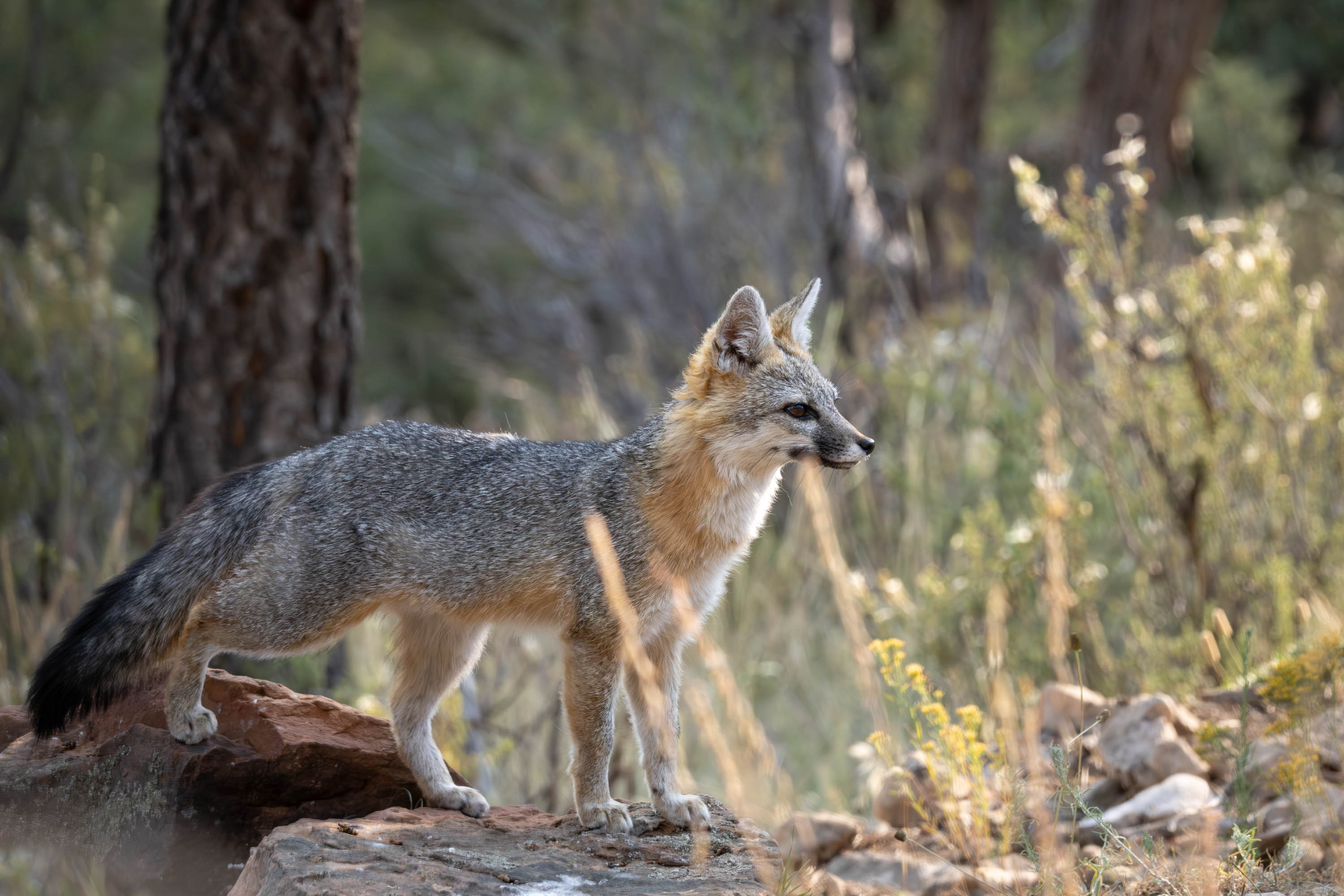
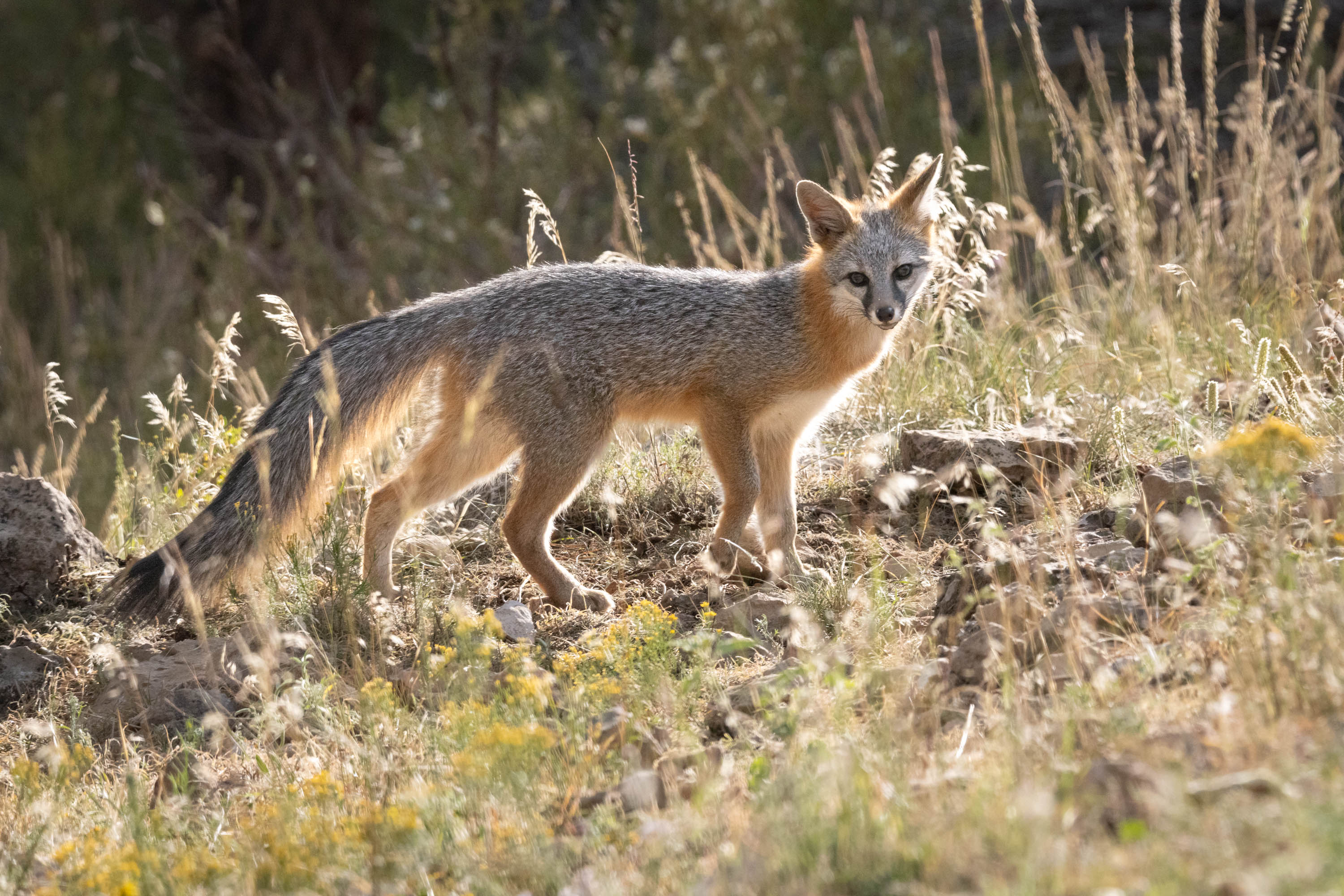
We have been fortunate enough to see gray fox this year, which is fortuitous given its nocturnal nature.
The gray fox normally frequents ridges and canyons, but can be found in wooded areas and grasslands. We were lucky enough to witness mom and 2 kits playing.
Our sightings were limited though, as the gray fox can be quite skittish, particularly during daylight hours.
Their predators include mountain lion, bobcats, coyotes, eagles, owls, and hawks, all of which we have our fair share, particularly the pesky mountain lion that wants to eat our pup for a snack.
The gray fox are mostly omnivores and prey on chipmunks, mice, bunnies, and the occasional bird or insect. Whatever brings them here, we are happy to see them, for as long as they happen to visit.
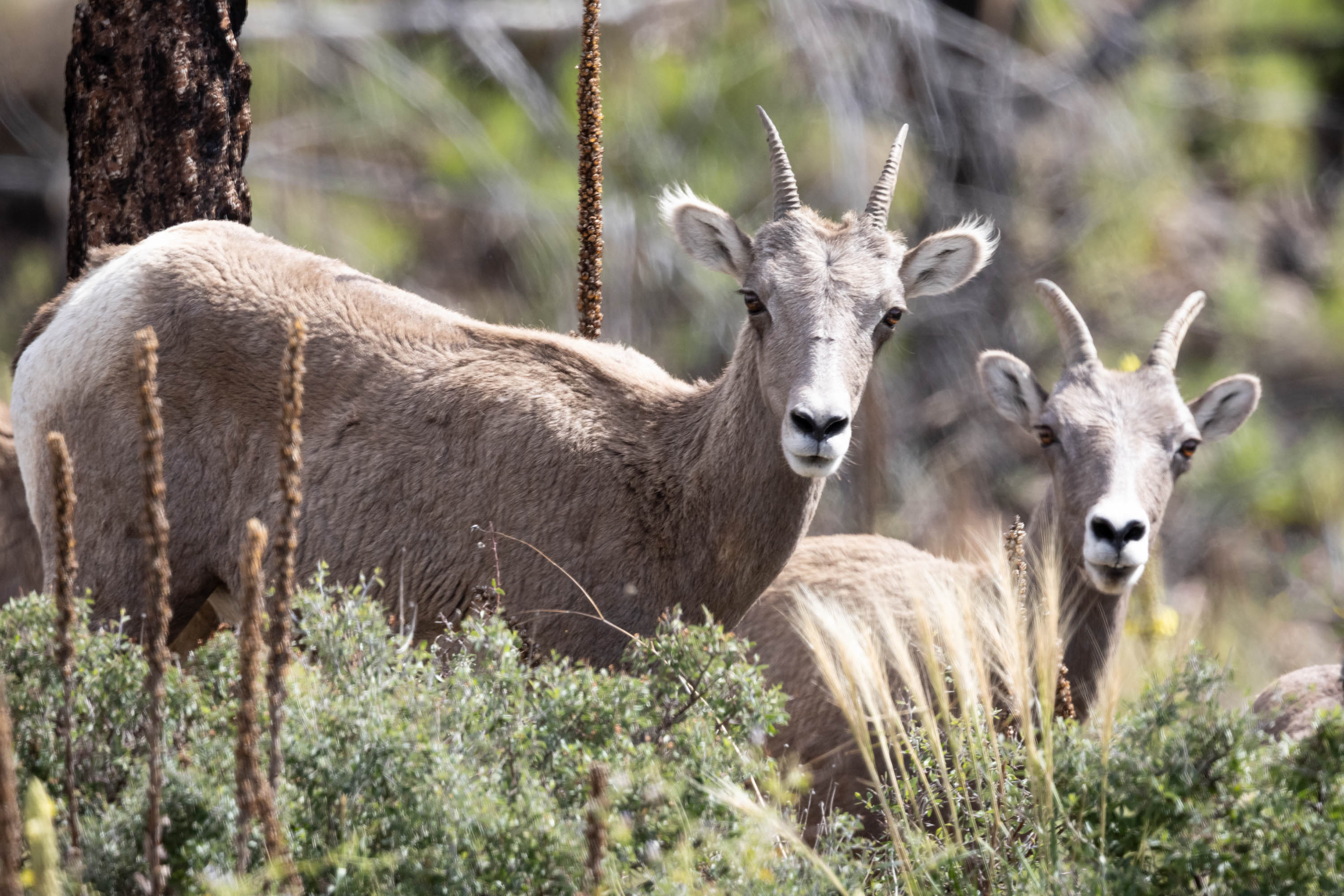
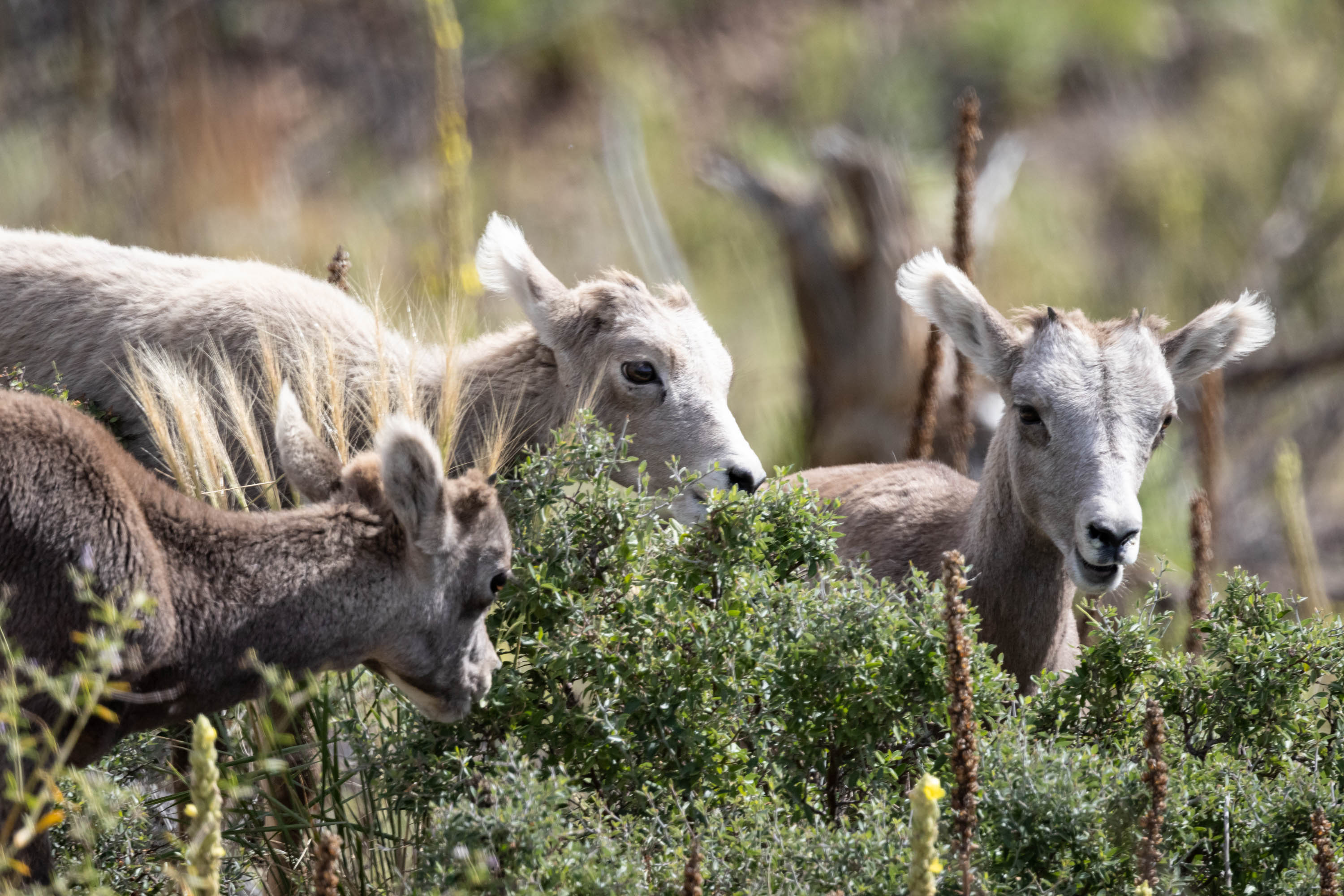
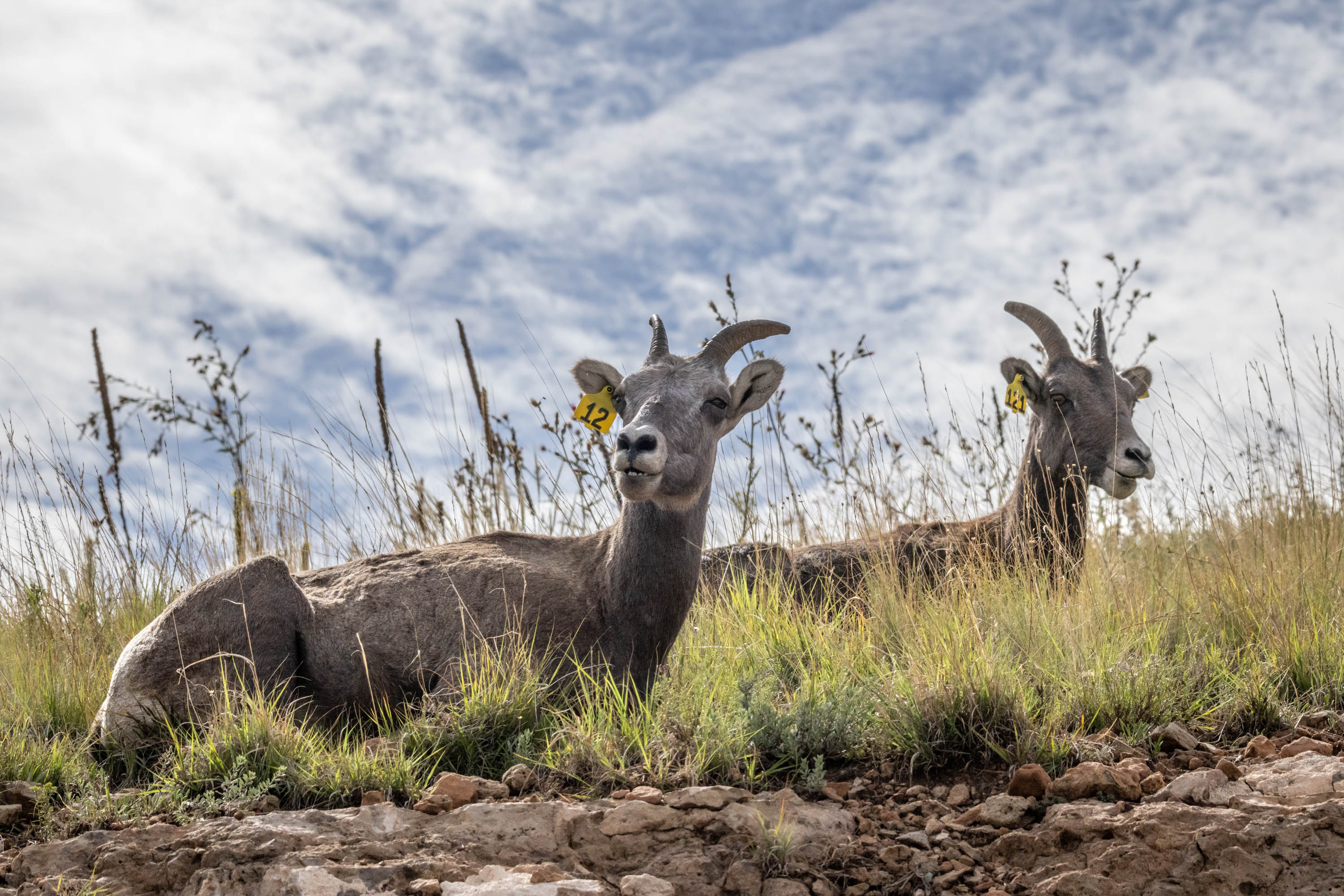
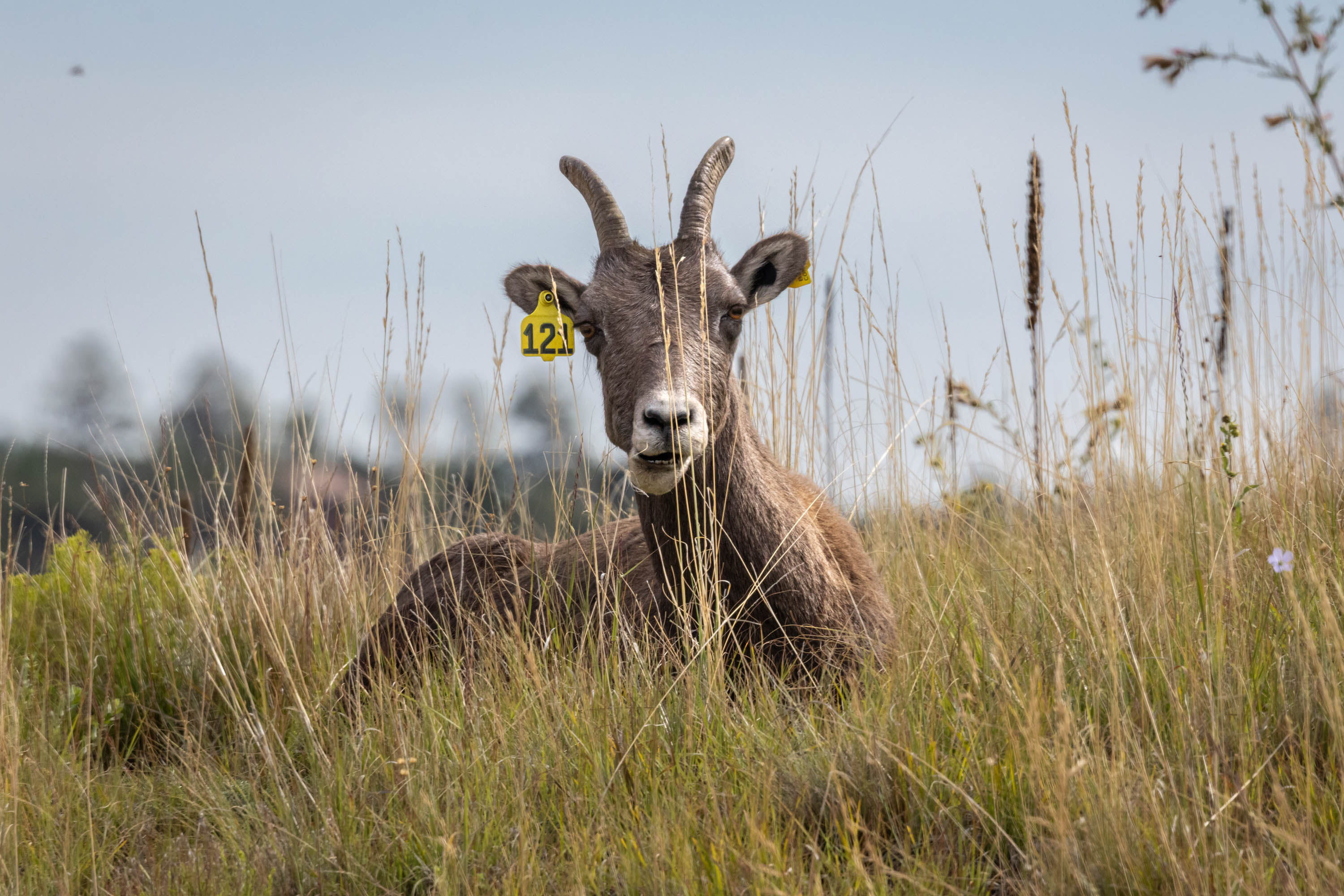
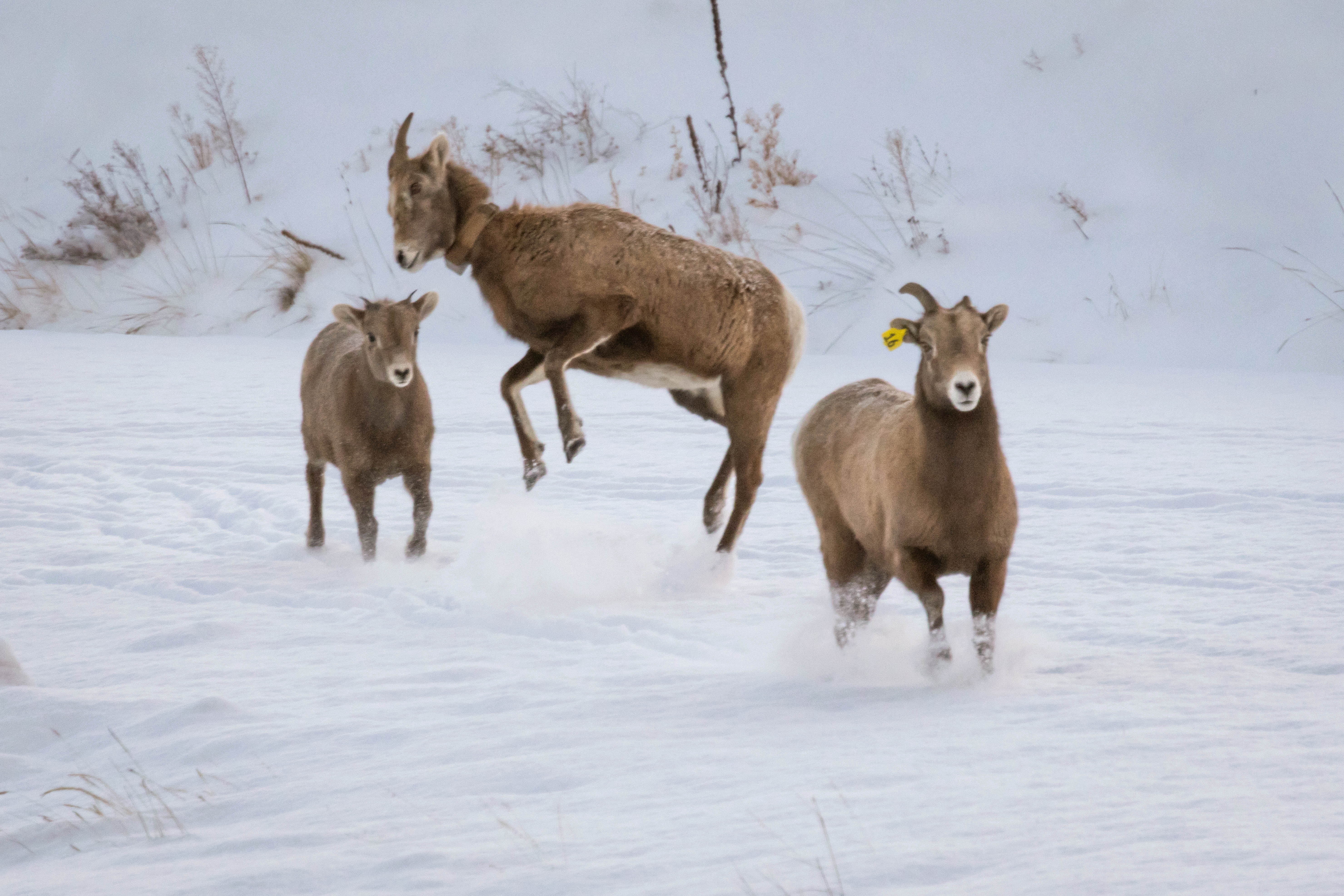
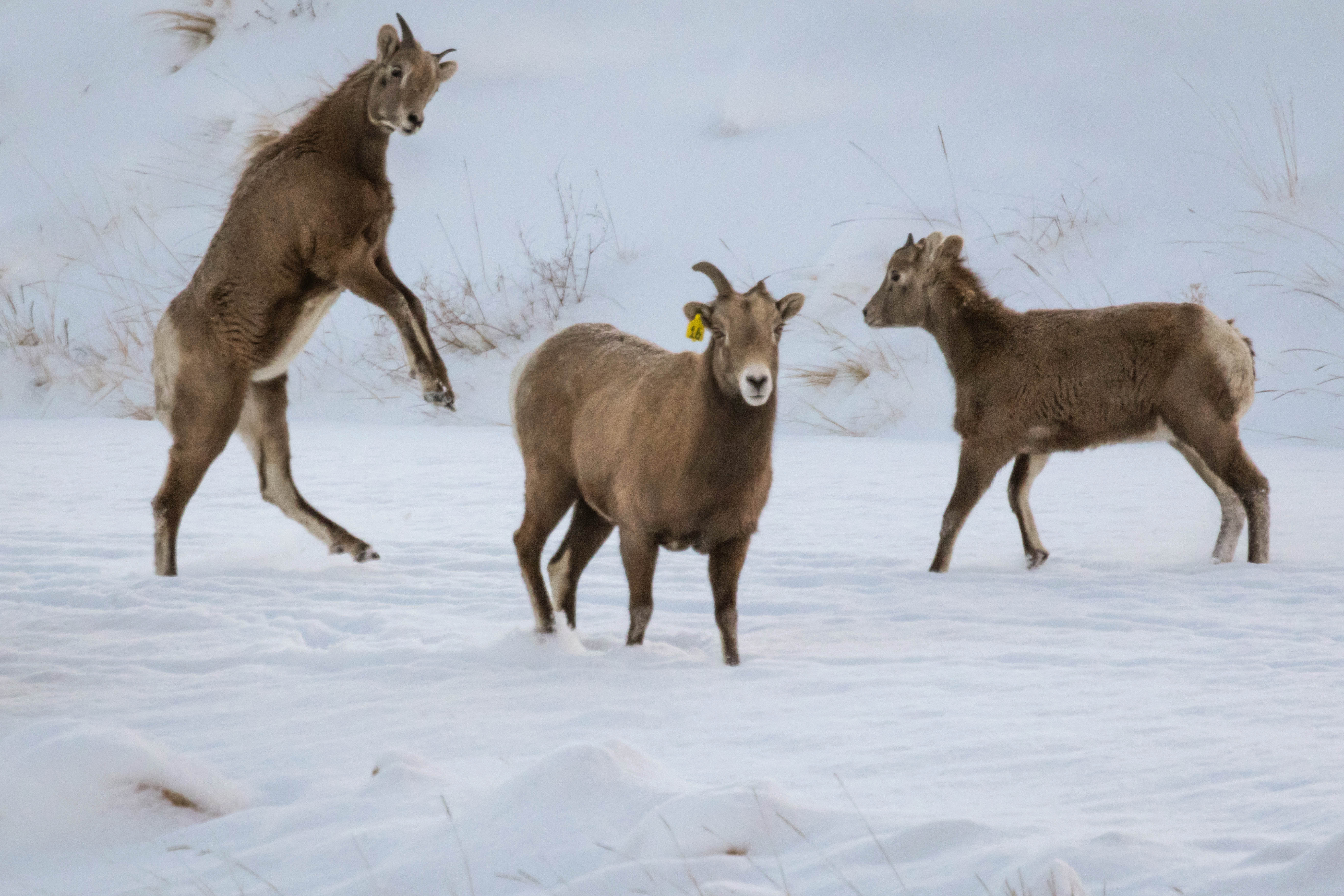
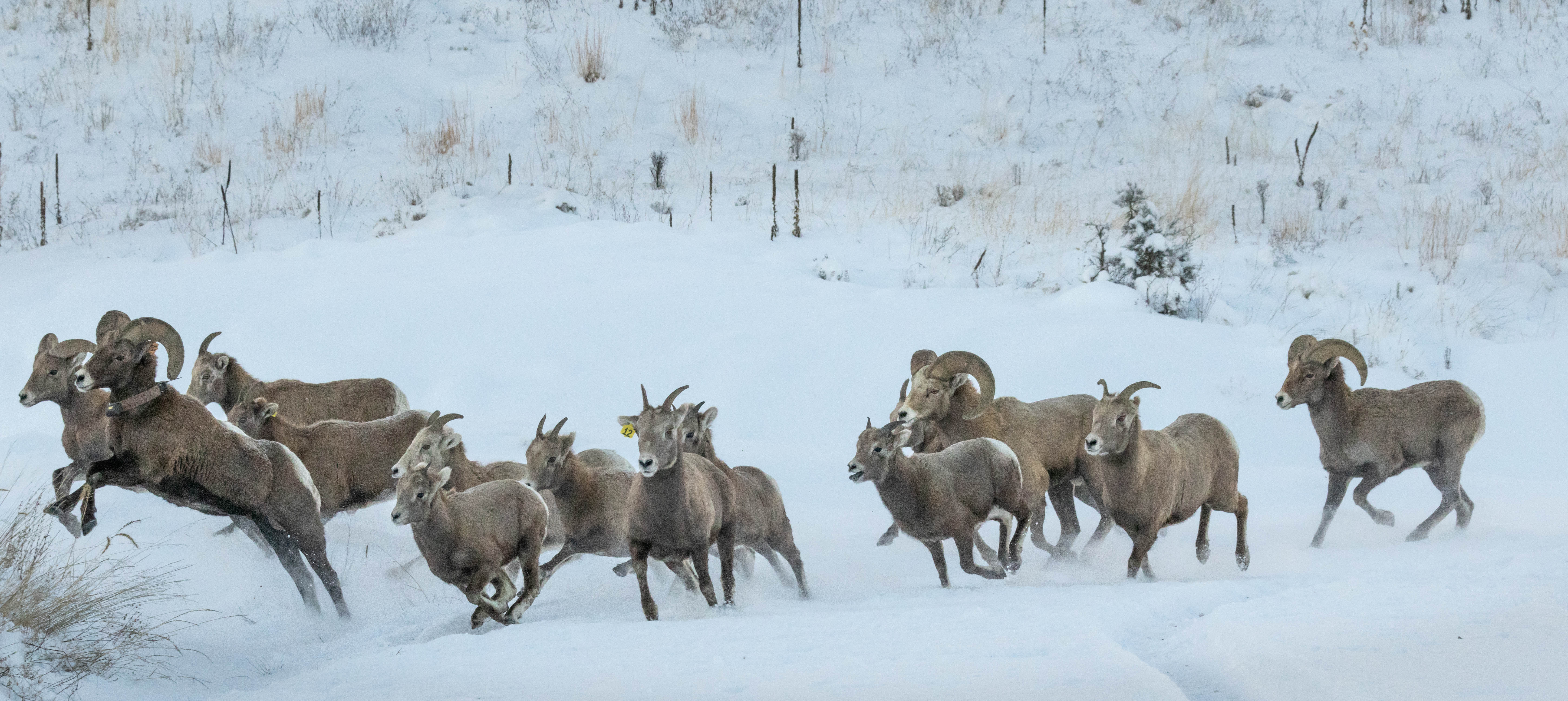
The big horn sheep used to number in the millions between 1850 and 1900. Unfortunately, parasites, disease and modern city growth have dwindled the numbers of desert big horn sheep to 20,000 and about 45,000 Rocky Mountain big horns. In Arizona the total population across AZ for both desert and Rocky Mountain bighorns is estimated to be about 6,000. We were lucky enough to run into a herd of big horn sheep, complete with a number of small lambs.
As I relished in the joy of trying to photographically capture these beautiful animals, I was struck by all the tips I have learned over the years flooding into my mind as I framed and composed my shots.
With so many animals, I had to keep reminding myself to cut the clutter for clean shots devoid of distraction.
Maintain a tight frame, and check all the borders for any complications that might take your eye away from the subject. Avoid ‘butt’ photos and isolate the face and body. Try to avoid cutting off body parts. Though, when necessary, be careful of cutting off feet, heads, and ears, and maintain at least front half of animal, behind front legs or major joints. Be cognizant of post process cropping to maintain large pixel size for best sharpness particularly when enlarging images.
Look for gestures, cute faces, and action to make more interesting and inviting photographs. Make sure the animal is looking at you and you can see the eyes, straight on or profile. Use narrow depth of field (large aperture) to blur distraction from background.
I try hard not to spook the animal or change it’s behavior. Stop, look, and enjoy the encounter of nature’s wildlife and her habits, characteristics and mannerisms. Knowing these things helps to achieve better results at the next lucky encounter.
Give the animal room to roam, allowing space around the animal. It’s not lost of me that some of these methods contradict one another. That’s the fun of photography, despite my own guidance, ‘rules’ are meant to be broken. Different situations call for different solutions. Creativity and vision are in the eye of the beholder. When dealing with wildlife, it is difficult to create a perfect clean shot, so we must adapt to what we encounter.
The more ‘exotic’ the better as far as I am concerned. But those more rare animals are indeed harder to find, particularly in good light to photograph.
So I am thrilled any time I get to observe any animal, so much so, that I solicit my friends and neighbors to let me know of any sightings. My friend and neighbor did just that when they told me of this herd of big horn sheep.
They caught me on the street during a walk around the neighborhood. I quickly jumped in their truck and asked them to take me home so that I could go get my camera and check it out.
Fortunately, I was able to catch them, and delighted to find a large group of baby sheep practicing climbing on the bunny hill ledges.
It was one of those memorable magical moments that I hope I was able to capture the fun and delight of these babies experiencing ‘firsts’ right in front of me.
People have often asked me, ‘how do you get so close to the animals?’, or ‘where do you find them?’. It’s not rocket science. The short answer is, I go out A LOT. It’s not like the occasional trip I get lucky on. It’s a whole bunch of trips… and every once in awhile I get lucky.
Luck definitely plays a part. But the more I find myself in a situation, the more I can use my gear, the more I can practice. All these things allow me to be better prepared when an opportunity presents itself.
I do find that the storms bring out the animals, and add more interest to the photographs. So we go out after most storms, whether it’s rain, sleet or snow (kinda like the postman). Where I find certain animals, I tend to go back, hoping I’ll get lucky again.
Having warm gloves that aren’t too bulky helps, making sure I can still operate my camera. When I encountered this herd of big horn sheep after a recent snowfall, it was 19F. I could barely feel my fingers, let along depress the camera release… and that was with good gloves and hand warmers. Being prepared allowed me to stay the course and get some nice shots.
Being able to take action photos, hand held, was a matter of having had proper settings, fast enough shutter, and panning the scene and composing the photo on the fly.
I know I need more practice to continue to improve my craft and to pay attention to what I do wrong, so that I can get better. It’s always a challenge, and I welcome the opportunities that may come my way so that I can.




















































 kritterspix