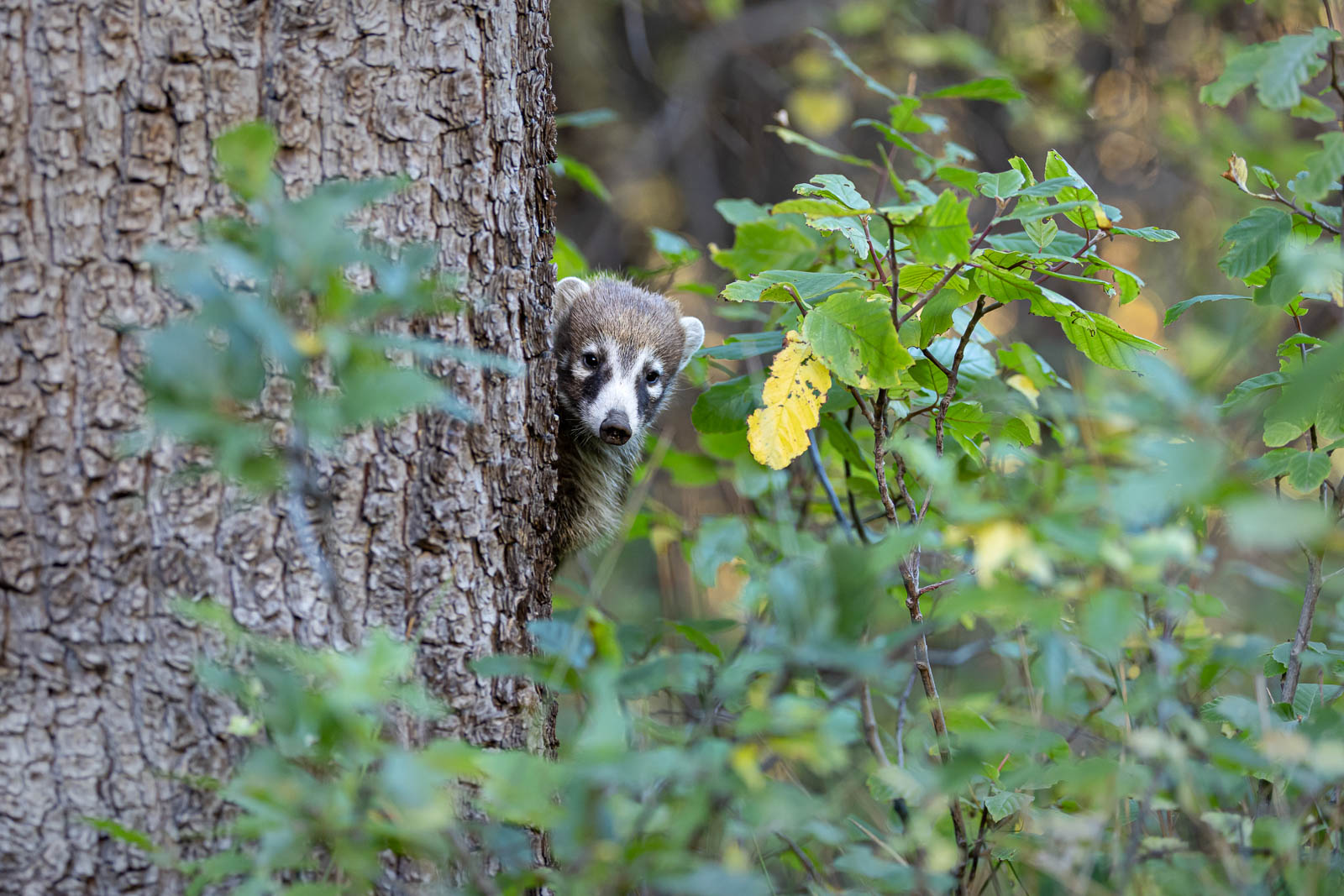
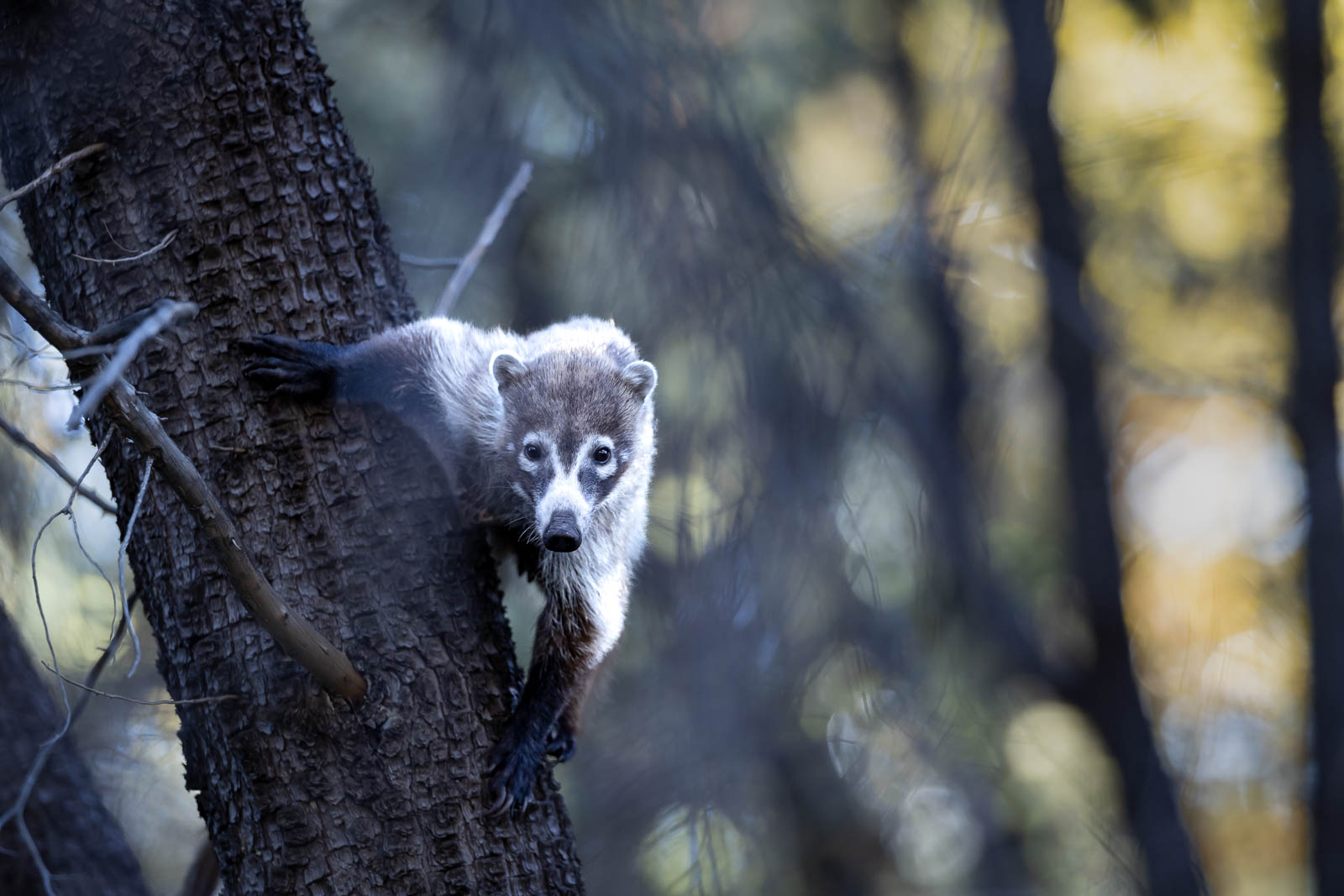
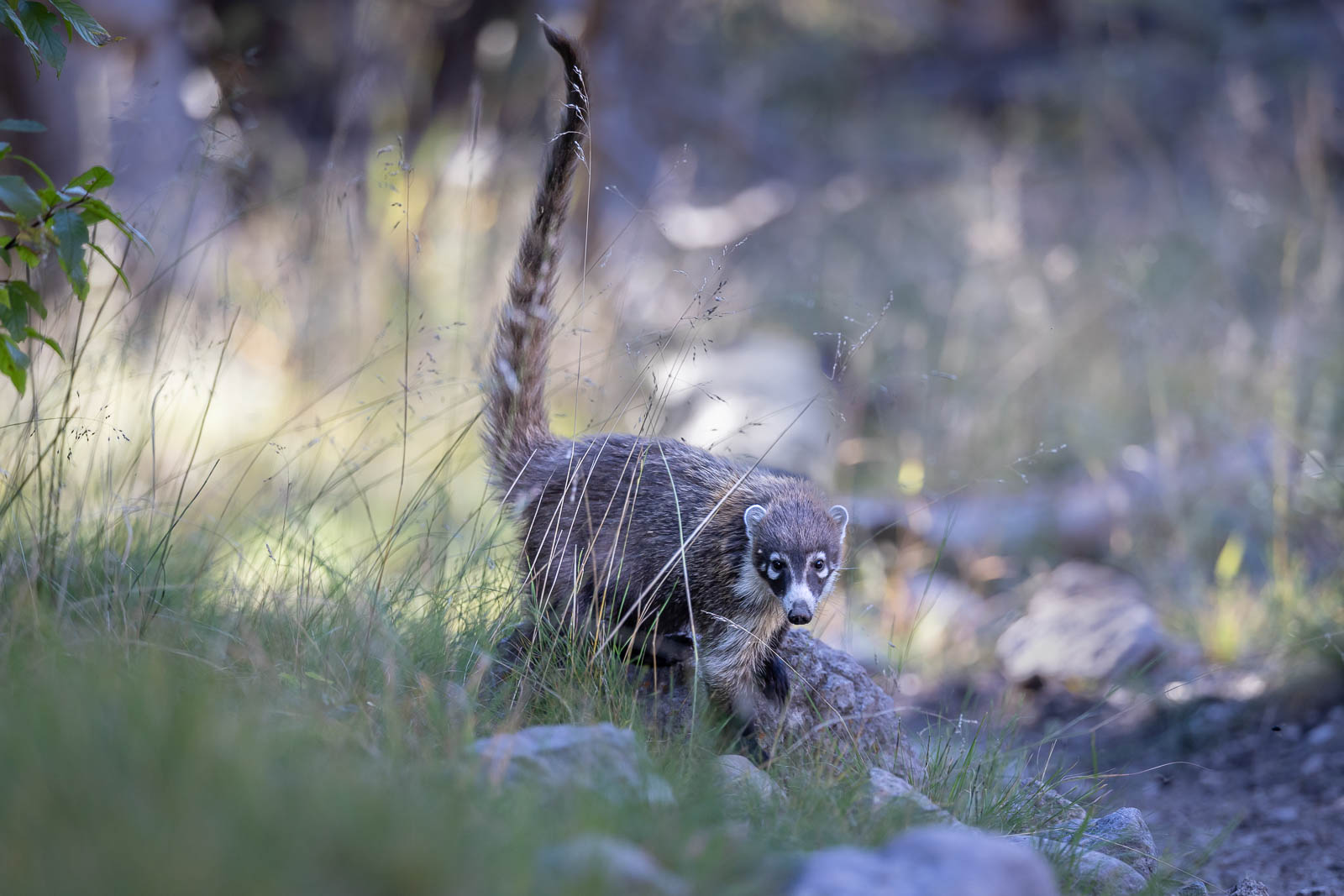
Coatimundi are a rarely seen Arizona mammal that inhabits our Southern and Eastern parts of the state. They band together and where you might see one, there are often more.
They are cute little guys with a long tail and white snout. They forage for seeds and nuts under the fallen foliage of oaks and sycamore trees. If spooked, they handily find refuge in trees.
We were lucky enough to see a band of them while camping. They can be found at higher elevations, often near water sources, and can be spotted by their stripped tail raised high in thick grass.
The more of them I see, the more I want to see. Sightings can be fleeting, so I am thrilled for every opportunity to take advantage of it.
The big horn sheep used to number in the millions between 1850 and 1900. Unfortunately, parasites, disease and modern city growth have dwindled the numbers of desert big horn sheep to 20,000 and about 45,000 Rocky Mountain big horns. In Arizona the total population across AZ for both desert and Rocky Mountain bighorns is estimated to be about 6,000. We were lucky enough to run into a herd of big horn sheep, complete with a number of small lambs.
As I relished in the joy of trying to photographically capture these beautiful animals, I was struck by all the tips I have learned over the years flooding into my mind as I framed and composed my shots.
With so many animals, I had to keep reminding myself to cut the clutter for clean shots devoid of distraction.
Maintain a tight frame, and check all the borders for any complications that might take your eye away from the subject. Avoid ‘butt’ photos and isolate the face and body. Try to avoid cutting off body parts. Though, when necessary, be careful of cutting off feet, heads, and ears, and maintain at least front half of animal, behind front legs or major joints. Be cognizant of post process cropping to maintain large pixel size for best sharpness particularly when enlarging images.
Look for gestures, cute faces, and action to make more interesting and inviting photographs. Make sure the animal is looking at you and you can see the eyes, straight on or profile. Use narrow depth of field (large aperture) to blur distraction from background.
I try hard not to spook the animal or change it’s behavior. Stop, look, and enjoy the encounter of nature’s wildlife and her habits, characteristics and mannerisms. Knowing these things helps to achieve better results at the next lucky encounter.
Give the animal room to roam, allowing space around the animal. It’s not lost of me that some of these methods contradict one another. That’s the fun of photography, despite my own guidance, ‘rules’ are meant to be broken. Different situations call for different solutions. Creativity and vision are in the eye of the beholder. When dealing with wildlife, it is difficult to create a perfect clean shot, so we must adapt to what we encounter.
I never cease to be amazed at the things we encounter while exploring the great outdoors. We often go back to a places we have been before just to see some particular scene or animal we have seen before.
But one thing I have learned is that one must take advantage of the opportunities presented to us at that very moment in time, as those moments are fleeting and may not return again. Such was the case when we went back to the Lake looking for osprey as we had seen before, only to find an entirely different scene.
This time around we found the lake blanketed in pink with a lily-esque type of plant I had never seen before. I searched the internet to yield nothing. It took reaching out to my AZGFD contact to identify this ‘strange’ plant as a native water smartweed.
As many times as we have been out and about, visiting many lakes throughout Arizona, we had never seen this beautiful photogenic aquatic plant. This unique smartweed can grow either submerged or floating on top, making it an unusual amphibious plant. You can read more about it here … https://www.fs.usda.gov/wildflowers/plant-of-the-week/polygonum_amphibium.shtml
One must be prepared for the situations we encounter, equipped with the right tools and knowledge, and willing to dedicate the time to capitalize on the moment.
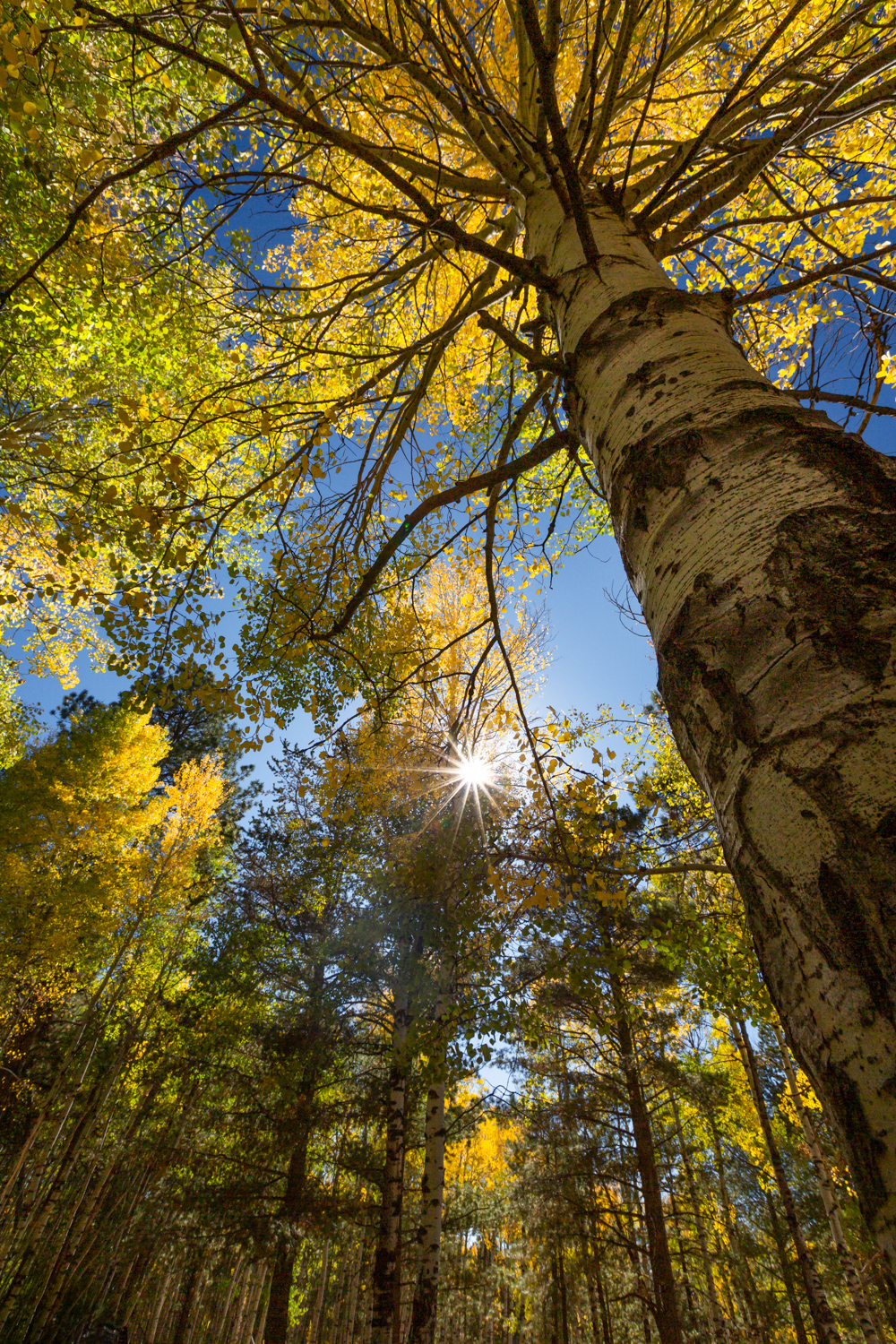
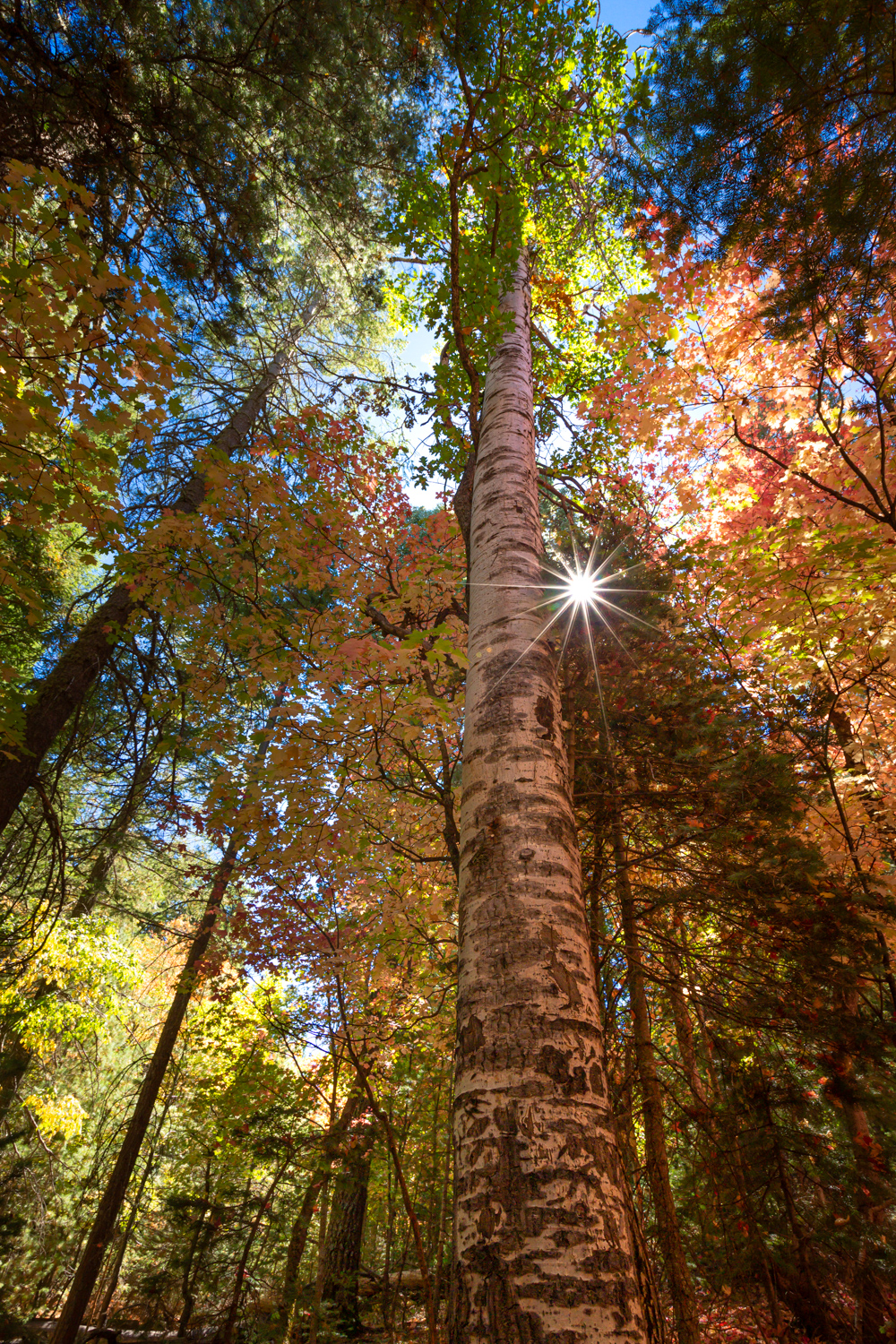
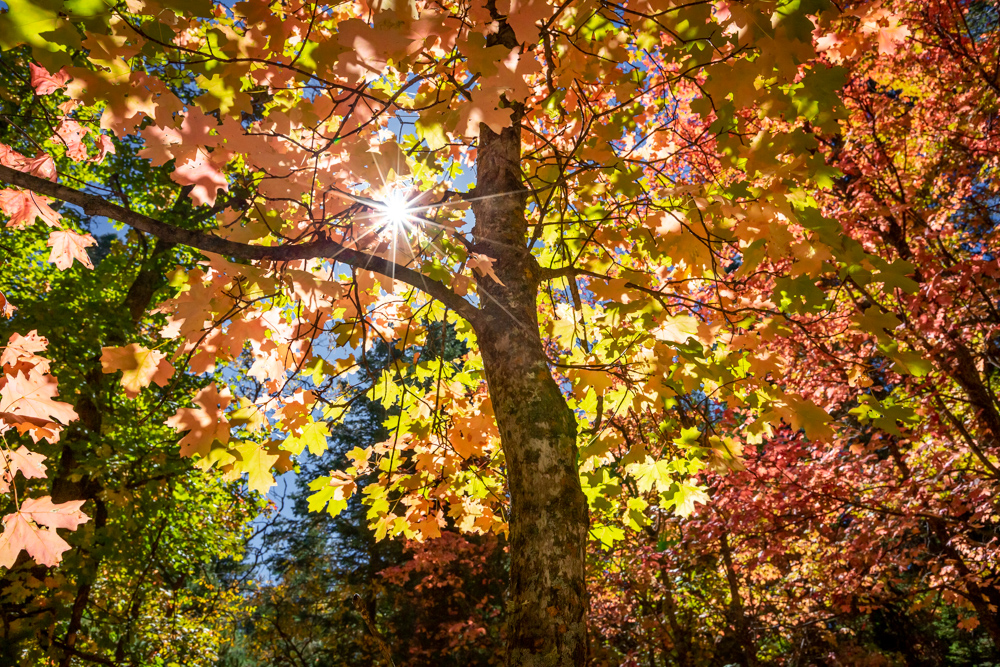
Call ’em what you will – sun star, sunburst, starburst, sunray, or just plain fun.
I love doing sunstars. A sunburst adds a dimension to any photograph and point of interest.
Sun bursts through the trees to reflect through the Aspen Trees
I am often complemented at my use of adding sunrays with a a star filter, program, or app. The truth is, sun bursts are very easy to do in camera. No apps required.
All one needs is a wide angle focal point and small aperture. I love my Canon 16mm, set at f/11 for these great results. Sometimes you have to take a number of photos to get the sun poking through the trees just right.
You may have to split a tree to showcase the sunburst, rather than just looking directly at it with full intensity.
But, it’s an easy thing to do, at sunrise, sunset, or even mid day.
As with any photograph – look ahead, look behind, look all around, and look up. Sometimes the best things are just ahead of us.
I would consider myself a scattered photographer… some people would call it spray and pray, ok, there i said it. My photography teacher in high school called me prolific.
Let’s just say I take a lot of photos of mixed variety.
For me to take a single photo (omg, never), a solitary subject (why??), or a single place (ok, doable) is a foreign concept. I like to wander around and take different perspectives to convey the ‘whole story’.
In an effort to stretch myself and my photography I decided to shoot the San Francisco Peaks. I love the fleeting snow and new green trees in her belly.. a sign of spring taking hold and summer on her heels.
I wanted to take photos from a different perspective so we traveled around to the north side of the peaks to get a southern view, and camped out for sunset and sunrise to capture her beauty.
We were lucky enough to get some nice skies, and I am happy to be able to show off another beautiful icon of Northern AZ.
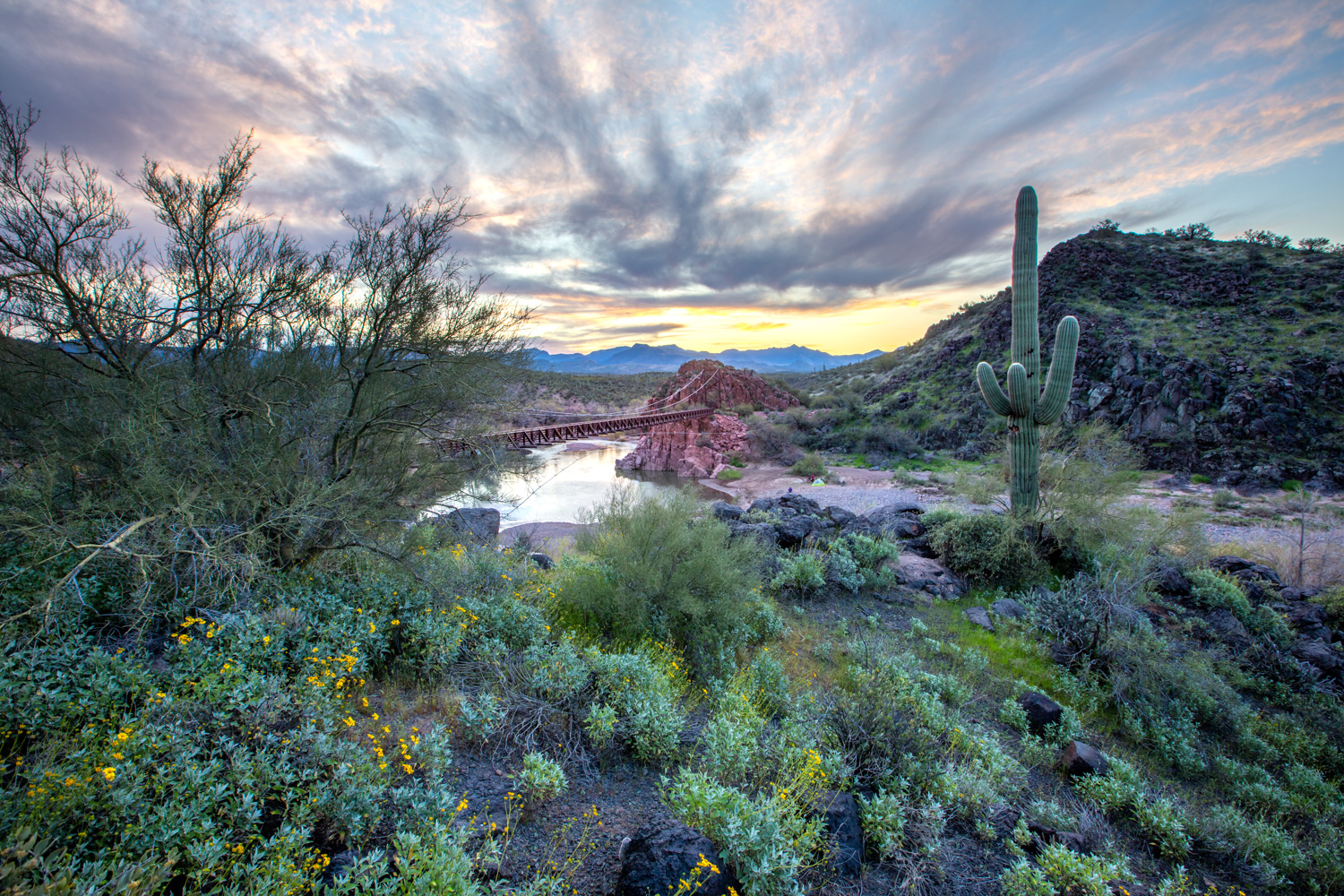
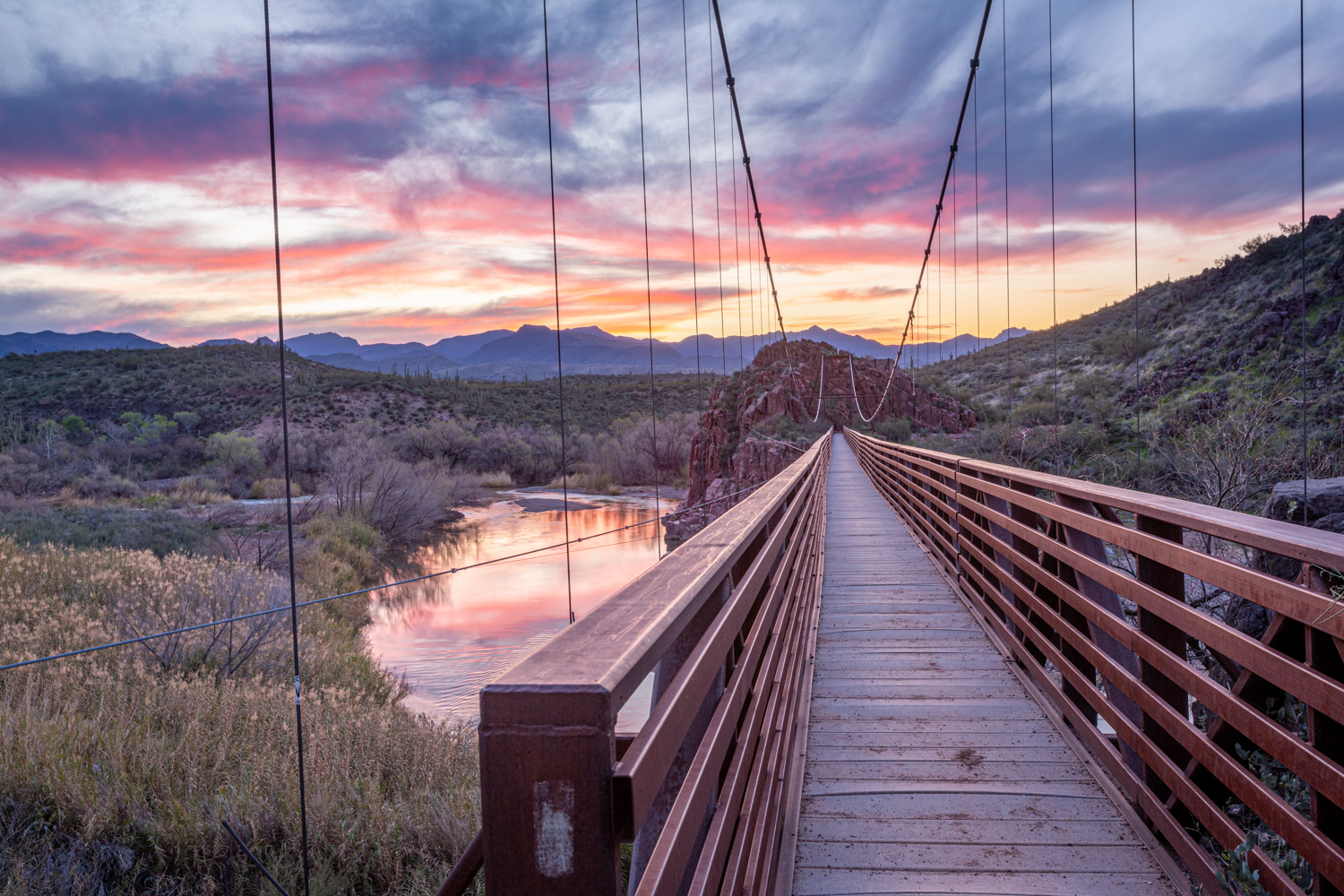
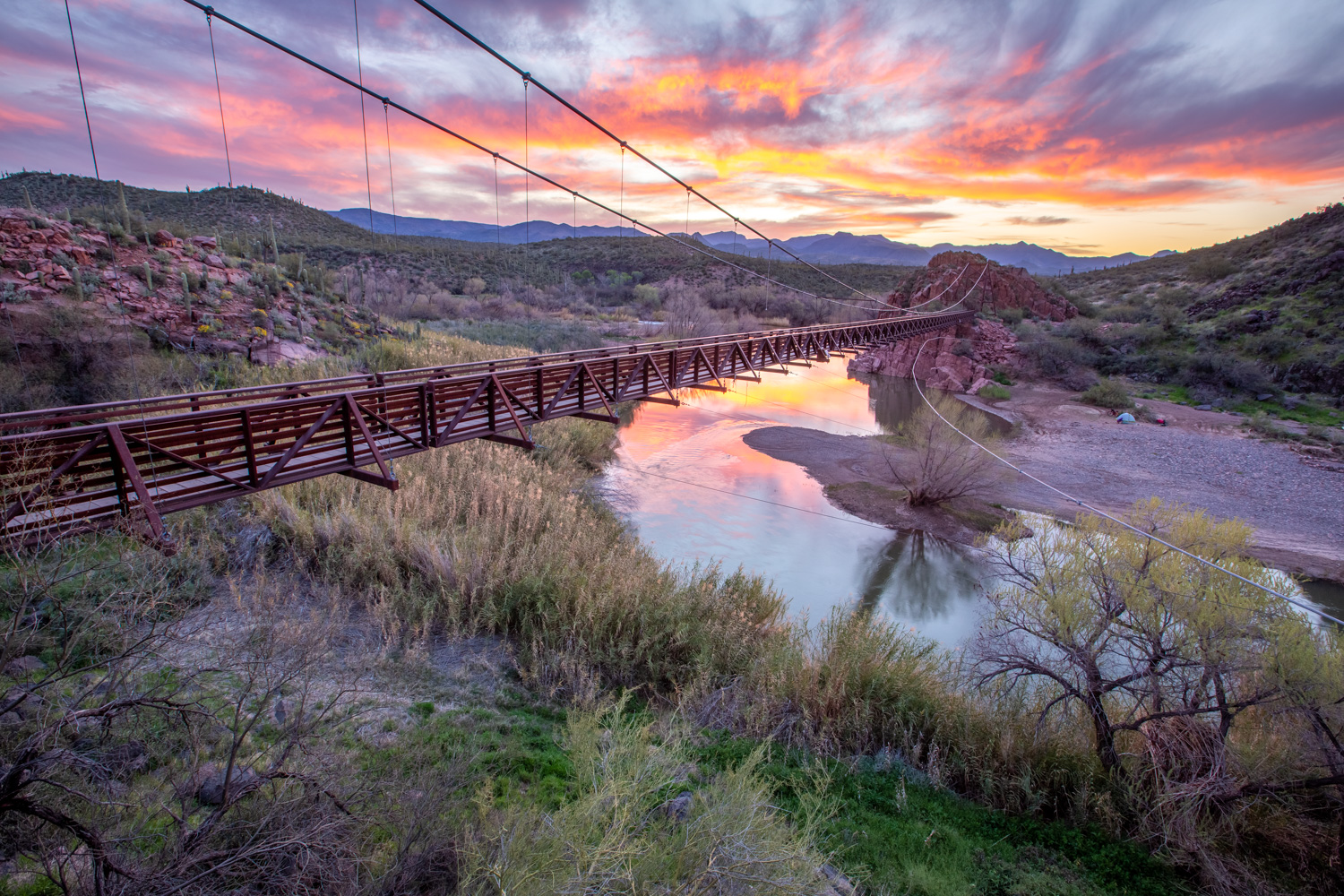
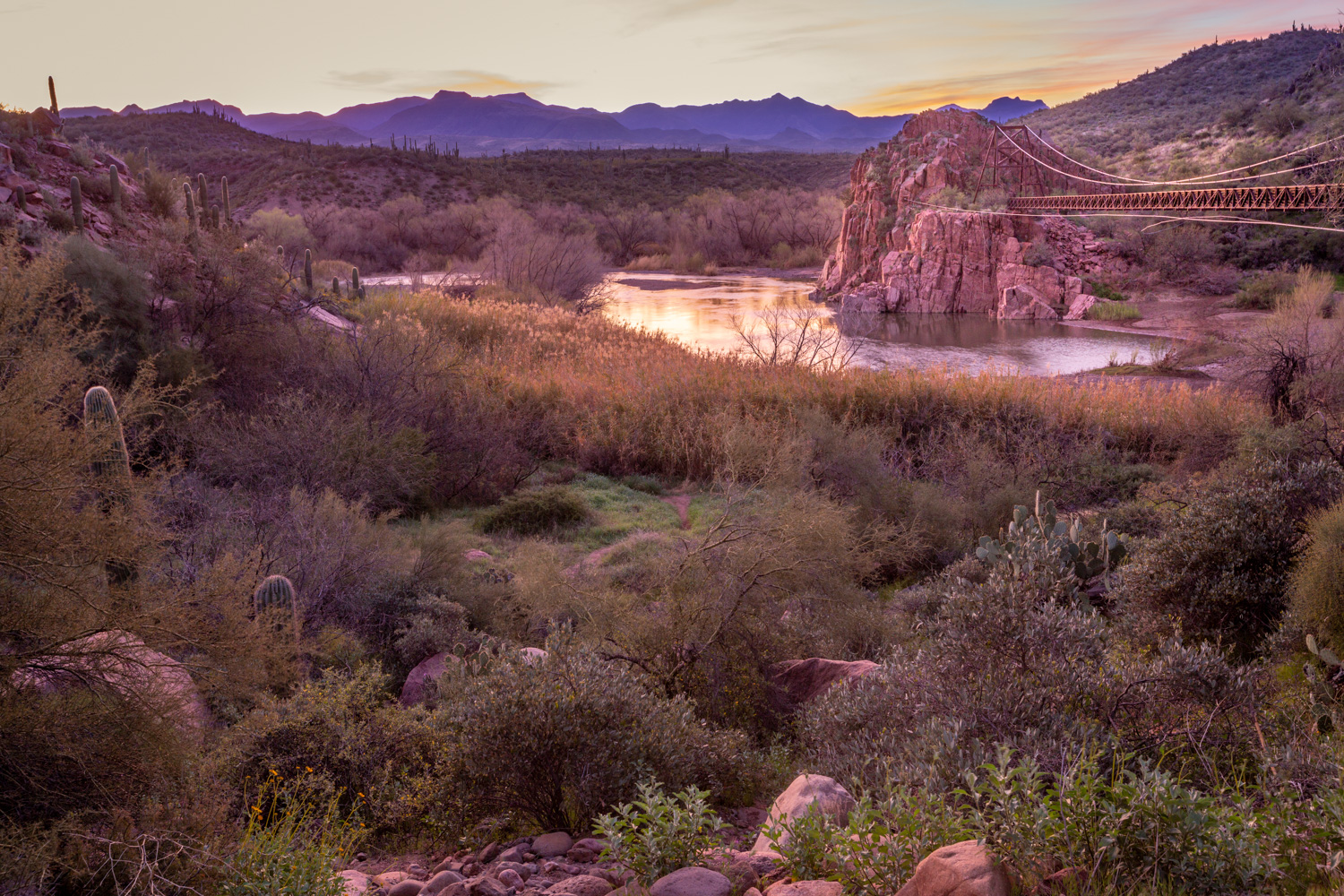
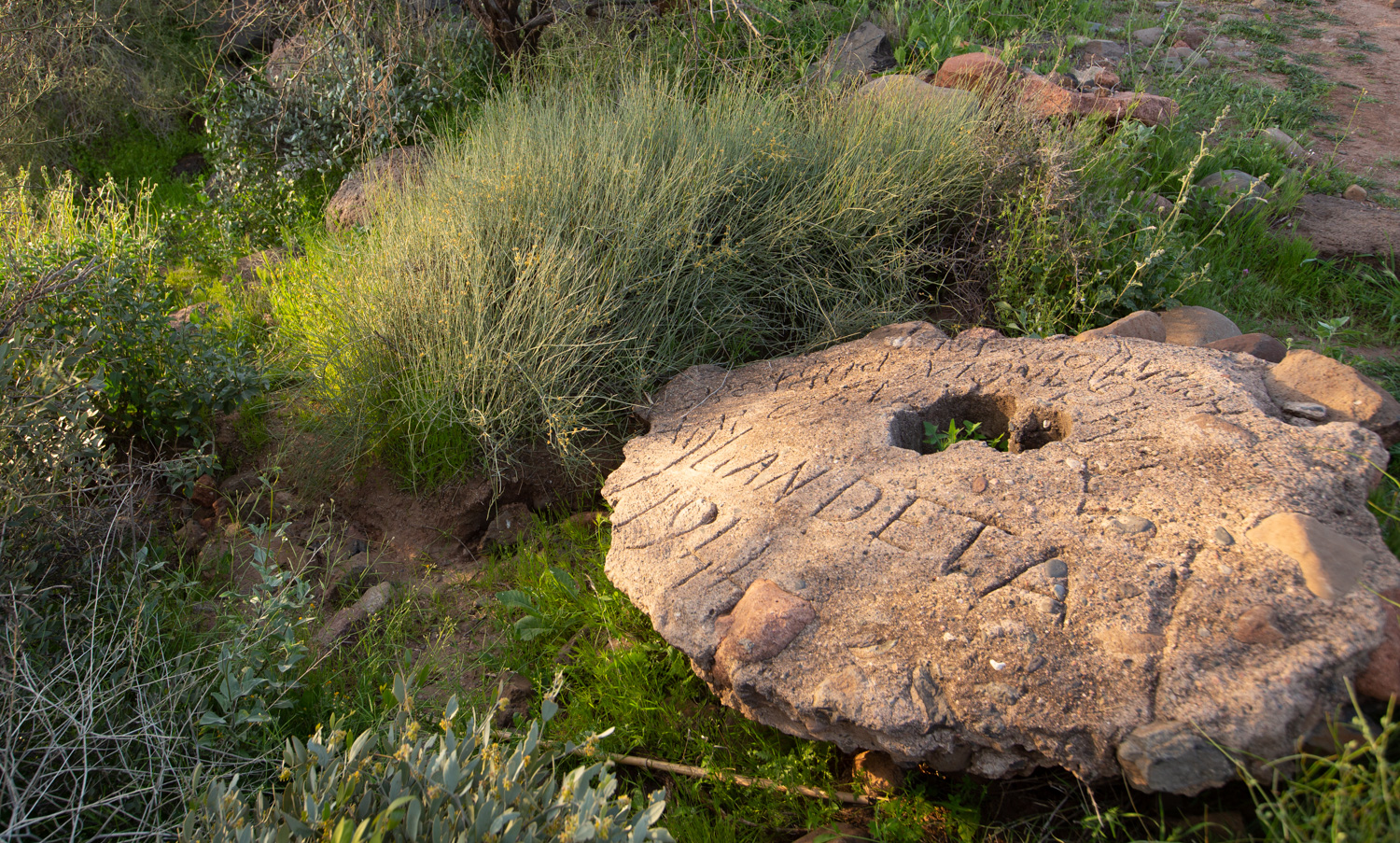
Arizona is a treasure trove of history and interesting stories. If only the landscape could speak. In this case… it does. Sheep’s Crossing is one of those special historic places that few know about.
It’s just north of Phoenix outside of Bloody Basin, down a long 3-hour rough dirt road. There are multiple ways to get there, and all long and arduous. At the end of the road though, one is rewarded with this historic moment of time.
The Flagstaff Sheep Company used to graze sheep in this area around Verde River under a permit from the Forest Service as far back as 1926. As sheep herders would move sheep during summer and winter months, they would invariably lose sheep down the swift river.
During WWII, in 1943, they built a bridge across the Verde. The bridge is 3′ wide and spans nearly 500′. Using salvaged materials and erected with hand tools and a few mule, it is one of the last remaining suspension bridges in AZ.
It was entered into the National Register of Historic Places in 1978 and was used from 1944 through 1979. Some 11,000 sheep would be moved across this bridge twice a year.
In 1988 the bridge was disassembled due to years of use, floods, and weathered over time. It was re-built in 1989 as a testament to the pioneering sheepmen and ranching that existed in old Arizona.
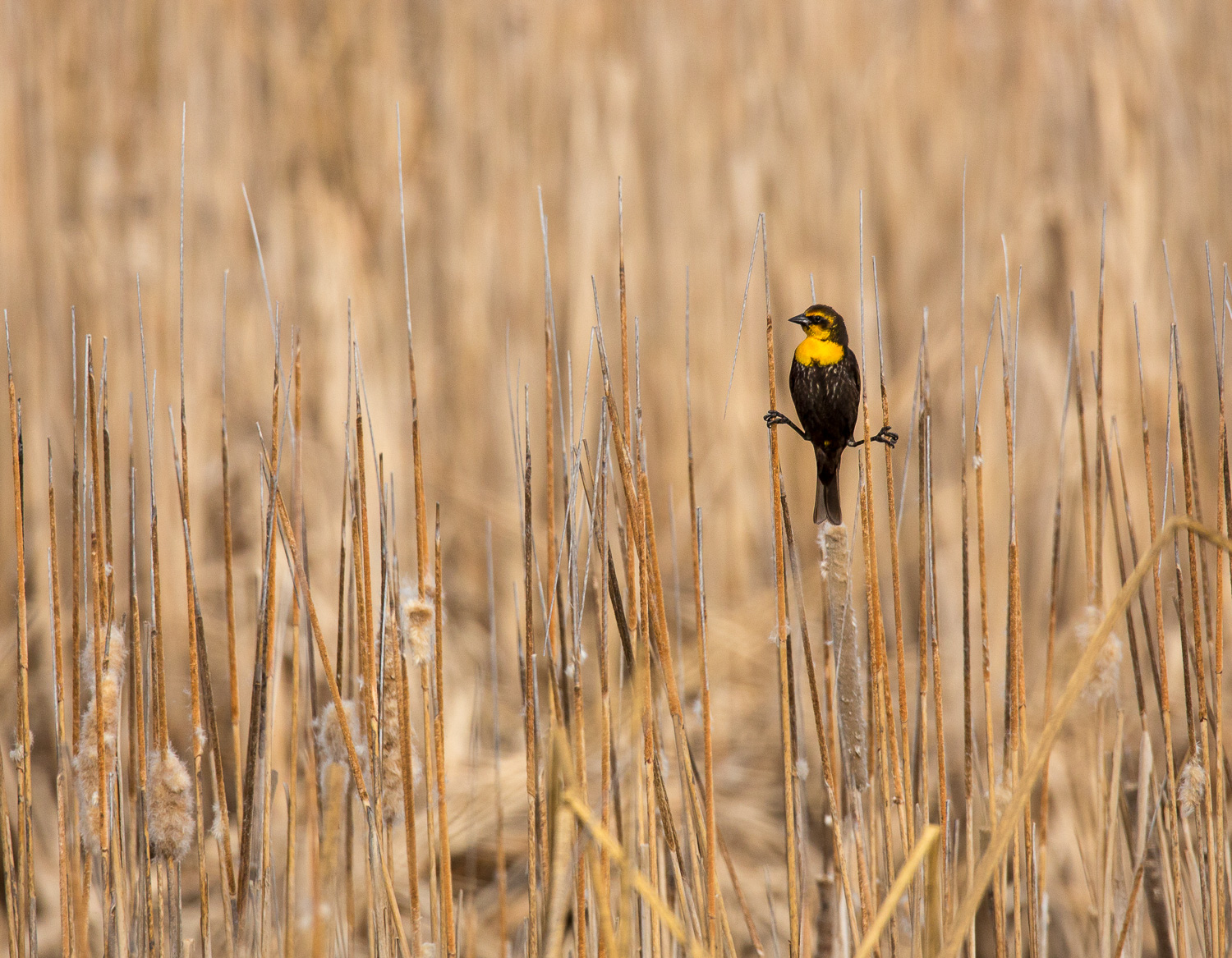
I have never been much of a bird watcher, but being retired, and living in the ‘wilderness’ has made me so much more aware of the animals and birds around me that I ever was living in the big city going to work every day.
There are so many interesting animals and birds out there, that I feel I have barely scratched the surface of being able to appreciate and identify the wide variety of species we have in AZ.
The sandhill cranes are among the more interesting migrating birds that call AZ their temporary home.
Then their are the snow geese that come for the summer – and I’m not talking about the east coasters that come in travel trailers and crowd Phoenix during Noreasters back home!
Northern shovelers with their platypus-type bills are among some of the interesting ducks we have.
Along with the pintail ducks that flock to our AZ lakes.
At Whitewater Draw in southern AZ, you might find yourself saying ‘who?’ to any number of bird species in this small, confined riparian area that serves as home to a snow bird of another feather.
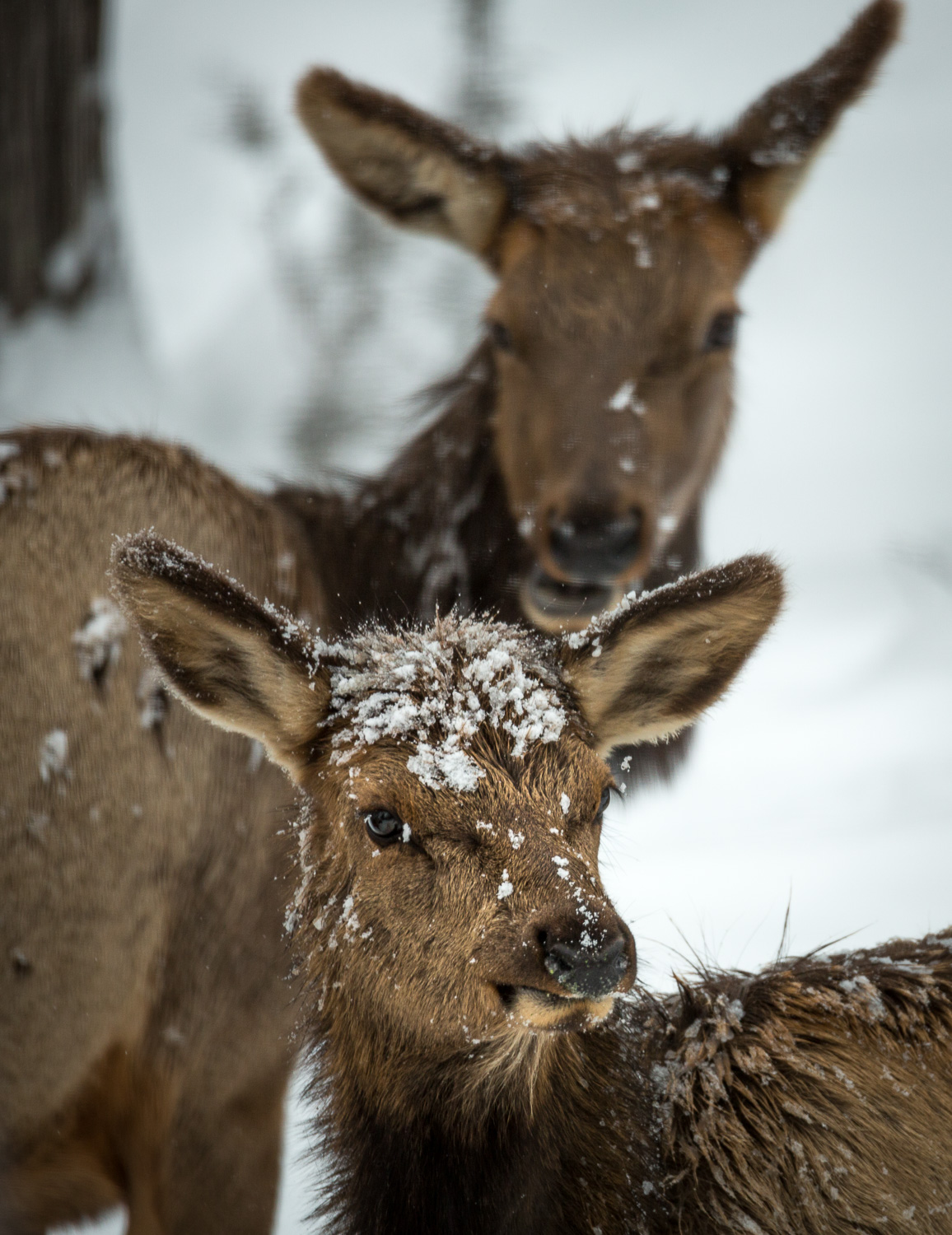
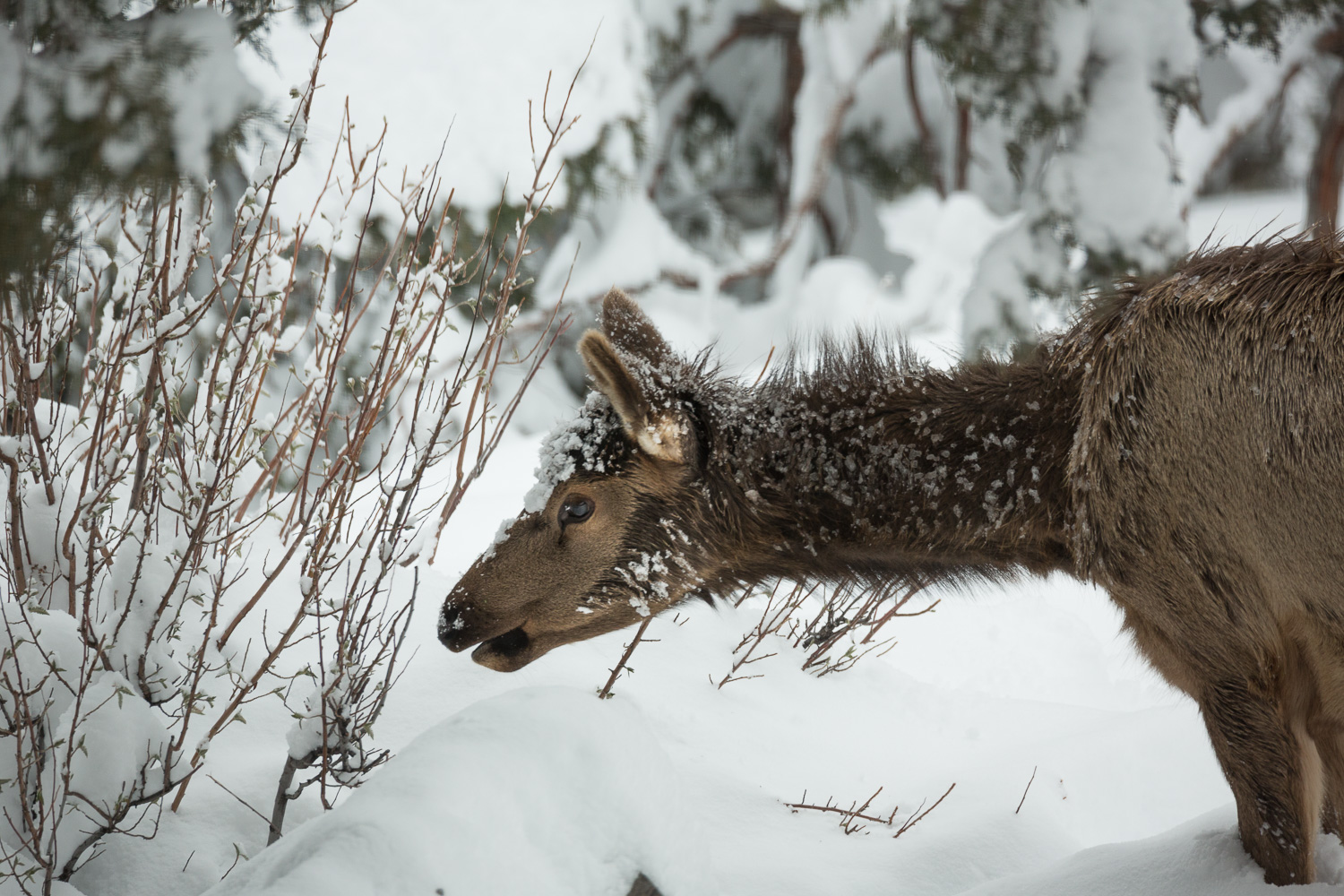
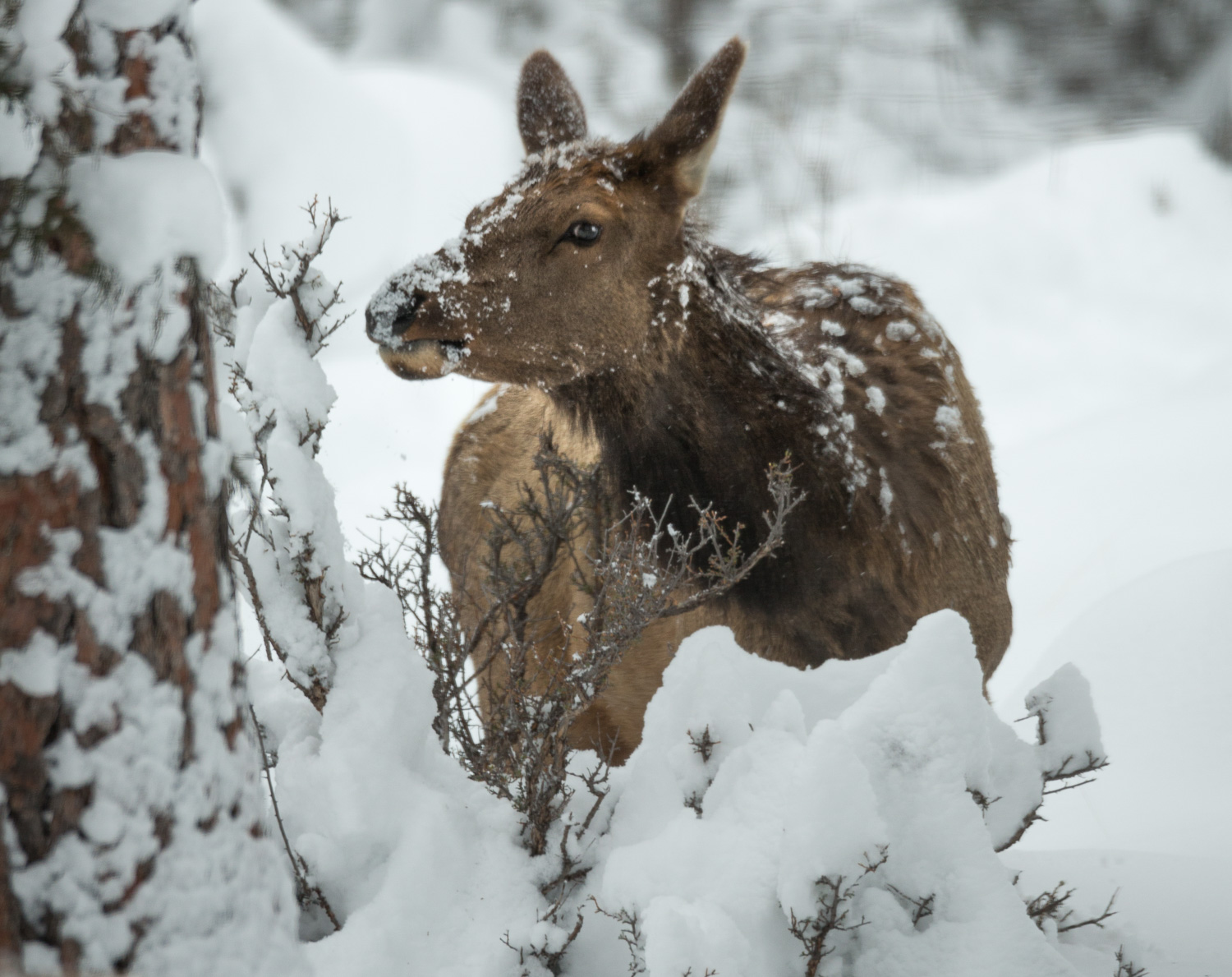
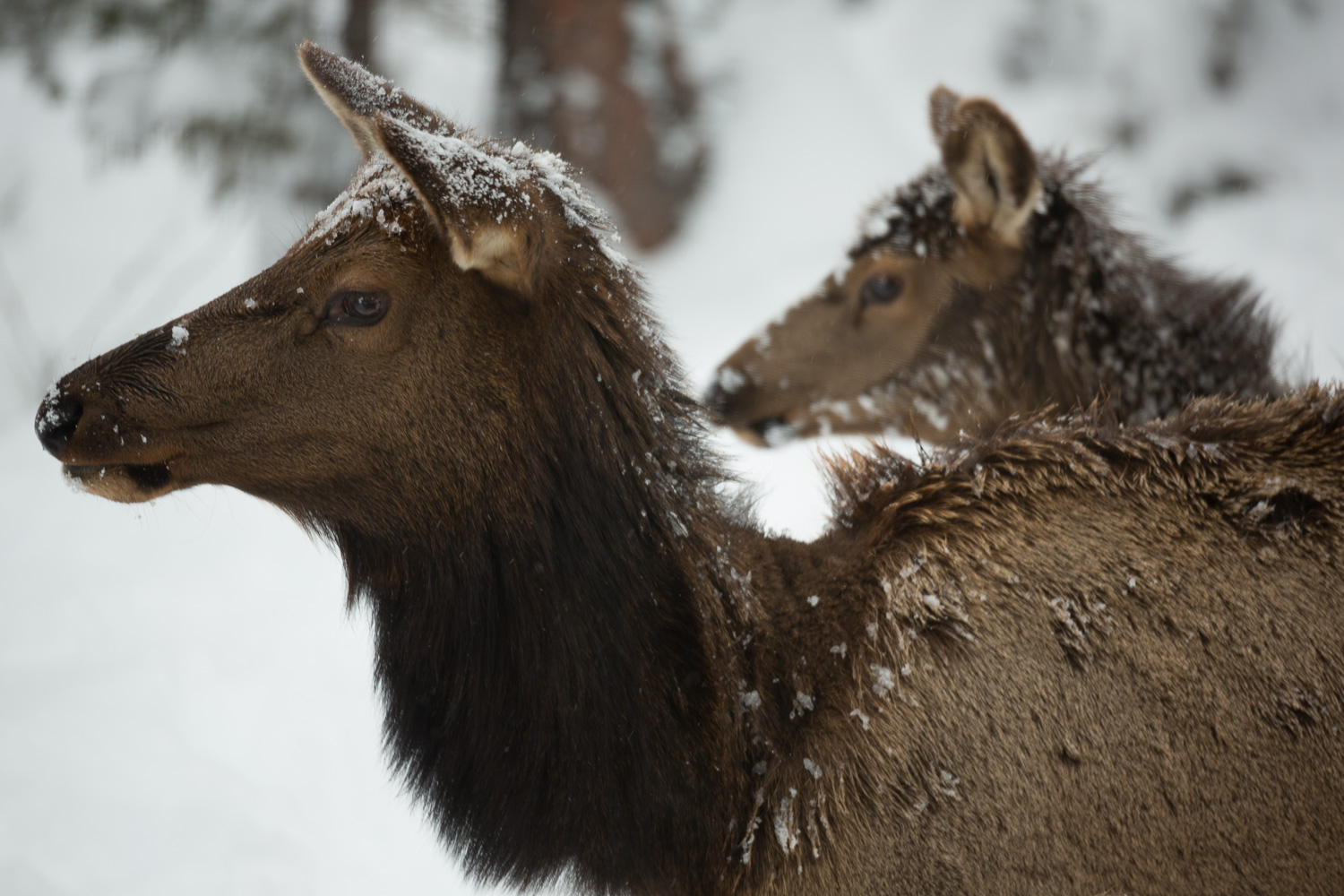
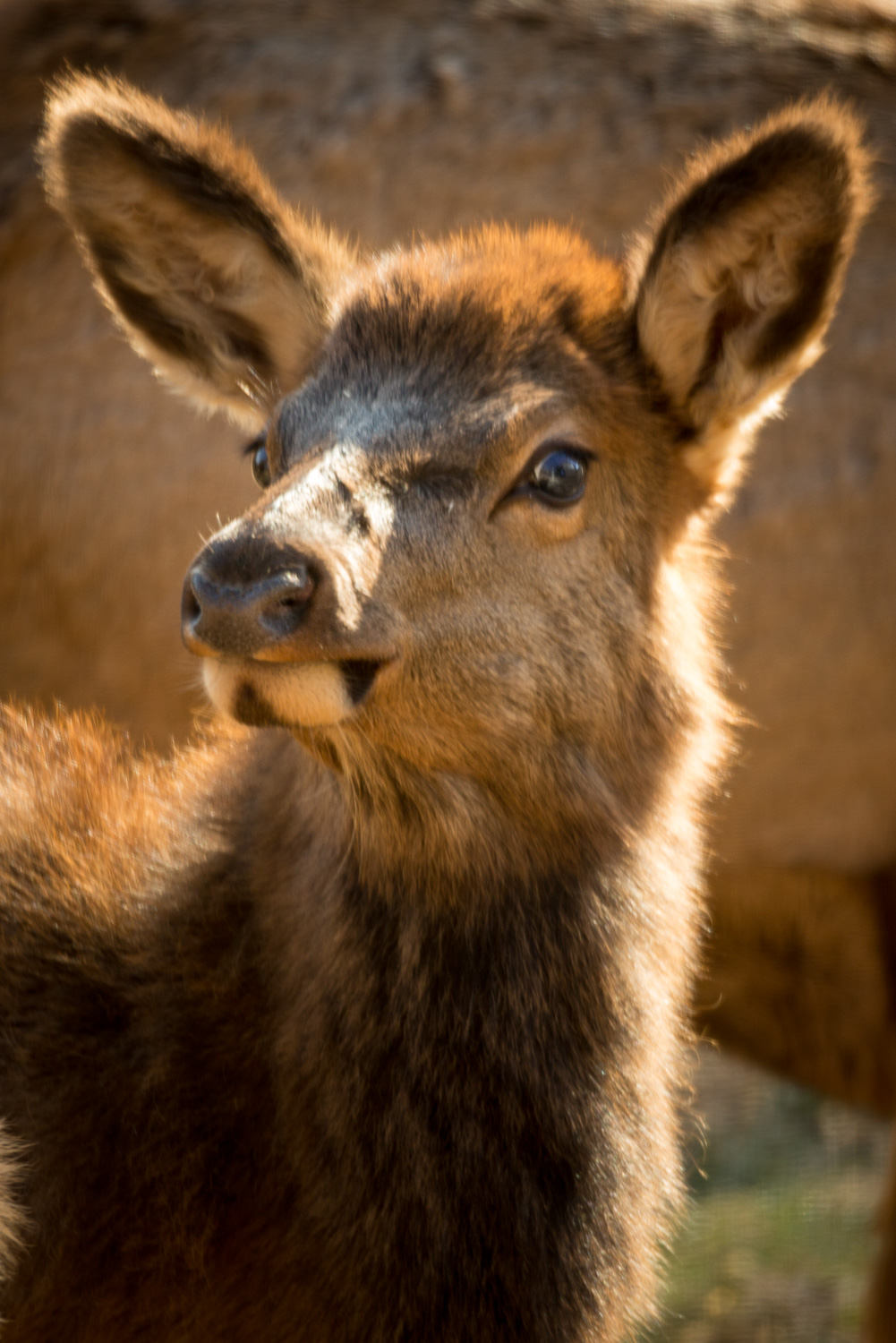
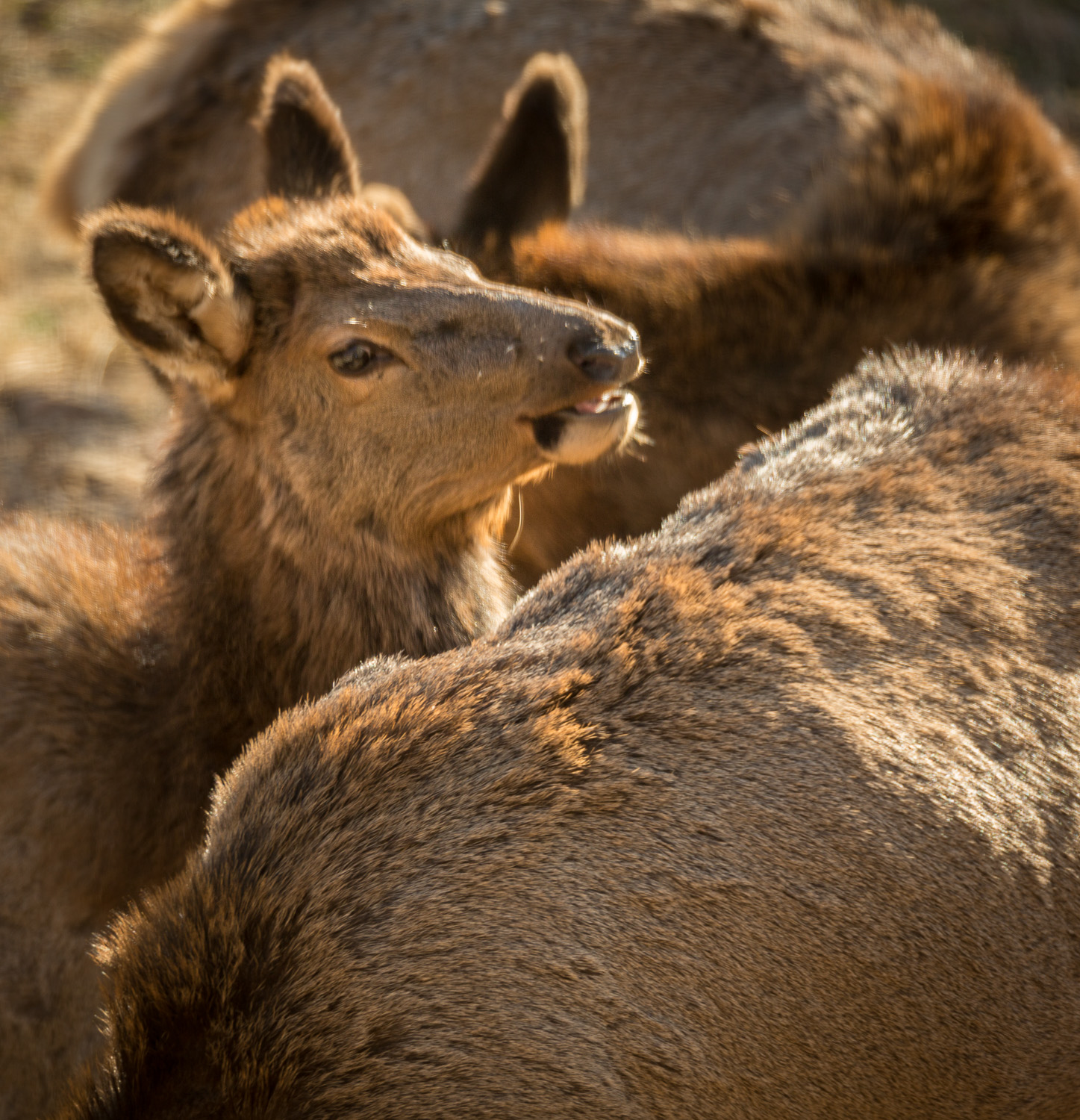
I remember when I used to visit my husband’s folks in Morman Lake, AZ. They would be all excited to share ‘their’ elk with us. With a binoculars in hand, if you squinted real hard, you could see the little dots of elk crossing in front of the fire house, about 1/4 mile away.
John’s mom still remembers fondly how close they got to see the elk. I laugh.
If she had any idea of how close we see the elk today!





















 kritterspix