

In Arizona we have 3 different varieties of turkey: Merriam, Gould, and Rio Grandes. The Rio Grandes were introduced to Arizona in 2008 in the Arizona Strip along the Black Rock Mountain, near the border of Utah and the North Rim Grand Canyon and Vermillion Cliffs. The Gould turkey are a native turkey found in Southern Arizona and throughout the Chiricahua Mountains. Finallly, the Merriam turkey are common throughout western US, and prefer higher elevation and mountainous areas.

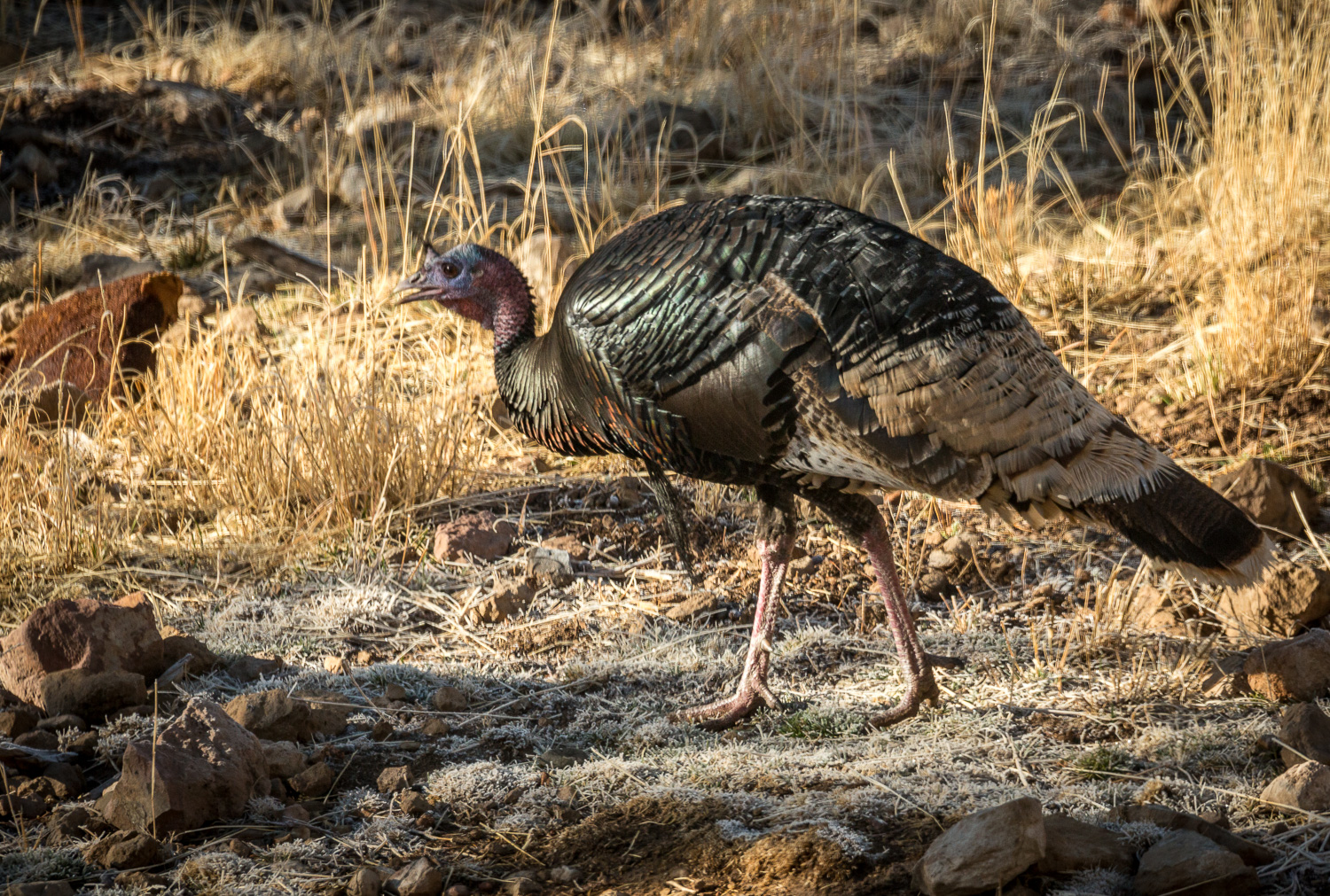
The Merriam turkey can be found along the Mogollon Rim. We encountered a group of 10 turkey: 4 adults, and 6 chicks. Interestingly, a group of turkeys go by many names, including rafter, posse, brood, flock, gang, herd, gaggle, and run are only a few of the many names for turkey congregations. The different names refer as much as the herd of turkey, as their activity. The original term, ‘rafter’ (no longer used), was coined by farmers where the turkey roosted in the rafters of barns. ‘Gaggle’ refers more to a noisy grouping of gobbling turkey. ‘Gang’ and ‘mob’ refer to noisy older males and young.


Our little flock is specifically referred to as a ‘brood’ as at least one adult female and a large group of young. The Merriam turkey can be identified by the pronounced white band on their tail feathers. Judging by the turkey feathers we collected from the area, and their locality in our ponderosa forest, we knew we were enjoying a Merriam turkey brood.

It never ceases to amaze me at how my passion for photography and desire to learn an animals behavior and habits to enable me to find and get closer to my subject, has made me more aware of the animal kingdom around us.

It’s a beautiful thing!



 kritterspix